Mind-Muscle Connection: Does Internal Focus Build More Muscle?
Mind-muscle connection explained: what the growth trial and EMG studies show, when focusing on a muscle helps, when it costs reps, plus cues and a plan.
Key takeaways
- The mind-muscle connection means focusing on the muscle you train (internal focus) instead of on moving the weight (external focus).
- The only long-term trial found more biceps growth with an internal focus (12.4% vs 6.9% in 8 weeks), but no extra quad growth, in 30 untrained men (Schoenfeld et al., 2018). Promising, not proven.
- Focusing on a muscle raises its activity mainly at loads up to about 60% of 1RM and at controlled speeds. At 80% of 1RM or in fast reps, the effect mostly disappears (Calatayud et al., 2016, 2018).
- Focusing on the muscle costs performance: an external focus gave more reps in a meta-analysis (Grgic and Mikulic, 2021) and more force in several studies.
- Our rule: use an external focus on heavy compound lifts and an internal focus on isolation and machine exercises with moderate loads and controlled reps.
- Higher muscle activity on a sensor is not the same as more growth. Train hard and close to failure first; use the mind-muscle connection to steer the work to the target muscle.
The mind-muscle connection is one of the oldest ideas in bodybuilding: think about the muscle you are training, feel it work and squeeze it, and it will grow more. Strength coaches often teach the opposite: forget your body and focus on pushing the bar or the floor.
Both camps have research on their side. This guide covers what the one long-term growth trial found, what more than a dozen muscle-activity studies show, why focusing on a muscle costs you force and reps, when to use which kind of focus, cues for every major muscle and a 4-day plan that uses both. It is part of our Training Methods section; for how a session fits into your week, see our pillar on every training split.
Evidence in one line: focusing on the muscle can shift more of the work to it on lighter, controlled sets, and may help growth in small muscles, but it reduces force and reps on heavy lifts.
What this page covers. This page is about where you put your attention during a set. How hard to push a set is covered in training to failure vs RIR, and bringing up one lagging muscle over a whole training block is covered in specialization phases.
Key terms
- Internal focus: attention on your body, a muscle or a body movement (“squeeze your chest”, “feel your lats”).
- External focus: attention on the effect of the movement on the outside world (“push the bar away”, “push the floor down”).
- Mind-muscle connection: in research, an internal focus on the specific target muscle during an exercise.
- EMG (electromyography): electrodes on the skin that record the electrical activity of a muscle. Results are often given as a percentage of a maximal effort (normalised EMG, or nEMG).
- 1RM (one-rep max): the heaviest weight you can lift once.
- Hard set: a work set taken close to failure, usually 0–3 reps in reserve (RIR).
Why it could work, and why it might not
The case for it. Most exercises are done by several muscles. A bench press uses the chest, triceps and front shoulders; a row uses the lats, upper back and biceps. If you can steer more of the work to the muscle you want to grow, that muscle may get more tension, and tension drives growth; see how muscle grows.
The case against it. Lifting is a skill. Decades of motor-learning research show that thinking about your body parts tends to make movements less efficient, while focusing on the outcome lets the body organise the movement itself. Reviews of attentional focus in lifting and force tasks agree that an external focus usually gives more force and better movement economy (Marchant, 2010; Neumann, 2019). Less force can mean lighter loads and fewer reps.
Both can be true at the same time. The question is when each matters more.
What the research says
The long-term growth trial
Only one study has tested the mind-muscle connection for muscle growth. Schoenfeld et al. (2018) randomised 30 untrained college-aged men to train with either an internal focus (contracting the target muscle) or an external focus (the outcome of the lift). Both groups trained 3 times a week for 8 weeks, with 4 sets of 8–12 reps per exercise. Muscle thickness was measured with ultrasound.
- Biceps (elbow flexor) thickness grew significantly more with the internal focus: 12.4% vs 6.9%.
- Quadriceps thickness grew similarly in both groups.
- Strength: isometric elbow-flexion strength was higher with the internal focus and knee-extension strength with the external focus, but neither difference was statistically significant.
It is a single trial, in beginners, with 15 men per group, over 8 weeks. The result for the arms is interesting; the lack of an effect for the legs is just as important. One idea is that it is easier to feel and steer a small muscle in a simple movement than a large one.
Muscle activity: focusing on a muscle raises its EMG
Many short studies measured EMG with and without an instruction to focus on the target muscle:
- Bench press, trained men: in 18 resistance-trained men, focusing on the chest or triceps increased the activity of that muscle at loads of 20–60% of 1RM, but not at 80% (Calatayud et al., 2016). Focusing on one muscle did not lower the activity of the other.
- Speed matters: at 50% of 1RM, focusing on the chest raised chest activity by 6% (nEMG) and focusing on the triceps raised triceps activity by 4% when reps were done at a controlled speed. In explosive reps, focus made no difference (Calatayud et al., 2018a).
- Push-ups: focusing on the chest raised chest activity by 9% (nEMG). The ability to steer work to the triceps grew with years of training experience, but not with bench press strength (Calatayud et al., 2017).
- Bench press, 13 trained men: a triceps instruction increased triceps activity at both 50% and 80% of 1RM; a chest instruction did not increase chest activity (Paoli et al., 2019).
- Lat pulldown, untrained: after expert instruction, lat activity increased, while biceps activity did not fall. The authors warned that this is more lat work, not “isolation” of the lats (Snyder and Leech, 2009).
- Seated row to failure: an instruction to use the back muscles raised lat activity by about 15% in the first reps of a set, but the effect faded as the set went on toward failure (Fujita et al., 2020).
- Machine shoulder press, untrained: in 31 participants, focusing on the deltoid or the triceps raised the activity of the chosen muscle without changing the upper trapezius (Kim et al., 2026).
- Who can do it: in 37 participants, only the bodybuilders selectively raised chest activity at 60% of 1RM; powerlifters, para powerlifters and untrained controls did not (Kosuge et al., 2026).
Where the effect breaks down
Not every study found a clean, selective effect:
- During knee extensions, an internal focus raised the activity of all the thigh muscles measured, not just the one the participants tried to target, with no difference in force (Marchant and Greig, 2017).
- In 21 trained men benching at 60% of their 3-rep max, both an internal and an external focus increased muscle activity compared with no instruction (Kristiansen et al., 2018). Simply paying attention seems to raise EMG.
- A follow-up analysis of grip width and focus found only small (4–6%) and uncertain extra effects of focus (Calatayud et al., 2018b).
The performance cost
When the goal is force or reps, an internal focus loses:
- A meta-analysis found that an external focus gave more reps to failure than an internal focus (effect size d = 0.58) and than no instruction (d = 0.42). Internal focus did not differ from no instruction (Grgic and Mikulic, 2021).
- In experienced exercisers, an external focus gave more reps to failure at 75% of 1RM on the bench press and squat than an internal focus or no instruction (Marchant et al., 2011).
- In 18 trained athletes, an external focus produced 9% more force in an isometric mid-thigh pull than an internal focus (Halperin et al., 2016).
- In isokinetic elbow flexion, an external focus gave more force with less muscle activity than an internal focus (Marchant et al., 2009).
- On the bench press, external cues gave higher bar speeds than internal cues (Finlay et al., 2025).
Critics have pointed out that the mind-muscle connection studies must be weighed against these known costs to performance (Halperin and Vigotsky, 2016).
Why EMG is not growth
Higher EMG means more electrical activity under the electrodes. It does not directly tell you how much tension each muscle fibre produces or how much the muscle will grow; conclusions about long-term adaptations from EMG comparisons are often unwarranted (Vigotsky et al., 2017). That is why the long-term trial matters more than all the EMG studies combined, and why we grade the evidence for growth as preliminary.
Mental imagery: a related idea
In 100 national-level CrossFit athletes, imagining the squat movement while doing it, during a 5-week squat program, improved 5RM strength and power more than the same training without imagery (Piveteau et al., 2025). That is a strength result in a different technique, not evidence for hypertrophy, but it shows that what you think about during a set can change results.
Evidence grade and gaps
Preliminary. One small trial in beginners found more arm growth with an internal focus, and none for the legs. The EMG studies are consistent that focus can raise target-muscle activity at light to moderate loads and slow speeds, mostly in young men. The performance studies are consistent that an internal focus lowers force and reps. We need long-term trials in trained lifters, in women, on more muscles and with sets close to failure.
When to use which focus
These are our conventions, based on the research above:
| Situation | Focus | Why |
|---|---|---|
| Heavy compound lifts (squat, deadlift, bench, overhead press), about 80% of 1RM or more | External | Internal focus has little effect at heavy loads and costs force |
| Explosive reps or speed work | External | Focus made no difference in fast reps; external cues gave faster bars |
| Isolation exercises (curls, raises, extensions, flyes) | Internal | Small muscles, simple movements; the growth trial found an effect for the biceps |
| Machine and cable exercises, 8–20 reps | Internal | Light to moderate loads, controlled speed; the conditions where focus works |
| Rows and pulldowns when you mostly feel your arms | Internal, early in the set | Lat activity rose with instruction in the first reps |
| Last reps of a set to failure | External (“finish the rep”) | The EMG effect fades near failure, and external focus helps reps |
| Learning a new exercise | External, then internal once the form is stable | Technique first |
Cues for each muscle
Internal cues (for isolation and machine work):
| Muscle | Exercises | Cue |
|---|---|---|
| Chest | Cable fly, pec deck, machine press | “Squeeze your upper arms together across your chest” |
| Lats | Lat pulldown, seated cable row | “Pull with your elbows, down toward your hips” |
| Upper back | Rows, reverse flyes | “Squeeze your shoulder blades back and down” |
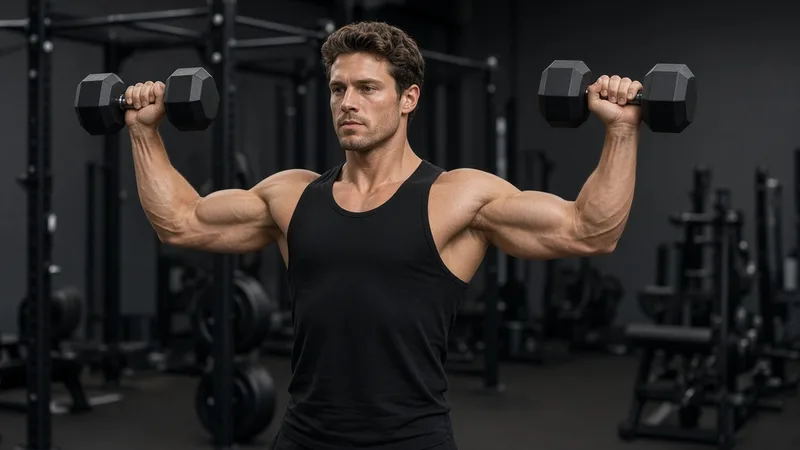
| Side delts | Lateral raise | “Push your elbows out to the walls” |
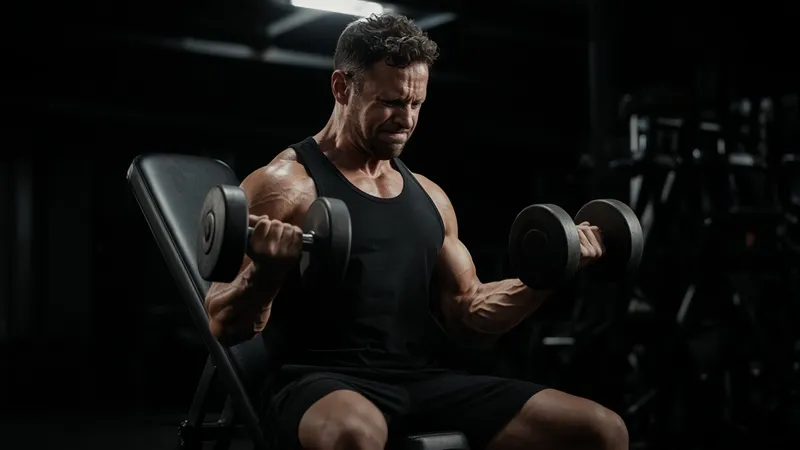
| Biceps | Biceps curl | “Squeeze the biceps hard at the top” |
| Triceps | Pushdown, overhead extension | “Straighten the elbow fully and squeeze the back of your arm” |
| Glutes | Hip thrust | “Squeeze your glutes to lock your hips” |
| Quads | Leg extension, leg press | “Squeeze the front of your thigh at the top” |
| Hamstrings | Leg curl | “Pull your heels toward your glutes with the back of your thigh” |
| Calves | Calf raise | “Pause in the stretch, then rise as high as you can” |
External cues (for heavy compounds):
| Lift | Cue |
|---|---|
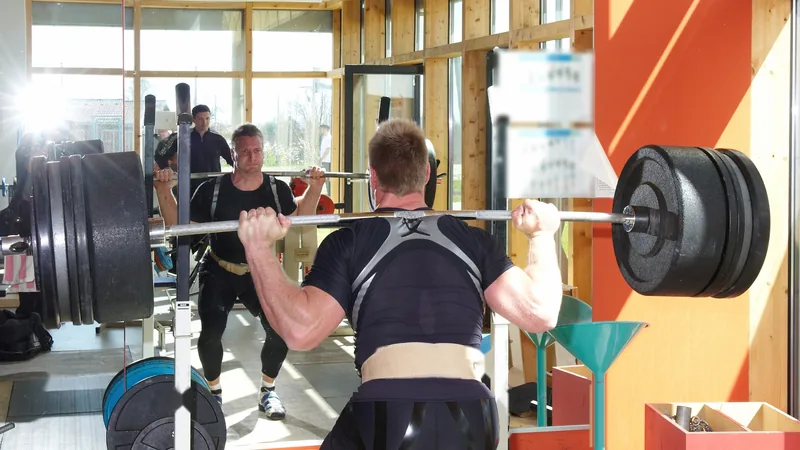
| Back squat | “Push the floor away” |
| Deadlift | “Push the floor down until the bar is locked out” |
| Bench press | “Push the bar away from you, toward the ceiling” |
| Overhead press | “Drive the bar straight up toward the ceiling” |
| Pull-up | “Pull the bar to your chest” |
The internal cues are coaching conventions. Only the general idea, focusing on the target muscle, has been studied.
How to build the connection
A practice routine you can add to the start of isolation work. It has not been tested as a method; it is our way of applying the research conditions (light loads, controlled speed):
- Pick one exercise per muscle you want to improve, ideally a machine, cable or dumbbell isolation exercise.
- Do one practice set at about 40–50% of your work weight for 10–12 reps. Lift in about 2 seconds, pause for 1 second at the hardest point and squeeze, lower in 2–3 seconds.
- Use touch if it helps. Lightly touch the target muscle with your free hand (on one-arm exercises) or ask a training partner to. Many lifters find it easier to feel a muscle that is touched. This is a coaching trick, not a studied method.
- Then do your work sets with the same focus, 10–20 reps, at 0–2 RIR.
- Switch to an external focus for the last 1–2 reps if you need to fight to finish them.
Practice sets are like warm-up sets: they stay far from failure and do not count toward your weekly volume.
The plan: 4-day upper/lower with focus labels
Each exercise is marked E (external focus) or I (internal focus). Run it as Upper A, Lower A, rest, Upper B, Lower B, rest, rest. Do one or two lighter warm-up sets before the first exercise for each muscle group.
Upper A
| # | Exercise | Focus | Sets × reps | RIR | Rest |
|---|---|---|---|---|---|
| 1 | Bench press | E | 3 × 6–8 | 2 | 2.5–3 min |
| 2 | Seated cable row | I | 3 × 8–12 | 1–2 | 2 min |
| 3 | Incline dumbbell press | E | 3 × 8–12 | 1–2 | 2 min |
| 4 | Lat pulldown | I | 3 × 10–12 | 1–2 | 2 min |
| 5 | Cable fly or pec deck | I | 2 × 12–15 | 0–1 | 1.5 min |
| 6 | Lateral raise | I | 3 × 12–20 | 0–1 | 1–1.5 min |
| 7 | EZ-bar biceps curl | I | 3 × 10–15 | 0–1 | 1.5 min |
Lower A
| # | Exercise | Focus | Sets × reps | RIR | Rest |
|---|---|---|---|---|---|
| 1 | Back squat | E | 3 × 5–8 | 2 | 3 min |
| 2 | Romanian deadlift | E | 3 × 8–10 | 2 | 2.5 min |
| 3 | Leg press | I | 3 × 10–15 | 1–2 | 2 min |
| 4 | Lying leg curl | I | 3 × 10–15 | 0–1 | 1.5 min |
| 5 | Leg extension | I | 2 × 12–15 | 0–1 | 1.5 min |
| 6 | Standing calf raise | I | 3 × 10–15 | 0–1 | 1–1.5 min |
Upper B
| # | Exercise | Focus | Sets × reps | RIR | Rest |
|---|---|---|---|---|---|
| 1 | Overhead press | E | 3 × 6–10 | 2 | 2.5 min |
| 2 | Pull-up (assisted if needed) | E | 3 × 6–10 | 1–2 | 2 min |
| 3 | Chest-supported row | I | 3 × 8–12 | 1–2 | 2 min |
| 4 | Machine chest press or dips | I | 3 × 8–12 | 1–2 | 2 min |
| 5 | Lateral raise | I | 3 × 12–20 | 0–1 | 1–1.5 min |
| 6 | Overhead triceps extension | I | 3 × 10–15 | 0–1 | 1.5 min |
| 7 | Incline dumbbell curl | I | 2 × 10–15 | 0–1 | 1.5 min |
Lower B
| # | Exercise | Focus | Sets × reps | RIR | Rest |
|---|---|---|---|---|---|
| 1 | Hip thrust | I | 3 × 8–12 | 1–2 | 2 min |
| 2 | Bulgarian split squat | E | 3 × 8–12 each leg | 1–2 | 2 min |
| 3 | Seated leg curl | I | 3 × 10–15 | 0–1 | 1.5 min |
| 4 | Leg extension | I | 3 × 12–15 | 0–1 | 1.5 min |
| 5 | Standing calf raise | I | 3 × 10–15 | 0–1 | 1–1.5 min |
Volume audit
Weekly hard sets per muscle, counted with the fractional method (1 for the main muscle, 0.5 for clear helpers, one-sided sets counted per side), compared with the common 10–20 set range from our guide to sets per week:
| Muscle | Upper A | Lower A | Upper B | Lower B | Week | Verdict |
|---|---|---|---|---|---|---|
| Quads | — | 8 | — | 6 | 14 | In range |
| Hamstrings | — | 6 | — | 3 | 9 | Slightly low; add a leg-curl set if hamstrings lag |
| Glutes | — | 4.5 | — | 4.5 | 9 | Slightly low; add a hip-thrust set if glutes are a priority |
| Chest | 8 | — | 3 | — | 11 | In range |
| Back | 6 | — | 6 | — | 12 | In range |
| Front delts | 3 | — | 4.5 | — | 7.5 | Fine; presses cover them |
| Side delts | 3 | — | 4.5 | — | 7.5 | Slightly low; add a lateral-raise set to each upper day if needed |
| Biceps | 6 | — | 5 | — | 11 | In range |
| Triceps | 3 | — | 6 | — | 9 | Slightly low; add a pushdown set to Upper A if needed |
| Calves | — | 3 | — | 3 | 6 | Low end; fine for most, add sets if calves lag |
How we counted: the squat, RDL and leg press each give 0.5 to the glutes; the Bulgarian split squat gives 0.5 to the glutes; presses give 0.5 to the front delts and triceps; the overhead press gives 0.5 to the side delts; rows, pulldowns and pull-ups give 0.5 to the biceps.
Beginner and advanced versions
- Beginner (first 6–12 months): use an external focus on everything while you learn the lifts, and add the internal focus on isolation exercises once your form is stable. Beginners were the participants in the only growth trial, so there is no reason to wait longer than that.
- Advanced: use the plan as written, and put your lagging muscle’s isolation exercise first in the session on one day per week, with a practice set and an internal focus. See exercise order for why the first slot helps.
Progression
- Double progression. When you reach the top of the rep range on all sets at the planned RIR, add the smallest available load (about 2.5 kg on barbell lifts, 1–2 kg on dumbbells and machines). See progressive overload.
- Don’t let the focus become an excuse to stay light. If the weight on an isolation exercise has not gone up in 4–6 weeks, the focus is not doing its job. Keep the cue, but push the load or reps.
- Deload every 6–8 weeks, or when reps fall two sessions in a row; see when and how to deload.
- Check the target muscle, not just the weight. Fatigue and a pump in the target muscle (rather than in your arms or lower back) is a rough sign that the focus is working. This is our rule of thumb, not a measured outcome.
Internal and external focus compared
| Approach | Target-muscle activity | Force and reps | Growth evidence | Best for |
|---|---|---|---|---|
| Internal focus (mind-muscle connection) | Higher at light to moderate loads, slow reps | Lower | One trial: more biceps growth, no extra quad growth | Isolation and machine work |
| External focus | Unchanged or higher than no cue | Higher | No growth trials | Heavy compounds, speed, finishing hard reps |
| No specific focus | Baseline | In between | No trials | Fine for most lifters most of the time |
| Mental imagery during the lift | Not measured | Higher strength in one trial | None for growth | Strength-focused athletes |
Common mistakes
- Using the mind-muscle connection on heavy squats and deadlifts. It costs force and does little at heavy loads. Fix: external cues on heavy compounds.
- Going so light that sets are no longer hard. Feeling the muscle is not a substitute for effort. Fix: keep the work sets at 0–2 RIR.
- Chasing the pump instead of progress. Fix: track loads and reps on every isolation exercise.
- Expecting to “isolate” a muscle in a compound lift. Focusing on the lats raised lat activity but did not switch off the biceps. Fix: accept that compounds train several muscles; use isolation exercises for the target.
- Moving fast and thinking about the muscle. In explosive reps, the focus made no difference. Fix: controlled reps of about 2 seconds up and 2–3 seconds down when you use an internal focus.
- Focusing on the muscle until the last rep. The effect fades near failure, and an external focus helps you finish. Fix: switch to “finish the rep” for the final 1–2 reps.
Make it better
- Combine it with long-muscle-length exercises. Overhead triceps extensions, incline curls and seated leg curls load the muscle in the stretch; an internal focus helps you keep the work there. See lengthened partials.
- Use myo-reps on isolation work. The short mini-sets of myo-reps suit an internal focus well, because each mini-set is short and controlled.
- Film one set. If the target muscle is not moving the weight on video, no amount of focus will fix the exercise choice or form.
Safety notes
- An internal focus can change your technique. On free-weight compounds, keep your form first; if a cue makes the bar path worse, drop it.
- Squeezing hard at the top of an exercise is safe for most people, but if you have high blood pressure, avoid long breath-holds while squeezing.
- If a joint hurts when you try to “feel” a muscle in a new way, stop and ask a physiotherapist.
- If you are pregnant, under 18 or have a medical condition, check with your doctor before starting a new program.
FAQ
Does the mind-muscle connection really work?
Partly. Focusing on a muscle raises its activity at light to moderate loads, and one 8-week trial found more biceps growth (12.4% vs 6.9%) with an internal focus. The same trial found no extra growth in the quads, so the evidence is promising but not proven.
Is the mind-muscle connection bro science?
No, it has research behind it, but it is often oversold. The muscle-activity studies are consistent, the growth evidence comes from one small trial in beginners, and focusing on the muscle reduces force and reps on heavy lifts.
Should I use the mind-muscle connection on compound lifts?
Mostly no. At about 80% of 1RM and above, focusing on a muscle had little effect on its activity, and an external focus gives more force and reps. Use internal focus on isolation and machine exercises instead.
How do I improve my mind-muscle connection?
Use lighter loads, controlled reps and a short pause and squeeze at the hardest point. A practice set at about 40–50% of your work weight before the work sets helps, and in one study, years of training experience were linked to better control of the triceps.
Is internal or external focus better for strength?
External. Studies found more force, faster bar speeds and more reps to failure with an external focus such as “push the bar away” than with an internal focus on the muscles.
Do beginners need the mind-muscle connection?
Not at first. Beginners should learn the lifts with simple external cues. Once your form is stable, add an internal focus on isolation exercises; the only growth trial was done in untrained men.
References
- Marchant DC. Attentional focusing instructions and force production. Front Psychol. 2010;1:210. doi:10.3389/fpsyg.2010.00210. PubMed: 21833266
- Neumann DL. A Systematic Review of Attentional Focus Strategies in Weightlifting. Front Sports Act Living. 2019;1:7. doi:10.3389/fspor.2019.00007. PubMed: 33344931
- Schoenfeld BJ, Vigotsky A, Contreras B, et al. Differential effects of attentional focus strategies during long-term resistance training. Eur J Sport Sci. 2018;18(5):705-712. doi:10.1080/17461391.2018.1447020. PubMed: 29533715 ↩
- Calatayud J, Vinstrup J, Jakobsen MD, et al. Importance of mind-muscle connection during progressive resistance training. Eur J Appl Physiol. 2016;116(3):527-33. doi:10.1007/s00421-015-3305-7. PubMed: 26700744
- Calatayud J, Vinstrup J, Jakobsen MD, et al. Influence of different attentional focus on EMG amplitude and contraction duration during the bench press at different speeds. J Sports Sci. 2018;36(10):1162-1166. doi:10.1080/02640414.2017.1363403. PubMed: 28795879
- Calatayud J, Vinstrup J, Jakobsen MD, et al. Mind-muscle connection training principle: influence of muscle strength and training experience during a pushing movement. Eur J Appl Physiol. 2017;117(7):1445-1452. doi:10.1007/s00421-017-3637-6. PubMed: 28500415
- Paoli A, Mancin L, Saoncella M, et al. Mind-muscle connection: effects of verbal instructions on muscle activity during bench press exercise. Eur J Transl Myol. 2019;29(2):8250. doi:10.4081/ejtm.2019.8250. PubMed: 31354928
- Snyder BJ, Leech JR. Voluntary increase in latissimus dorsi muscle activity during the lat pull-down following expert instruction. J Strength Cond Res. 2009;23(8):2204-9. doi:10.1519/JSC.0b013e3181bb7213. PubMed: 19826307
- Fujita RA, Silva NRS, Bedo BLS, et al. Mind-Muscle Connection: Limited Effect of Verbal Instructions on Muscle Activity in a Seated Row Exercise. Percept Mot Skills. 2020;127(5):925-938. doi:10.1177/0031512520926369. PubMed: 32448047
- Kim D, Woo J, Lee S, et al. Effects of Mind-Muscle Connection on Muscle Activity During Machine-Based Shoulder Press in Untrained Individuals. J Clin Med. 2026;15(10). doi:10.3390/jcm15103925. PubMed: 42194886
- Kosuge T, Mitsuya H, Hakkaku T, et al. Electromyographic activity during bench press differs by attentional focus strategy and sport: a cross-sectional comparison of bodybuilding, powerlifting, and paralympic powerlifting. Eur J Appl Physiol. 2026;126(6):3139-3156. doi:10.1007/s00421-026-06128-6. PubMed: 41579184
- Marchant DC, Greig M. Attentional focusing instructions influence quadriceps activity characteristics but not force production during isokinetic knee extensions. Hum Mov Sci. 2017;52:67-73. doi:10.1016/j.humov.2017.01.007. PubMed: 28142073
- Kristiansen M, Samani A, Vuillerme N, et al. External and Internal Focus of Attention Increases Muscular Activation During Bench Press in Resistance-Trained Participants. J Strength Cond Res. 2018;32(9):2442-2451. doi:10.1519/JSC.0000000000002613. PubMed: 30137029
- Calatayud J, Vinstrup J, Jakobsen MD, et al. Attentional Focus and Grip Width Influences on Bench Press Resistance Training. Percept Mot Skills. 2018;125(2):265-277. doi:10.1177/0031512517747773. PubMed: 29231125
- Grgic J, Mikulic P. Effects of Attentional Focus on Muscular Endurance: A Meta-Analysis. Int J Environ Res Public Health. 2021;19(1). doi:10.3390/ijerph19010089. PubMed: 35010348
- Marchant DC, Greig M, Bullough J, et al. Instructions to adopt an external focus enhance muscular endurance. Res Q Exerc Sport. 2011;82(3):466-73. doi:10.1080/02701367.2011.10599779. PubMed: 21957705
- Halperin I, Williams KJ, Martin DT, et al. The Effects of Attentional Focusing Instructions on Force Production During the Isometric Midthigh Pull. J Strength Cond Res. 2016;30(4):919-23. doi:10.1519/JSC.0000000000001194. PubMed: 27003451
- Marchant DC, Greig M, Scott C. Attentional focusing instructions influence force production and muscular activity during isokinetic elbow flexions. J Strength Cond Res. 2009;23(8):2358-66. doi:10.1519/JSC.0b013e3181b8d1e5. PubMed: 19826287
- Finlay M, Marchant D, Langley C, et al. Impact of attentional focus and action verbs on bench press performance. Hum Mov Sci. 2025;102:103385. doi:10.1016/j.humov.2025.103385. PubMed: 40602018
- Halperin I, Vigotsky AD. The mind-muscle connection in resistance training: friend or foe? Eur J Appl Physiol. 2016;116(4):863-4. doi:10.1007/s00421-016-3341-y. PubMed: 26896956
- Vigotsky AD, Halperin I, Lehman GJ, et al. Interpreting Signal Amplitudes in Surface Electromyography Studies in Sport and Rehabilitation Sciences. Front Physiol. 2017;8:985. doi:10.3389/fphys.2017.00985. PubMed: 29354060
- Piveteau É, Guillot A, Di Rienzo F. New insights on mind-muscle connection: Motor imagery concomitant to actual resistance training enhances force performance. J Sci Med Sport. 2025;28(8):666-675. doi:10.1016/j.jsams.2025.03.005. PubMed: 40216565