Exercise Order: Does What You Do First Matter for Growth?
Exercise order explained: what 11 trials say about compounds vs isolation first, why the first lift gets stronger and a 4-day plan that rotates the order.
Key takeaways
- For muscle growth, order matters little: a meta-analysis of 11 trials found no difference between compounds first and isolation exercises first (Nunes et al., 2021).
- For strength, the first exercise wins: compound lifts gained more when done first, and isolation lifts gained more when done first.
- Every exercise loses reps when it comes later in a session. In trained women, reps per set were always lower when an exercise was done later (Simão et al., 2007).
- Our default: heavy, technical compounds first, then smaller compounds, then isolation work. Put a priority or lagging muscle first when it needs it.
- Rotate the order between sessions so each main lift gets a fresh slot each week. This is our convention, not a tested rule.
- Lift before cardio if strength matters: lifting first gave about 7% more lower-body strength, with no difference in muscle growth (Eddens et al., 2018).
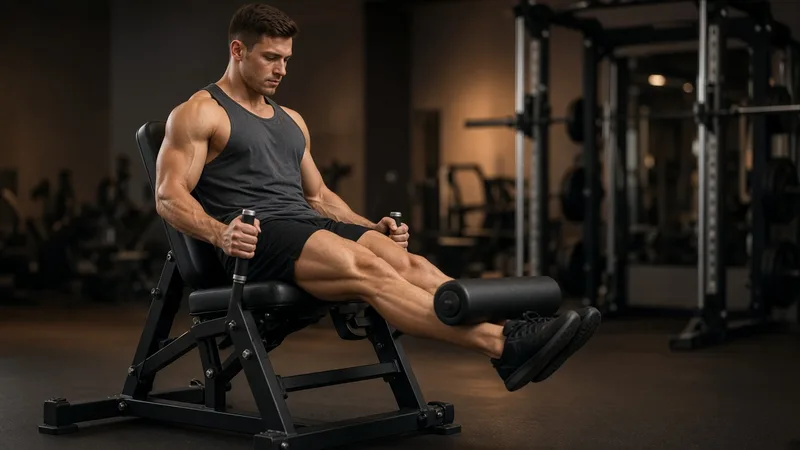
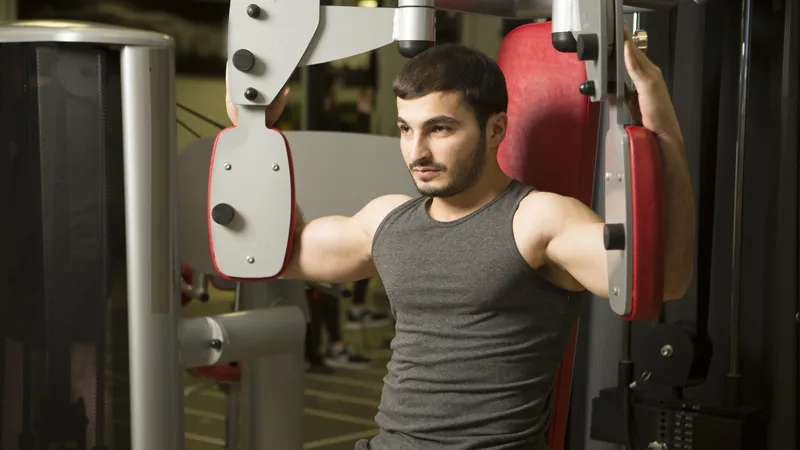
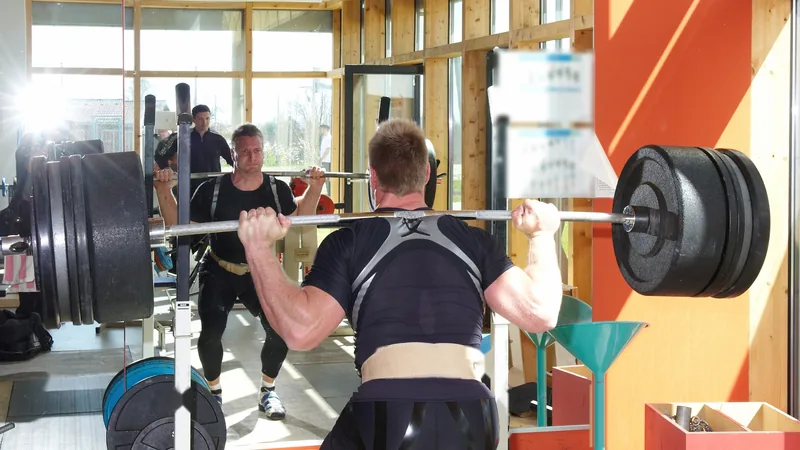
Exercise order is the sequence of exercises in a session. The classic rule says big lifts first, small lifts last: squats before leg extensions, bench presses before triceps work. It is a sensible rule, but is it a rule for muscle growth, for strength, or just for comfort?
This guide covers what the training studies found, why the first exercise of the day gets an edge, when breaking the rule makes sense, how to rotate your order across the week, and a complete 4-day upper/lower plan with a volume audit. It is part of our Training Methods section; for how a session fits into the week, see our pillar on every training split.
Evidence in one line: order shapes which lifts get stronger, but it does not measurably change muscle growth, as long as you still do your hard sets.
What this page covers. This is the general guide to ordering exercises. Doing an isolation exercise straight before a compound for the same muscle is a special case with its own page: pre-exhaust training. Pairing two exercises back to back is covered in supersets.
Key terms
- Compound (multi-joint) exercise: a lift that moves several joints, for example a squat, bench press or row.
- Isolation (single-joint) exercise: a lift that moves one joint, for example a leg extension, curl or lateral raise.
- Hard set: a work set taken close to failure. We count sets that end 0–3 reps in reserve (RIR); see training to failure vs RIR.
- 1RM (one-rep max): the heaviest weight you can lift once.
- Muscle thickness: a measure of muscle size taken with ultrasound.
- Priority principle: the idea that the exercise that matters most should come first, whatever its size.
Why order matters at all
Fatigue builds up during a session. Each set leaves a little behind, both in the muscles you just trained and in your body as a whole. So the later an exercise comes, the fewer reps you get with the same weight:
- In 23 women with at least 2 years of training, 3 sets to failure at 80% of 1RM were done in two opposite orders. The number of reps per set was always lower when an exercise came later, for big and small exercises alike. Ratings of effort did not differ (Simão et al., 2007).
- In 10 trained participants, reversing the order of six exercises changed the total reps for triceps extensions, leg extensions and leg curls. Markers of muscle damage did not differ between orders (Chaves et al., 2013).
- In 12 male adolescents, the small exercises (triceps extension, curl) got more reps when done first, and the bench press and row got more reps when done first (Balsamo et al., 2013).
A review of the order studies summed it up: total reps, and therefore volume, are greater for an exercise placed at the start of a session, regardless of how much muscle it uses. The authors recommended ordering exercises by priority for the training goal (Simão et al., 2012).
Fewer reps with the same weight does not have to mean less growth. You can lower the weight for later exercises and still take each set close to failure. Growth tends to increase as sets end closer to failure (Robinson et al., 2024), and a hard set later in the session is still a hard set. That is the key to the research below.
What the research says
The meta-analysis
Nunes et al. (2021) pooled 11 good-to-excellent quality studies that compared compound-first and isolation-first orders over several weeks:
- Strength in compound lifts improved more when the session started with compounds (effect size 0.32).
- Strength in isolation lifts improved more when the session started with isolation exercises (effect size 0.58 in favour of isolation first).
- Across all strength tests, there was no overall difference (−0.11).
- For muscle growth, there was no effect of order (effect size 0.03, p = 0.86).
The authors concluded that strength gains are largest in the exercises done at the start of a session, and that both orders may give similar muscle growth.
The individual trials
- Spineti et al. (2010): participants trained for 12 weeks (nonlinear periodisation), starting either with bench press and lat pulldown or with curls and triceps extensions. Bench press strength rose more when the bench press came first; pulldown, triceps extension and curl strength rose more when the small exercises came first. Triceps volume increased only in the small-first group; biceps volume did not differ. The authors concluded that an important exercise should be done first, whether it trains a large or a small muscle.
- Dias et al. (2010): in untrained young men, both orders raised 1RM by 16.3–77.8% over 8 weeks. Only the small-muscle exercises differed between the groups.
- Assumpção et al. (2013): in 16 trained men over 6 weeks, 1RM rose in all exercises in both groups, with no significant difference. Effect sizes favoured the bench press and pulldown when done first, and the triceps extension and curl when done first.
- Avelar et al. (2019): 36 young men trained for 6 weeks in either order. Biceps thickness grew about the same (+14.2% vs +13.8%). Mid-thigh thickness rose significantly only with compounds first (+7.2% vs +3.9%), a hint, not proof, that the big lower-body lifts benefit from going first.
- Brandão et al. (2020): 43 young men did bench press plus lying triceps press in either order, or one of the two exercises alone. Order made no difference, but the combination did: the bench press alone did not significantly grow the triceps, and the long head of the triceps grew more when the isolation exercise was included. What you do matters more than the order you do it in.
- Dib et al. (2020): 45 trained women aged 60 and over did 12 weeks with compounds first, isolation first or alternating upper and lower body. All three groups gained similar strength, muscle mass and physical function.
- Cunha et al. (2023): 61 trained older women in four different orders (compound or isolation first, upper or lower body first), with a crossover after detraining. All orders improved strength, body composition, function, blood markers and mental health similarly.
Pre-exhaust: the extreme case
Pre-exhaust puts an isolation exercise directly before a compound for the same muscle. In the newest trial, 48 young trained adults did 8 weeks of leg training either way. Muscle size and body composition changes slightly favoured traditional order, with statistical uncertainty; strength and endurance were similar (Hermann et al., 2026). One author formerly served on the scientific advisory board of a fitness-equipment maker, and another owns a fitness coaching company (Built With Science). See pre-exhaust training for the full picture.
Lower body first or upper body first?
There is little research. In 15 trained older women, starting with lower-body exercises gave a lower average effort rating for the whole session (6.3–6.7 vs 7.1–7.2), with the same total volume when loads were adjusted for each position (Nunes et al., 2019). In younger and older women, order did not change total oxygen uptake, and effort ratings differed by order only in the older group (Farinatti et al., 2013).
Lifting and cardio in the same session
A meta-analysis of 10 concurrent-training studies (5 weeks or longer) found that lifting before endurance work gave more lower-body dynamic strength (6.91% more), but no difference in lower-body muscle growth, aerobic fitness or body fat (Eddens et al., 2018). If strength matters, lift first. For more, see the interference effect.
Evidence grade and gaps
Moderate. The finding that the first exercise gains the most strength is consistent across trials and the meta-analysis. The finding that order does not change growth is also consistent, but most trials measured only a few muscles (often the arms), lasted 6–12 weeks and used untrained men, recreationally trained men or older women. Very few research participants are elite: in 26 highly cited reviews on training variables, including exercise order, only 2.3% of 18,574 participants were highly trained or elite athletes (Fry et al., 2026). So the order question for very advanced lifters is not settled.
Our rules for ordering a session
These are our conventions, built on the research above:
- Heavy, technical compounds first. Squats, deadlifts, bench and overhead presses, and rows need the most skill and carry the most injury risk when you are tired. They are also where the strength research favours going first.
- Then smaller compounds, then isolation work. A typical order: main compound → second compound → machine or dumbbell compound → isolation.
- Put a priority muscle first when it needs it. If your arms or side delts lag, start one session a week with them. You may lose a little on the compound that follows; you will not lose growth elsewhere if you still do your hard sets.
- Rotate the first slot. In an upper/lower split, start Upper A with a press and Upper B with a pull, and Lower A with a squat and Lower B with hamstrings. Each main lift gets a fresh start at least once a week.
- Adjust the weight, not the effort. Later exercises get lighter weights at the same RIR. Write down the weight you use for each exercise in its position; if you change the order, it will change.
- Keep the order stable within a block. Changing order every session makes it hard to tell whether you are progressing. Change it between blocks of 4–8 weeks.
- Lift before cardio when both are in one session and strength matters.
Decision table
| Your situation | Start the session with | Why |
|---|---|---|
| You want a bigger squat, bench or deadlift | That lift | Strength gains are largest in the first exercise |
| A muscle is lagging (arms, side delts, calves) | That muscle’s exercise, once a week | Priority principle; growth elsewhere is unchanged by order |
| A joint hurts under heavy load | A light isolation exercise for the area, as warm-up | Lets you use lighter weights on the compound; see pre-exhaust |
| Short session, full body | Lower-body compound, then supersets | Lower-body first felt easier in one trial; supersets save time |
| You do cardio and lifting together | The lifting | More strength, same growth |
The plan: 4-day upper/lower with a rotating order
Upper A starts with chest, Upper B with back and shoulders, Lower A with the squat and Lower B with the hamstrings and glutes. Run it as Upper A, Lower A, rest, Upper B, Lower B, rest, rest (or any 4 days with a rest day between pairs). Do one or two lighter warm-up sets before the first exercise for each muscle group.
Upper A (chest first)
| # | Exercise | Sets × reps | RIR | Rest |
|---|---|---|---|---|
| 1 | Bench press | 3 × 5–8 | 2 | 2.5–3 min |
| 2 | Seated cable row | 3 × 8–12 | 1–2 | 2 min |
| 3 | Incline dumbbell press | 4 × 8–12 | 1–2 | 2 min |
| 4 | Lat pulldown | 3 × 8–12 | 1–2 | 2 min |
| 5 | Lateral raise | 3 × 12–20 | 0–1 | 1–1.5 min |
| 6 | Overhead triceps extension | 2 × 10–15 | 0–1 | 1–1.5 min |
| 7 | Incline dumbbell curl | 2 × 10–15 | 0–1 | 1–1.5 min |
Lower A (squat first)
| # | Exercise | Sets × reps | RIR | Rest |
|---|---|---|---|---|
| 1 | Back squat | 3 × 5–8 | 2 | 3 min |
| 2 | Romanian deadlift | 3 × 8–10 | 2 | 2.5 min |
| 3 | Bulgarian split squat | 2 × 8–12 each leg | 1–2 | 2 min |
| 4 | Lying leg curl | 3 × 10–15 | 0–1 | 1.5 min |
| 5 | Standing calf raise | 3 × 10–15 | 0–1 | 1–1.5 min |
Upper B (back and shoulders first)
| # | Exercise | Sets × reps | RIR | Rest |
|---|---|---|---|---|
| 1 | Barbell row | 3 × 6–10 | 2 | 2.5 min |
| 2 | Overhead press | 3 × 6–10 | 2 | 2.5 min |
| 3 | Pull-up (assisted if needed) | 3 × 6–10 | 1–2 | 2 min |
| 4 | Dips or machine chest press | 3 × 8–12 | 1–2 | 2 min |
| 5 | EZ-bar biceps curl | 3 × 10–12 | 0–1 | 1.5 min |
| 6 | Triceps pushdown | 2 × 10–15 | 0–1 | 1–1.5 min |
| 7 | Lateral raise | 3 × 12–20 | 0–1 | 1–1.5 min |
Lower B (hamstrings and glutes first)
| # | Exercise | Sets × reps | RIR | Rest |
|---|---|---|---|---|
| 1 | Seated leg curl | 4 × 10–15 | 1 | 1.5 min |
| 2 | Hip thrust | 3 × 8–12 | 1–2 | 2 min |
| 3 | Leg press | 3 × 8–12 | 1–2 | 2–2.5 min |
| 4 | Leg extension | 3 × 12–15 | 0–1 | 1.5 min |
| 5 | Standing calf raise | 3 × 10–15 | 0–1 | 1–1.5 min |
Starting Lower B with leg curls means the leg press comes third. Expect to use less weight on it than on a day when it comes first, and log it separately.
Volume audit
Weekly hard sets per muscle, counted with the fractional method (1 for the main muscle, 0.5 for clear helpers, one-sided sets counted per side), compared with the common 10–20 set range from our guide to sets per week:
| Muscle | Upper A | Lower A | Upper B | Lower B | Week | Verdict |
|---|---|---|---|---|---|---|
| Quads | — | 5 | — | 6 | 11 | In range |
| Hamstrings | — | 6 | — | 4 | 10 | In range |
| Glutes | — | 4 | — | 4.5 | 8.5 | Slightly low; add a hip-thrust set if glutes are a priority |
| Chest | 7 | — | 3 | — | 10 | In range |
| Back | 6 | — | 6 | — | 12 | In range |
| Front delts | 3.5 | — | 4.5 | — | 8 | Fine; presses cover them |
| Side delts | 3 | — | 4.5 | — | 7.5 | Slightly low; add a lateral-raise set to each upper day if needed |
| Biceps | 5 | — | 6 | — | 11 | In range |
| Triceps | 5.5 | — | 5 | — | 10.5 | In range |
| Calves | — | 3 | — | 3 | 6 | Low end; fine for most, add sets if calves lag |
Arms-first variant (specialization)
If your arms lag, swap Upper B for this order for one 6–8 week block: EZ-bar curl 3 × 10–12 → triceps pushdown 3 × 10–15 → barbell row → overhead press → pull-up → dips → lateral raise. In the order trials, the small exercises done first gained more strength, and arm growth was similar either way (Spineti et al., 2010; Assumpção et al., 2013). Expect the row and press to feel a little heavier than usual. See specialization phases for a full plan.
Progression
- Double progression per exercise, in its slot. When you hit the top of the rep range on all sets at the planned RIR, add the smallest available load next time (about 2.5 kg on barbell lifts, 1–2 kg on dumbbells and isolation work). This is our standard rule; see progressive overload.
- Track each lift by position. A leg press done third is a different benchmark from a leg press done first.
- Keep the order fixed for the block (4–8 weeks), then rotate priorities if you want to.
- Deload every 6–8 weeks, or when reps fall two sessions in a row; see when and how to deload.
- After a stall on a main lift, move it to the first slot of its day for the next block.
Exercise orders compared
| Order | Strength | Growth | Best for |
|---|---|---|---|
| Compounds first (classic) | Best for the compounds | Similar | Most lifters, most of the time |
| Isolation first | Best for the isolation lifts | Similar | Lagging small muscles, sore joints |
| Pre-exhaust (isolation straight into compound) | Similar | Similar or slightly less | Special cases only |
| Alternating upper/lower | Similar | Similar | Full-body sessions, supersets |
| Rotating priority (our plan) | Each main lift gets a first slot | Similar | Intermediate lifters with several goals |
Common mistakes
- Thinking order is a growth hack. Fix: get your weekly hard sets right first; order fine-tunes strength.
- Doing heavy squats or deadlifts at the end, tired. Fix: keep heavy, technical lifts early unless you deliberately lower the load.
- Leaving the lagging muscle for last, every session. Fix: give it the first slot at least once a week.
- Comparing weights across different positions. Fix: log each exercise by its position in the session.
- Changing the order every workout. Fix: keep it fixed for a block so you can see progress.
- Easing off the effort on late exercises. Fix: lower the weight but keep the RIR target; a late hard set still counts.
- Doing long cardio before a heavy lifting session. Fix: lift first, or split them into separate sessions.
Make it better
- Use the first slot for long-length work on a lagging muscle: an overhead triceps extension or a seated leg curl first, while you are fresh.
- Superset the late isolation work to save time; see supersets.
- Warm up specifically. One or two lighter sets of the first exercise are usually enough; more in our guide to warm-up sets.
Safety notes
- Heavy, technical lifts done late in a session, when you are tired, need lighter weights and strict technique. Use safety bars or a spotter on squats and bench presses.
- If you have a joint injury, ask a physiotherapist before you load it heavily, whatever the order.
- If you are pregnant, under 18 or have a medical condition, check with your doctor before starting a new program.
FAQ
Should I do compound or isolation exercises first?
Compounds first is a good default, mainly for strength and technique. For muscle growth, a meta-analysis of 11 trials found no difference between the two orders, as long as you still do your hard sets.
Does exercise order matter for hypertrophy?
Not measurably in the research so far. The order trials found similar growth with compounds first or isolation first. Order mainly decides which lifts get the most reps and the biggest strength gains.
Should I train big muscles before small muscles?
Usually, yes, because big lifts are heavier and more technical. But if a small muscle is your priority, train it first. Small exercises done first gained more strength in several trials, and growth was similar.
Should I do legs or upper body first in a full-body workout?
There is little research. In one study of trained older women, starting with lower-body exercises made the whole session feel slightly easier, with the same total volume. Start with whichever lift you most want to improve.
Should I do cardio before or after weights?
After, if strength matters. A meta-analysis found about 7% more lower-body strength gain when lifting came before endurance work, with no difference in muscle growth.
Should I change my exercise order regularly?
Change it between training blocks, not every session. A fixed order makes progress easy to track. Rotating which lift goes first across the week, as in our plan, gives each main lift a fresh slot.
References
- Simão R, Farinatti Pde T, Polito MD, et al. Influence of exercise order on the number of repetitions performed and perceived exertion during resistance exercise in women. J Strength Cond Res. 2007;21(1):23-8. doi:10.1519/00124278-200702000-00005. PubMed: 17313265
- Chaves CP, Simão R, Miranda H, et al. Influence of exercise order on muscle damage during moderate-intensity resistance exercise and recovery. Res Sports Med. 2013;21(2):176-86. doi:10.1080/15438627.2012.738439. PubMed: 23541104
- Balsamo S, Tibana RA, Nascimento Dda C, et al. Exercise order influences number of repetitions and lactate levels but not perceived exertion during resistance exercise in adolescents. Res Sports Med. 2013;21(4):293-304. doi:10.1080/15438627.2013.825794. PubMed: 24067116
- Simão R, de Salles BF, Figueiredo T, et al. Exercise order in resistance training. Sports Med. 2012;42(3):251-65. doi:10.2165/11597240-000000000-00000. PubMed: 22292516
- Robinson ZP, Pelland JC, Remmert JF, et al. Exploring the Dose-Response Relationship Between Estimated Resistance Training Proximity to Failure, Strength Gain, and Muscle Hypertrophy: A Series of Meta-Regressions. Sports Med. 2024;54(9):2209-2231. doi:10.1007/s40279-024-02069-2. PubMed: 38970765
- Nunes JP, Grgic J, Cunha PM, et al. What influence does resistance exercise order have on muscular strength gains and muscle hypertrophy? A systematic review and meta-analysis. Eur J Sport Sci. 2021;21(2):149-157. doi:10.1080/17461391.2020.1733672. PubMed: 32077380 ↩
- Spineti J, de Salles BF, Rhea MR, et al. Influence of exercise order on maximum strength and muscle volume in nonlinear periodized resistance training. J Strength Cond Res. 2010;24(11):2962-9. doi:10.1519/JSC.0b013e3181e2e19b. PubMed: 20938358 ↩
- Dias I, de Salles BF, Novaes J, et al. Influence of exercise order on maximum strength in untrained young men. J Sci Med Sport. 2010;13(1):65-9. doi:10.1016/j.jsams.2008.09.003. PubMed: 19243993 ↩
- Assumpção CO, Tibana RA, Viana LC, et al. Influence of exercise order on upper body maximum and submaximal strength gains in trained men. Clin Physiol Funct Imaging. 2013;33(5):359-63. doi:10.1111/cpf.12036. PubMed: 23701174 ↩
- Avelar A, Ribeiro AS, Nunes JP, et al. Effects of order of resistance training exercises on muscle hypertrophy in young adult men. Appl Physiol Nutr Metab. 2019;44(4):420-424. doi:10.1139/apnm-2018-0478. PubMed: 30248269 ↩
- Brandão L, de Salles Painelli V, Lasevicius T, et al. Varying the Order of Combinations of Single- and Multi-Joint Exercises Differentially Affects Resistance Training Adaptations. J Strength Cond Res. 2020;34(5):1254-1263. doi:10.1519/JSC.0000000000003550. PubMed: 32149887 ↩
- Dib MM, Tomeleri CM, Nunes JP, et al. Effects of Three Resistance Exercise Orders on Muscular Function and Body Composition in Older Women. Int J Sports Med. 2020;41(14):1024-1031. doi:10.1055/a-1192-5205. PubMed: 32688414 ↩
- Cunha PM, Nunes JP, Werneck AO, et al. Effect of Resistance Exercise Orders on Health Parameters in Trained Older Women: A Randomized Crossover Trial. Med Sci Sports Exerc. 2023;55(1):119-132. doi:10.1249/MSS.0000000000003030. PubMed: 36044330 ↩
- Hermann T, Mohan AE, Piñero A, et al. Front-Loading Fatigue: Does the Pre-exhaustion Method influence Resistance Training-induced Muscular Adaptations? Int J Exerc Sci. 2026;19(1):1008. doi:10.70252/IJES2026108. PubMed: 42516618
- Nunes JP, Marcori AJ, Tomeleri CM, et al. Starting the Resistance-Training Session with Lower-Body Exercises Provides Lower Session Perceived Exertion without Altering the Training Volume in Older Women. Int J Exerc Sci. 2019;12(4):1187-1197. doi:10.70252/NNCJ3157. PubMed: 31839851
- Farinatti PT, da Silva NS, Monteiro WD. Influence of exercise order on the number of repetitions, oxygen uptake, and rate of perceived exertion during strength training in younger and older women. J Strength Cond Res. 2013;27(3):776-85. doi:10.1519/JSC.0b013e31825d9bc1. PubMed: 22648138
- Eddens L, van Someren K, Howatson G. The Role of Intra-Session Exercise Sequence in the Interference Effect: A Systematic Review with Meta-Analysis. Sports Med. 2018;48(1):177-188. doi:10.1007/s40279-017-0784-1. PubMed: 28917030
- Fry AC, Schechter EGK, Johnson QR, et al. Tons of Resistance Exercise Research, But Does it Apply to Highly Trained Athletes? J Strength Cond Res. 2026. Online ahead of print. doi:10.1519/JSC.0000000000005603. PubMed: 42417489