Barbell Back Squat
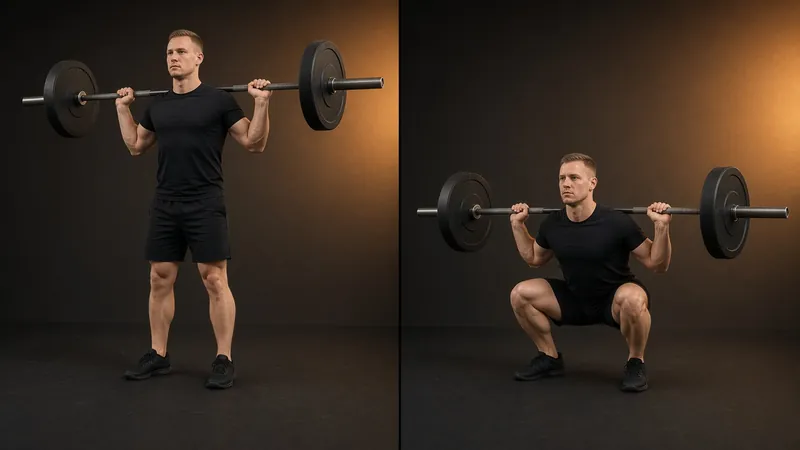
How to barbell back squat with good form: setup, step-by-step technique, coaching cues, common mistakes, muscles worked, variations and how to program it for muscle growth.
Primary muscles
Secondary muscles
Equipment
Barbell, squat rack
Level
Beginner–advanced
Setup
- Set the bar in the rack at about mid-chest height so you can unrack it with a small knee extension.
- Step under the bar and place it on your upper traps (high-bar) or a few centimetres lower across the rear delts (low-bar). Grip just outside your shoulders.
- Pull your shoulder blades together and squeeze the bar into your back to create a firm 'shelf'.
- Stand up to unrack, take two or three short steps back, and set your feet about shoulder-width apart with toes turned out 15–30°.
Step by step
- Brace: take a big breath into your belly and tighten your midsection as if about to be punched.
- Descend: break at the hips and knees together. Push your knees out in line with your toes and sit down between your heels.
- Hit depth: lower until your hip crease is at least level with the top of your knees — deeper if you can keep a neutral spine.
- Drive up: push the floor away through your whole foot, keeping the bar over mid-foot and your chest up.
- Lock out: finish by standing tall with your hips and knees fully extended. Breathe out at the top, re-brace, and repeat.
Coaching cues
- “Spread the floor” — knees out over the toes.
- “Chest up, bar over mid-foot.”
- “Big breath, then go.”
- “Drive your upper back into the bar” on the way up.
Common mistakes and fixes
Variations
| Variation | Why use it |
|---|---|
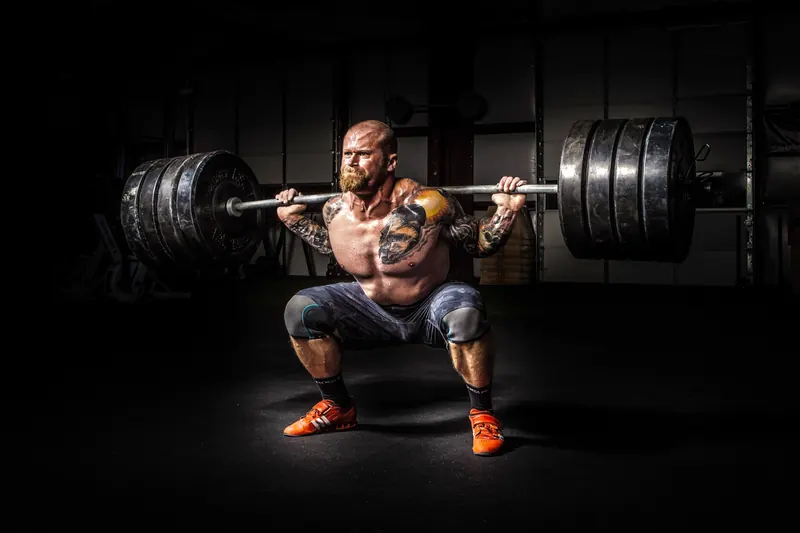
| High-bar back squat | More upright torso and more knee bend — a strong quad builder. |
| Low-bar back squat | More forward lean and hip involvement; often allows heavier loads. Popular with powerlifters. |
| Front squat | Bar on the front delts; very upright and quad-dominant; less load on the lower back. |
| Goblet squat | Dumbbell or kettlebell held at the chest — ideal for learning the pattern. |
| Pause squat | 2–3 s pause in the bottom to build strength and control out of the hole. |
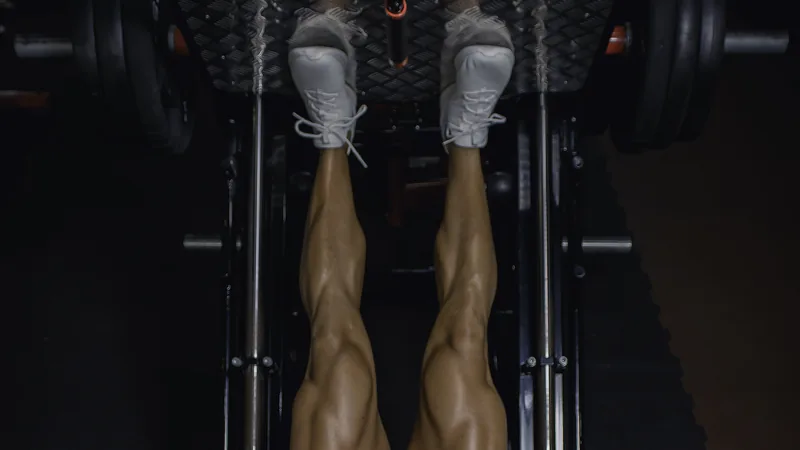
| Hack squat / leg press | Machine options that train the quads hard with less need for balance and bracing. |
How to program it
For muscle growth, use 3–5 sets of 5–10 reps with 1–3 reps in reserve, resting 2–4 minutes. Squat 1–2 times a week as part of 10–20 weekly sets for the quads. Use double progression: when you can do all sets at the top of your rep range, add 2.5–5 kg. See our PPL program for a complete plan.
How deep should you squat?
Evidence note: In a 10-week trial (two sessions a week), Kubo et al. (2019) randomized 17 men to full squats or half squats and measured muscle volume by MRI. Full squats grew the gluteus maximus (+6.7% vs +2.2%) and adductors (+6.2% vs +2.7%) more, while the knee extensors grew similarly (+4.9% vs +4.6%). Neither group’s hamstrings or rectus femoris grew measurably. The study was small, so treat it as supportive evidence rather than proof.
The practical takeaway: if your goal is overall leg and glute development, squat as deep as you can while keeping good form. If mobility limits you, work on depth gradually with goblet squats and pause squats, and use partial-range work as an addition — not a replacement.
Is the squat dangerous for your knees?
For healthy lifters, squatting with progressive loads and good technique is a normal training stimulus — knees travelling past the toes is natural and often necessary for depth. If you have pain, reduce the load and range of motion, and consult a qualified health professional.
Reference
Kubo K, Ikebukuro T, Yata H. Effects of squat training with different depths on lower limb muscle volumes. Eur J Appl Physiol. 2019;119(9):1933-1942. doi:10.1007/s00421-019-04181-y. PubMed: 31230110