The Texas Method Explained: Volume, Recovery and Intensity Days
Texas Method explained: the volume, recovery and intensity days, how to run it after a beginner program, what research says, and a Texas plan for size.
Key takeaways
- The Texas Method is a three-day weekly cycle: Monday 5×5 at about 90% of your 5-rep max, Wednesday a light recovery day, Friday a new 5-rep record.
- It is an intermediate strength program for lifters who can no longer add weight every session, typically after StrongLifts or Starting Strength.
- Weekly changes in volume and intensity gave more 1RM strength than linear progression in trained lifters in a 35-study meta-analysis, but the same muscle growth (Moesgaard et al., 2022).
- By our count, the classic template gives the quads about 6 hard sets a week, chest about 3, lats and biceps 3, and side delts, rear delts and calves none.
- For size, keep the three-day rhythm and add 2–4 accessory exercises per session. Our template brings most muscles to roughly 6–12 weekly sets.
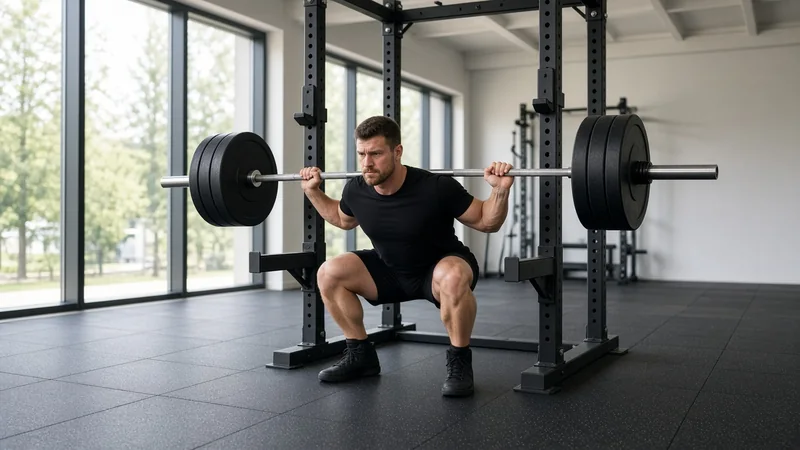
The Texas Method is one of the best-known “next step” programs after a beginner routine. Instead of adding weight to the bar every workout, you organise the week around three different days: a hard volume day, an easy recovery day, and an intensity day where you try to set a new five-rep record. Strength coach Mark Rippetoe, who runs a gym in Wichita Falls, Texas, popularised it in Practical Programming for Strength Training (with Lon Kilgore, and in later editions Andy Baker).
This guide explains how the program works, what the research says about its main ideas, counts the weekly sets each muscle actually gets, and gives you a Texas Method for size template that keeps the strength focus while training every muscle properly. For how it compares with every other option, see our guide to every training split. If you are coming from a beginner program, read our 5×5 guide first.
Who the Texas Method is for
Beginner programs such as StrongLifts 5×5 and Starting Strength add weight every session. That works for months, but eventually the jumps stop. Rippetoe calls the next stage the intermediate lifter: someone who needs a whole week of training stress and recovery to set a new record.
The Texas Method fits you if:
- you have stalled on a session-to-session program at least two or three times,
- you train three days a week,
- your main goal is barbell strength on the squat, bench press, overhead press and deadlift,
- you are willing to eat and sleep enough to recover from a very hard Monday.
If your main goal is muscle size, read the volume audit below before you start. The classic program is built for strength.
How the classic Texas Method works
We summarise the program from Rippetoe’s Starting Strength article on the Texas Method and from Practical Programming. Please use those sources for the author’s full rules.
Monday: volume day
| Exercise | Sets × reps | Load |
|---|---|---|
| Back squat | 5 × 5 | About 90% of your current 5RM |
| Bench press or overhead press (alternate weeks) | 5 × 5 | About 90% of your 5RM |
| Deadlift | 1 × 5 | One heavy set that should go up each week |
Rippetoe’s rule for the load is that you should be able to finish all 25 reps, using rest of up to 8–10 minutes between sets if needed. The deadlift is a single set because, in his experience, most lifters can’t recover from more than one heavy set after 5 × 5 squats.
Wednesday: recovery day
| Exercise | Sets × reps | Load |
|---|---|---|
| Back squat | 2 × 5 | About 80% of Monday’s weight |
| The press you did not do for volume on Monday | 3 × 5 | A little lighter than its last 5 × 5 |
| Pull-ups or chin-ups | 3 sets | Close to failure |
| Back extensions or glute-ham raises | 5 × 10 | Light; optional |
The point of Wednesday is to practise the lifts and keep blood flowing without adding fatigue. Rippetoe treats chin-ups as the main arm and lat work in the program.
Friday: intensity day
| Exercise | Sets × reps | Load |
|---|---|---|
| Back squat | 1 × 5 | A new 5RM, or within about 2% of it |
| Bench press or overhead press | 1 × 5 | A new 5RM |
| Power cleans (or power snatches) | Low-rep sets | Fast, explosive pulls |
A common way to run the presses: in week A, bench press 5 × 5 on Monday, overhead press 3 × 5 on Wednesday, and a bench press record on Friday; in week B, swap them.
When Friday records stop
A Starting Strength article on intensity-day programming notes that new 5RMs every week usually last for only about 4–8 weeks. Then the intensity day moves to heavier, lower-rep work: two triples, then doubles, then singles, and later a rotating 3-week wave of 3s, 2s and 1s. Monday stays at 5 × 5.
What the research says
No study has tested the Texas Method as a named program. Here is what research says about its key ideas.
1. Varying volume and intensity within the week
The Texas Method is a form of weekly undulating training: high volume early in the week, low intensity mid-week, high intensity at the end.
- Moesgaard et al. (2022) pooled 35 volume-equated studies. Periodised training gave more 1RM strength than non-periodised training, and undulating periodisation gave more 1RM strength than linear periodisation, but only in trained participants. Muscle growth did not differ between any of the models.
- Grgic et al. (2017) compared linear and daily undulating periodisation in 13 studies and found no difference in muscle hypertrophy.
Takeaway: undulating structures like the Texas Method are a reasonable way for trained lifters to keep getting stronger. They do not, by themselves, build more muscle.
2. Heavy sets of five
- Heavy loads build more 1RM strength than light loads, while muscle growth is similar across a wide range of loads when sets are hard (Schoenfeld et al., 2017, 21 studies; Lopez et al., 2021, 28 studies).
- In well-trained men, 7 sets of 3RM and 3 sets of 10RM produced similar biceps growth over 8 weeks, but the heavy group gained more bench-press strength (Schoenfeld et al., 2014). That study matched total volume load, so the heavy group did more than twice as many sets.
Takeaway: sets of five are a good strength tool, and they build muscle too, as long as you do enough hard sets.
3. Weekly volume
Muscle growth rises with the number of weekly hard sets per muscle: in a 15-study meta-regression, each extra weekly set added about 0.37% to the percentage gain (Schoenfeld, Ogborn and Krieger, 2017). This is where the classic Texas Method falls short for bodybuilding goals (see the audit below).
4. Training frequency
When weekly volume is matched, training a muscle more often does not meaningfully change hypertrophy (Schoenfeld et al., 2019, 25 studies). For strength, higher frequency seems to help mainly because it allows more volume (Grgic et al., 2018, 22 studies). Squatting three times a week is a good way to accumulate practice and volume, not a magic number.
5. Not training to failure on the heavy lifts
The Monday sets at about 90% of 5RM leave a rep or two in reserve. A 2024 meta-regression found that strength gains were similar across a wide range of reps in reserve, while hypertrophy improved as sets got closer to failure (Robinson et al., 2024). That supports sub-maximal heavy work for strength, and harder sets on accessories for size.
6. Practising the heavy lift
In one study, untrained adults who mainly practised a 1RM test gained similar 1RM strength to a group doing higher-volume training (Mattocks et al., 2017). It suggests the Friday “test” is itself a strong strength stimulus, although the population was untrained, so it doesn’t prove the effect in intermediates.
Evidence grade
| Program element | Evidence | Grade |
|---|---|---|
| Undulating volume/intensity for strength (trained) | Meta-analysis | Moderate |
| Same for hypertrophy | Meta-analyses show no advantage | Moderate (no benefit) |
| Heavy sets of 5 for strength | Multiple meta-analyses | Strong |
| Weekly 5RM tests as the progression engine | Coaching experience | No direct evidence |
| The Texas Method as a whole | Never studied | No direct evidence |
Weekly volume audit
We counted hard sets per muscle per week for the classic program (our own analysis). Rules: Monday and Friday work sets count as 1; Wednesday’s light squats and presses at about 80–90% of an already sub-maximal load count as 0; chin-ups count as 1 for lats and biceps; the deadlift counts as 1 for glutes and spinal erectors and 0.5 for hamstrings; every press counts 1 for front delts and 0.5 for triceps, and bench presses count 1 for chest. Bench and press alternate, so chest and shoulder figures are two-week averages.
| Muscle | Hard sets/week (classic) | Evidence range for growth |
|---|---|---|
| Quads | ~6 | 10–20 |
| Glutes | ~7 | 10–20 |
| Hamstrings | ~0.5–1 (plus light back extensions) | 10–20 |
| Chest | ~3 | 10–20 |
| Front delts | ~5–6 | 10–20 (gets indirect work from presses) |
| Triceps | ~3 | 10–20 |
| Lats / upper back | ~3 (plus the deadlift and cleans) | 10–20 |
| Biceps | ~3 | 10–20 |
| Side and rear delts | ~0 | 10–20 |
| Calves | 0 | 10–20 |
The classic Texas Method is a strong strength program. For size, most muscles get too few hard sets.
Template: GrowMyMuscles Texas Method for size
Our own adaptation. The main lifts and their loads stay exactly as above; we add accessories done at 1–2 RIR (reps in reserve) for hypertrophy. Rest 2–3 minutes on compounds and 60–120 seconds on isolation work.
Monday: volume day
| Exercise | Sets × reps | Effort | Rest |
|---|---|---|---|
| Back squat | 5 × 5 @ ~90% 5RM | 1–2 RIR | 3–5 min |
| Bench press or overhead press | 5 × 5 @ ~90% 5RM | 1–2 RIR | 3–5 min |
| Deadlift | 1 × 5 | 1–2 RIR | — |
| Seated cable row | 3 × 8–12 | 1–2 RIR | 2 min |
| Lateral raise | 3 × 12–20 | 0–1 RIR | 90 s |
| Leg curl | 3 × 10–15 | 1 RIR | 90 s |
Wednesday: recovery day (plus hypertrophy work)
| Exercise | Sets × reps | Effort | Rest |
|---|---|---|---|
| Back squat | 2 × 5 @ 80% of Monday | Easy | 2–3 min |
| The other press | 3 × 5, light | Easy | 2–3 min |
| Pull-up or chin-up | 3 × 6–12 | 1 RIR | 2–3 min |
| Incline dumbbell press | 3 × 8–12 | 1–2 RIR | 2 min |
| Romanian deadlift | 3 × 8–10 | 2 RIR | 2–3 min |
| Biceps curl | 2 × 10–15 | 0–1 RIR | 90 s |
| Overhead triceps extension | 2 × 10–15 | 0–1 RIR | 90 s |
The heavy main lifts on Wednesday stay light. The added work targets muscles that the main lifts barely train, so it should not hurt Friday’s records much. If it does, cut the RDLs to 2 sets.
Friday: intensity day
| Exercise | Sets × reps | Effort | Rest |
|---|---|---|---|
| Back squat | 1 × 5 (new 5RM) | ~0–1 RIR | — |
| Bench press or overhead press | 1 × 5 (new 5RM) | ~0–1 RIR | — |
| Power clean or barbell row | 3–5 × 3 (clean) or 3 × 8 (row) | 2 RIR | 2–3 min |
| Bulgarian split squat | 2 × 8–12 per leg | 1–2 RIR | 2 min |
| Lat pulldown | 3 × 10–12 | 1 RIR | 2 min |
| Lateral raise | 3 × 12–20 | 0–1 RIR | 90 s |
| Standing calf raise | 3 × 8–15 | 0–1 RIR | 90 s |
Add 2–3 sets of calf raises on Monday too if calves are a priority.
Size template audit (our counting)
| Muscle | Hard sets/week |
|---|---|
| Quads | ~8 |
| Glutes | ~11–12 |
| Hamstrings | ~6–7 |
| Chest | ~6 |
| Triceps | ~6–7 |
| Lats / upper back | ~12 |
| Biceps | ~9–11 |
| Side delts | 6 (direct) |
| Calves | 3–6 |
Quads and chest stay on the low side because the heavy days are limited by recovery. If size is your main goal, add 2 sets of leg extensions on Monday and 2 sets of flyes on Friday, or consider an upper/lower split instead.
Progression
- Friday drives everything. Each week, try to beat last Friday’s 5RM by the smallest jump you have (1–2.5 kg on squats, 0.5–1.25 kg on presses with micro-plates).
- Monday follows Friday. Set Monday’s 5 × 5 at about 90% of your most recent 5RM.
- Wednesday follows Monday. Squat at about 80% of Monday’s weight.
- When the 5RM stalls twice: first check sleep, food and bodyweight. Then move Friday to two triples, later doubles and singles, as in Rippetoe and Baker’s “running it out” approach.
- Accessories: use double progression. Add reps within the range, then add weight.
- Deload after a failed Friday and a bad Monday in the same fortnight: one week with all main lifts at about 70–80% and half the accessory sets.
When even that stops working, move to a monthly-progression program such as Wendler 5/3/1. For more options, see progressive overload.
Texas Method compared with other programs
| Texas Method | 5×5 (StrongLifts) | Wendler 5/3/1 | Upper/lower | |
|---|---|---|---|---|
| Level | Intermediate | Beginner | Intermediate–advanced | All |
| Days/week | 3 | 3 | 3–4 | 4 |
| Progression | Weekly 5RM | Every session | Monthly | Reps then load |
| Main goal | Strength | Strength | Strength + size | Size + strength |
| Accessory volume (classic) | Very low | Very low | Flexible | High |
| Recovery demand | Very high on Monday | Moderate | Moderate | Moderate |
See our deep guides to 5×5, Wendler 5/3/1 and the upper/lower split.
Common mistakes
- Starting too early. If you can still add weight every session, stay on your beginner program. You will gain faster.
- Making Monday too heavy. If you need more than 10 minutes between sets or miss reps, Monday’s weight is too close to your 5RM. Drop it 5%.
- Making Wednesday hard. The recovery day is supposed to feel easy. Heavy Wednesdays ruin Fridays.
- Chasing a Friday record with bad form. Rippetoe himself asks for a record “within 2%” when technique needs it. A grinding, ugly rep is not progress.
- Under-eating. Monday is very demanding. Most lifters need a small calorie surplus to keep setting records (see our lean bulk guide).
- Ignoring small muscles. Arms, side delts, hamstrings and calves get almost nothing in the classic version. Add accessories.
- Running 5RMs forever. When the records stop after a few months, switch Friday to triples, doubles and singles rather than repeating failed fives.
Make it better
- Use a top set + back-offs on Friday. After the 5RM, do 2 sets of 8 with 15–20% less weight. It adds two hard sets for growth with little extra fatigue.
- Finish isolation work with myo-reps. Turn the last lateral-raise and calf-raise set into a myo-rep series to add hard work in little time.
- Choose a long-length accessory. Overhead triceps extensions, Romanian deadlifts and deep split squats train muscles in the stretched position. See our guide to long muscle lengths.
Safety notes
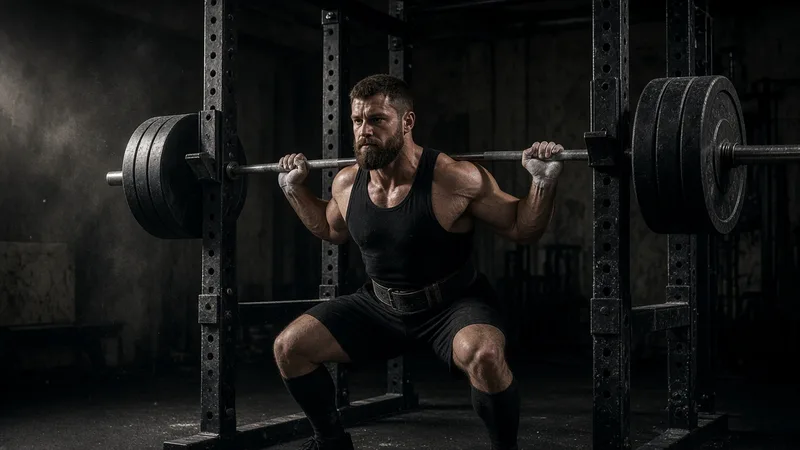
- Heavy 5RM squats and presses should be done in a power rack with safeties or with a competent spotter.
- If anything hurts sharply, stop. Persistent joint pain is a reason to see a physiotherapist or doctor.
- Anyone under 18, with heart disease or high blood pressure, or returning from injury should get medical clearance and qualified coaching before heavy maximal sets.
FAQ
Is the Texas Method good for building muscle?
The classic version is mainly a strength program. It gives most muscles fewer than the 10 or more weekly hard sets that growth research supports (Schoenfeld, Ogborn and Krieger, 2017). Add accessories as in our template, and it builds muscle well.
How long can you run the Texas Method?
Many lifters set new 5RMs for one to two months. After that, moving Friday to triples, doubles and singles can keep progress going for several more months, according to Starting Strength’s intensity-day guidance.
What percentage should the Texas Method volume day be?
About 90% of your current 5-rep max for 5 × 5, so that all 25 reps can be completed. If you miss reps, lower it.
Can you do the Texas Method 4 days a week?
Yes. A common variation splits the presses and adds a fourth day for upper-body accessory work. Keep Monday for volume and Friday for intensity.
Texas Method or 5/3/1: which is better?
Neither has been tested in a trial. The Texas Method progresses weekly and suits lifters who recently finished a beginner program. 5/3/1 progresses monthly, is easier to recover from, and suits lifters who have stalled on weekly progression.
Do I need power cleans?
No. They train speed and the upper back. A barbell row or more pull-ups is a fine swap if you are focused on muscle size or can’t get coached on the clean.
References
- Moesgaard L, Beck MM, Christiansen L, et al. Effects of Periodization on Strength and Muscle Hypertrophy in Volume-Equated Resistance Training Programs: A Systematic Review and Meta-analysis. Sports Med. 2022;52(7):1647-1666. doi:10.1007/s40279-021-01636-1. PubMed: 35044672 ↩
- Grgic J, Mikulic P, Podnar H, et al. Effects of linear and daily undulating periodized resistance training programs on measures of muscle hypertrophy: a systematic review and meta-analysis. PeerJ. 2017;5:e3695. doi:10.7717/peerj.3695. PubMed: 28848690 ↩
- Schoenfeld BJ, Grgic J, Ogborn D, et al. Strength and Hypertrophy Adaptations Between Low- vs. High-Load Resistance Training: A Systematic Review and Meta-analysis. J Strength Cond Res. 2017;31(12):3508-3523. doi:10.1519/JSC.0000000000002200. PubMed: 28834797 ↩
- Lopez P, Radaelli R, Taaffe DR, et al. Resistance Training Load Effects on Muscle Hypertrophy and Strength Gain: Systematic Review and Network Meta-analysis. Med Sci Sports Exerc. 2021;53(6):1206-1216. doi:10.1249/MSS.0000000000002585. PubMed: 33433148
- Schoenfeld BJ, Ratamess NA, Peterson MD, et al. Effects of different volume-equated resistance training loading strategies on muscular adaptations in well-trained men. J Strength Cond Res. 2014;28(10):2909-2918. doi:10.1519/JSC.0000000000000480. PubMed: 24714538
- Schoenfeld BJ, Ogborn D, Krieger JW. Dose-response relationship between weekly resistance training volume and increases in muscle mass: A systematic review and meta-analysis. J Sports Sci. 2017;35(11):1073-1082. doi:10.1080/02640414.2016.1210197. PubMed: 27433992
- Schoenfeld BJ, Grgic J, Krieger J. How many times per week should a muscle be trained to maximize muscle hypertrophy? A systematic review and meta-analysis of studies examining the effects of resistance training frequency. J Sports Sci. 2019;37(11):1286-1295. doi:10.1080/02640414.2018.1555906. PubMed: 30558493
- Grgic J, Schoenfeld BJ, Davies TB, et al. Effect of Resistance Training Frequency on Gains in Muscular Strength: A Systematic Review and Meta-Analysis. Sports Med. 2018;48(5):1207-1220. doi:10.1007/s40279-018-0872-x. PubMed: 29470825
- Robinson ZP, Pelland JC, Remmert JF, et al. Exploring the Dose-Response Relationship Between Estimated Resistance Training Proximity to Failure, Strength Gain, and Muscle Hypertrophy: A Series of Meta-Regressions. Sports Med. 2024;54(9):2209-2231. doi:10.1007/s40279-024-02069-2. PubMed: 38970765
- Mattocks KT, Buckner SL, Jessee MB, et al. Practicing the Test Produces Strength Equivalent to Higher Volume Training. Med Sci Sports Exerc. 2017;49(9):1945-1954. doi:10.1249/MSS.0000000000001300. PubMed: 28463902