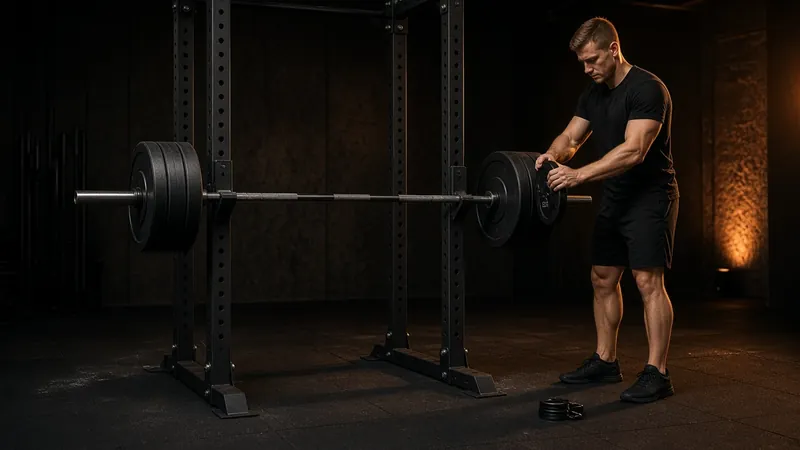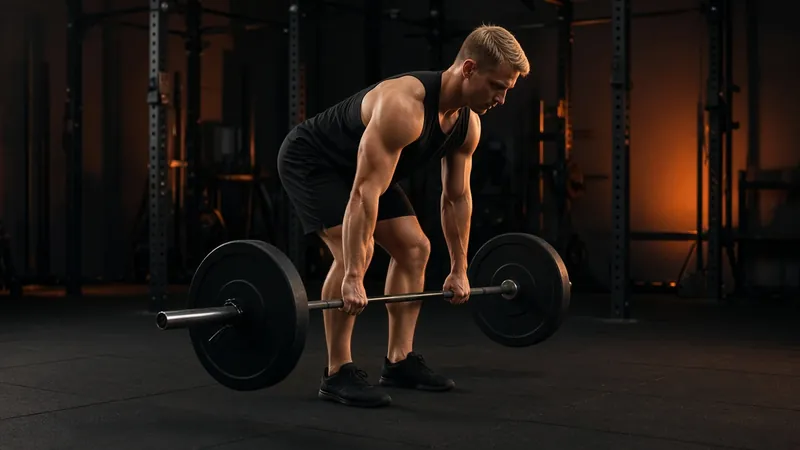
Push/Pull/Legs (PPL): An Evidence-Based Guide and 6-Day Program
How the push/pull/legs split works, what research says about its volume and frequency, plus a free 6-day PPL program with 3-day and 4-day versions too.
Key takeaways
- PPL groups muscles by movement: push (chest, shoulders, triceps), pull (back, rear delts, biceps) and legs. Run it 6 days a week to train each muscle twice.
- Research on frequency says a 3-day PPL (1×/week) and a 6-day PPL (2×/week) can grow similar muscle if weekly sets are equal — the 6-day version simply makes high volume easier.
- Aim for about 10–20 hard sets per muscle per week, most of them 0–3 reps from failure, with 2–3 minutes' rest on big lifts.
- Choose exercises that load muscles at long lengths — overhead triceps extensions and seated leg curls outperformed their short-length versions in trials.
- Progress with a double progression: add reps until you hit the top of the range, then add load. Deload every 4–8 weeks or when performance drops.
Push/pull/legs — PPL — is probably the most popular bodybuilding split in the world, and for good reason. It is simple to understand, it groups muscles that work together, and it scales from three days a week to six. But popular does not mean magic. In this guide we explain how PPL works, what the research says about its frequency and volume, which exercises to choose, and give you a complete 6-day PPL program with progression rules, plus 3-day and 4-day versions.
If you are still choosing a split, start with our pillar guide: every training split and scheme explained.
What is the push/pull/legs split?
PPL divides your training by movement pattern:
- Push day: chest, shoulders (front and side delts), triceps — exercises where you push weight away from you, like the bench press and overhead press.
- Pull day: upper back, lats, rear delts, biceps — exercises where you pull weight toward you, like pull-ups, rows and curls. Many lifters put the deadlift here.
- Leg day: quads, hamstrings, glutes, calves — the back squat, Romanian deadlift, leg press, leg curls.
The logic is efficiency. When you bench press, your front delts and triceps work hard too; doing shoulder and triceps work in the same session means those muscles are trained in one block and then get several days to recover. It also prevents the classic bro-split problem of training shoulders the day after chest, when the front delts are still fatigued.
The three common formats
| Format | Weekly layout | Frequency per muscle | Best for |
|---|---|---|---|
| PPL ×1 (3 days) | Push – Pull – Legs, then four rest days (or rest as you like) | Exactly 1× | Beginners to PPL, busy weeks |
| PPL ×2 (6 days) | Push – Pull – Legs – Push – Pull – Legs – rest | Exactly 2× | Intermediate–advanced lifters chasing size |
| Rolling PPL | Push – Pull – Legs – rest, then repeat, with no extra rest week | 5.25 sessions/week and 1.75× per muscle | Lifters who want more recovery than 6 days |
A rolling cycle is four days long, not a 4-day weekly program. Three sessions in every four days is 3 ÷ 4 × 7 = 5.25 sessions per week. Each muscle is trained once per four-day cycle, which is 7 ÷ 4 = 1.75 times per week. That is higher than the older “about 4–5 days” and “about 1.5×” labels, which mixed a repeating cycle with a days-per-week program. If you want a true 4-day week, use the PPL + upper plan below, not the rolling cycle by itself.
What the science says about PPL
PPL has never been tested as a named program. But every piece of its design is covered by research on volume, frequency, rest and effort.
Frequency: once or twice a week?
The 3-day PPL trains each muscle once a week; the 6-day version, twice. An early meta-analysis found that training muscles twice weekly produced larger hypertrophy effect sizes than once weekly (0.49 vs 0.30; Schoenfeld, Ogborn & Krieger, 2016). Later analyses that equated volume found frequency itself mattered little (Schoenfeld, Grgic & Krieger, 2019), and the 2025–26 meta-regression by Pelland and colleagues found frequency’s independent effect on hypertrophy was small and possibly negligible once weekly volume was accounted for.
In a direct test in trained men, training 3 vs 6 times per week with equal volume produced similar gains in strength and muscle thickness over six weeks (Saric et al., 2019). And a 2024 meta-analysis of 14 studies found split and full-body routines produce similar growth when volume is matched (Ramos-Campo et al., 2024).
What this means for PPL: the 6-day version is not magic because of its frequency. It works well because it lets you accumulate more high-quality weekly sets without 2-hour sessions. If you can only train 3 days, a 3-day PPL still works — just keep weekly volume adequate.
Volume: how many sets per muscle?
Weekly sets per muscle are a key driver of growth, with diminishing returns as volume climbs (Schoenfeld, Ogborn & Krieger, 2017; Pelland et al., 2025–26). In trained men, 5 sets per exercise, three times a week, produced more muscle growth than 1 or 3 sets — but not more strength (Schoenfeld et al., 2019). For most lifters, 10–20 hard sets per muscle per week is a productive range; see sets per week for how to count them.
Effort and rep ranges
Muscle grows across roughly 5–30 reps when sets are close to failure (Schoenfeld et al., 2017; Lopez et al., 2021). Hypertrophy improves as sets end closer to failure (Robinson et al., 2024). Heavy sets build more maximal strength (Schoenfeld et al., 2015). PPL therefore uses heavier sets (5–8 reps) for the main compound lifts and moderate-to-high reps (8–20) for accessories. More in our rep range guide.
Rest periods
In trained men doing full-body training, 3-minute rest periods produced more strength and more thigh muscle growth than 1-minute rests at the same number of sets (Schoenfeld et al., 2016). Rest 2–3 minutes on compounds and 1–2 minutes on isolation exercises, and use supersets only where they do not hurt performance.
Exercise selection and long muscle lengths
A growing line of research suggests that training a muscle in a lengthened (stretched) position produces more growth:
- Hamstrings: seated leg curls (hip flexed, hamstrings lengthened) grew the whole hamstrings more than prone (lying) leg curls: +14% vs +9% volume over 12 weeks (Maeo et al., 2021).
- Triceps: overhead cable extensions grew the triceps about 1.4 times more than pushdowns with the arm at the side (+19.9% vs +13.9% whole-triceps volume), even though less weight was lifted (Maeo et al., 2023).
- Quads: partial-range knee extensions performed in the lengthened part of the movement produced greater regional growth than other ranges in untrained women (Pedrosa et al., 2022).
- Squat depth: full squats grew the glutes and adductors more than half squats (Kubo et al., 2019).
These are relatively small studies, so we class them as promising, not settled. But they cost nothing to apply, and they are built into the exercise choices below.
Exercise variety — but not chaos
A systematic review found that systematic exercise variation can improve regional hypertrophy and strength, whereas excessive, random variation can compromise gains (Kassiano et al., 2022). That is why the 6-day program below uses different exercises on the two push, pull and leg days — heavier compounds on day A, more stretch-focused and machine work on day B — and keeps them the same for a whole block.
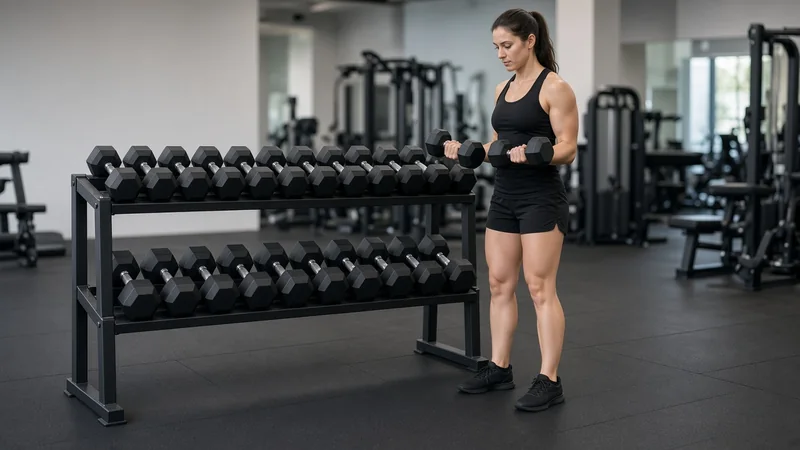
How to build a great PPL day
Push day
- 1 heavy horizontal press (bench press, incline barbell press)
- 1 vertical press (overhead press or seated dumbbell press)
- 1 chest exercise with a deep stretch (dumbbell press, cable or machine fly)
- Side-delt isolation (lateral raises — the bench and overhead press train side delts only partly)
- Triceps, ideally overhead (overhead cable extension, skull crushers)
Pull day
- 1 vertical pull (pull-ups, lat pulldown)
- 1 horizontal row (barbell row, chest-supported row, cable row)
- Rear delts (reverse pec deck, face pulls)
- Biceps (incline dumbbell curl for a stretched position, plus a heavier curl)
- Optional hinge (deadlift or rack pull) if you do not deadlift on leg day
Leg day
- 1 squat pattern (back squat, hack squat, leg press)
- 1 hip hinge (Romanian deadlift)
- Hamstring curl, preferably seated
- Quad isolation (leg extension)
- Calves (standing and seated raises)
The 6-day PPL program (intermediate)
Who it’s for: lifters with at least 6–12 months of consistent training who can train 6 days a week.
Effort guide: “RIR” means reps in reserve — how many more reps you could have done. RIR 2 = you stopped with about two good reps left. Keep heavy compounds at RIR 1–3, accessories at RIR 0–2.
Rest: 2–3 min on compounds, 60–120 s on isolation.
Day 1 — Push A (strength focus)
| Exercise | Sets × reps | Effort |
|---|---|---|
| Barbell bench press | 4 × 5–7 | RIR 1–2 |
| Standing overhead press | 3 × 6–8 | RIR 1–2 |
| Incline dumbbell press | 3 × 8–12 | RIR 1 |
| Cable lateral raise | 3 × 12–15 | RIR 0–1 |
| Overhead cable triceps extension | 3 × 10–12 | RIR 0–1 |
Day 2 — Pull A (strength focus)
| Exercise | Sets × reps | Effort |
|---|---|---|
| Weighted pull-up (or lat pulldown) | 4 × 5–8 | RIR 1–2 |
| Barbell row | 3 × 6–8 | RIR 1–2 |
| Seated cable row | 3 × 10–12 | RIR 1 |
| Reverse pec deck | 3 × 12–15 | RIR 0–1 |
| Barbell or EZ-bar curl | 3 × 8–10 | RIR 0–1 |
Day 3 — Legs A (squat focus)
| Exercise | Sets × reps | Effort |
|---|---|---|
| Barbell back squat | 4 × 5–7 | RIR 1–3 |
| Romanian deadlift | 3 × 6–8 | RIR 2 |
| Leg press | 3 × 10–12 | RIR 1 |
| Seated leg curl | 3 × 10–12 | RIR 0–1 |
| Standing calf raise | 4 × 8–12 | RIR 0–1 |
Day 4 — Push B (hypertrophy focus)
| Exercise | Sets × reps | Effort |
|---|---|---|
| Incline barbell or machine press | 3 × 8–10 | RIR 1 |
| Flat dumbbell press | 3 × 10–12 | RIR 1 |
| Cable fly (deep stretch) | 3 × 12–15 | RIR 0–1 |
| Dumbbell lateral raise | 4 × 12–20 | RIR 0–1 |
| Skull crusher or overhead dumbbell extension | 3 × 10–15 | RIR 0–1 |
Day 5 — Pull B (hypertrophy focus)
| Exercise | Sets × reps | Effort |
|---|---|---|
| Lat pulldown (full stretch at top) | 3 × 10–12 | RIR 1 |
| Chest-supported row | 3 × 8–12 | RIR 1 |
| Single-arm cable row | 2 × 12–15 | RIR 0–1 |
| Face pull | 3 × 12–15 | RIR 0–1 |
| Incline dumbbell curl | 3 × 10–12 | RIR 0–1 |
| Hammer curl | 2 × 10–12 | RIR 0–1 |
Day 6 — Legs B (hinge and hamstring focus)
| Exercise | Sets × reps | Effort |
|---|---|---|
| Deadlift (or hack squat if you deadlift on pull days) | 3 × 4–6 | RIR 2–3 |
| Bulgarian split squat | 3 × 8–10 each leg | RIR 1 |
| Seated leg curl | 3 × 12–15 | RIR 0–1 |
| Leg extension | 3 × 12–15 | RIR 0–1 |
| Seated calf raise | 4 × 12–15 | RIR 0–1 |
Day 7: rest.
Weekly volume check
The totals below use one coefficient table, applied to the six day tables above. A set counts as 1.0 for its main muscle and 0.5 for an important helper. Isolation work counts as 1.0 only for the target muscle.
| Exercise family | 1.0 credit | 0.5 credit |
|---|---|---|
| Bench, incline or flat press, fly | Chest | Triceps (presses only) |
| Overhead press | Front/side delts | Triceps |
| Lateral raise | Side delts | — |
| Overhead extension, skull crusher | Triceps | — |
| Pull-up, pulldown, row | Back | Biceps |
| Reverse pec deck, face pull | Rear delts | Upper back (face pull 0.5) |
| Curl, hammer curl | Biceps | — |
| Squat, leg press, split squat, leg extension | Quads | Glutes (except leg extension) |
| Romanian deadlift, leg curl | Hamstrings | Glutes (hinges only) |
| Deadlift | Hamstrings | Back and glutes |
| Calf raise | Calves | — |
| Muscle | How the total is built | Weekly fractional sets |
|---|---|---|
| Chest | Bench 4 + incline DB 3 + incline 3 + flat DB 3 + fly 3 | 16 |
| Back | Pull-up 4 + barbell row 3 + cable row 3 + pulldown 3 + chest-supported row 3 + single-arm row 2 = 18, plus deadlift 3 × 0.5 | 19.5 |
| Side delts | Laterals 3 + 4 = 7, plus overhead press 3 × 0.5 | 8.5 |
| Rear delts | Reverse pec deck 3 + face pull 3 = 6, plus rows 11 × 0.5 | 11.5 |
| Triceps | Direct 3 + 3 = 6, plus presses (bench, OHP, two inclines, flat) 16 × 0.5 | 14 |
| Biceps | Curls 3 + 3 + 2 = 8, plus vertical and horizontal pulls 18 × 0.5 | 17 |
| Quads | Squat 4 + leg press 3 + split squat 3 + leg extension 3 | 13 |
| Hamstrings | RDL 3 + deadlift 3 + leg curl 3 + 3 | 12 |
| Glutes | Squat, leg press, split squat, RDL and deadlift at 0.5 each (16 × 0.5) | 8 |
| Calves | Standing 4 + seated 4 | 8 |
Most muscles land in the 10–20 range; side delts, glutes and calves sit a little lower, so add 2–4 sets if they are priorities. If you are newer or recover poorly, remove one set from every exercise for the first 3–4 weeks. If a muscle is lagging, add 2–4 sets to it — not to everything.
How to progress on PPL
Double progression
For each exercise, pick a rep range (e.g. 8–12). Use the same load until you can hit the top of the range on every set at the target effort. Then increase the weight (about 2.5–5% for most lifts, the smallest jump available on dumbbells) and build back up from the bottom of the range.
Track your sessions
Log weight, reps and approximate RIR. Your log is the only way to know whether you are progressing — the mirror is too slow and soreness is a poor guide. Use the free training log: it runs in your browser, can be printed or downloaded as a CSV, and includes a 6-day PPL template. After 4–6 weeks, use the checklist later on this page to decide whether to add sets, add load, or take a lighter week.
Deload
Every 4–8 weeks — or when performance drops for two sessions in a row on several lifts — take a lighter week: cut sets by roughly 40–50% and stop all sets further from failure. Then start the next block slightly above your previous starting loads.
Mesocycle example (6 weeks)
| Week | Volume | Effort |
|---|---|---|
| 1 | Program minus 1 set per exercise | RIR 2–3 |
| 2 | Full program | RIR 2 |
| 3–4 | Full program | RIR 1–2 |
| 5 | Add 1 set to 1–2 priority muscles | RIR 0–1 on isolations |
| 6 | Deload (≈50% sets) | RIR 3–4 |
3-day and 4-day PPL variations
These are complete, ready-to-run plans, not shorthand for “do the A days and add a bit”. Effort and rest match the 6-day program: compounds at RIR 1–3 with 2–3 minutes’ rest, isolation at RIR 0–2 with 60–120 seconds. Progress with the same double-progression rules, and review the block after 4–6 weeks.
3-day PPL (each muscle once a week)
Train Push, Pull and Legs on non-consecutive days if you can (for example Monday, Wednesday, Friday). Expected session length is about 60–75 minutes.
Push (3-day)
| Exercise | Sets × reps | Effort | Rest |
|---|---|---|---|
| Barbell bench press | 4 × 6–10 | RIR 1–2 | 2–3 min |
| Standing overhead press | 3 × 8–12 | RIR 1–2 | 2–3 min |
| Incline dumbbell press | 3 × 8–12 | RIR 1 | 2 min |
| Cable fly | 3 × 12–15 | RIR 0–1 | 60–90 s |
| Cable lateral raise | 4 × 12–15 | RIR 0–1 | 60–90 s |
| Overhead cable triceps extension | 3 × 10–12 | RIR 0–1 | 60–90 s |
Pull (3-day)
| Exercise | Sets × reps | Effort | Rest |
|---|---|---|---|
| Pull-up or lat pulldown | 4 × 6–10 | RIR 1–2 | 2–3 min |
| Barbell row | 3 × 6–10 | RIR 1–2 | 2–3 min |
| Seated cable row | 3 × 8–12 | RIR 1 | 2 min |
| Face pull | 3 × 12–15 | RIR 0–1 | 60–90 s |
| Barbell or EZ-bar curl | 3 × 8–12 | RIR 0–1 | 60–90 s |
| Hammer curl | 2 × 10–12 | RIR 0–1 | 60–90 s |
Legs (3-day)
| Exercise | Sets × reps | Effort | Rest |
|---|---|---|---|
| Barbell back squat | 4 × 6–10 | RIR 1–3 | 2–3 min |
| Romanian deadlift | 3 × 6–10 | RIR 2 | 2–3 min |
| Leg press | 3 × 8–12 | RIR 1 | 2 min |
| Seated leg curl | 4 × 10–12 | RIR 0–1 | 60–120 s |
| Leg extension | 3 × 12–15 | RIR 0–1 | 60–90 s |
| Standing calf raise | 4 × 8–12 | RIR 0–1 | 60–90 s |
Weekly fractional totals (same coefficients as above): chest 10, back 10, side delts 5.5 (laterals 4 + overhead press 1.5), rear delts about 8, triceps 10, biceps 10, quads 10, hamstrings 7, glutes about 6.5, calves 4. Chest, back, quads, biceps and triceps sit at the 10-set mark; hamstrings, side delts, glutes and calves sit lower because they only appear once a week. If any of those are a priority, add 2 sets rather than lengthening every exercise. Swap equipment using the section below.
4-day PPL + upper
Layout: Push – Pull – rest – Legs – Upper – rest – rest (or an equivalent 4-on-a-week calendar). Upper-body muscles are trained twice; legs once, with more local volume on leg day to compensate.
Push
| Exercise | Sets × reps | Effort | Rest |
|---|---|---|---|
| Barbell bench press | 4 × 5–7 | RIR 1–2 | 2–3 min |
| Standing overhead press | 3 × 6–8 | RIR 1–2 | 2–3 min |
| Incline dumbbell press | 3 × 8–12 | RIR 1 | 2 min |
| Cable lateral raise | 3 × 12–15 | RIR 0–1 | 60–90 s |
| Overhead cable triceps extension | 3 × 10–12 | RIR 0–1 | 60–90 s |
Pull
| Exercise | Sets × reps | Effort | Rest |
|---|---|---|---|
| Pull-up or lat pulldown | 4 × 5–8 | RIR 1–2 | 2–3 min |
| Barbell row | 3 × 6–8 | RIR 1–2 | 2–3 min |
| Seated cable row | 3 × 8–12 | RIR 1 | 2 min |
| Face pull | 3 × 12–15 | RIR 0–1 | 60–90 s |
| Barbell or EZ-bar curl | 3 × 8–10 | RIR 0–1 | 60–90 s |
Legs (with extra work)
| Exercise | Sets × reps | Effort | Rest |
|---|---|---|---|
| Barbell back squat | 4 × 5–7 | RIR 1–3 | 2–3 min |
| Romanian deadlift | 3 × 6–8 | RIR 2 | 2–3 min |
| Leg press | 3 × 10–12 | RIR 1 | 2 min |
| Bulgarian split squat | 3 × 8–10 each leg | RIR 1 | 2 min |
| Seated leg curl | 3 × 10–12 | RIR 0–1 | 60–120 s |
| Leg extension | 3 × 12–15 | RIR 0–1 | 60–90 s |
| Standing calf raise | 4 × 8–12 | RIR 0–1 | 60–90 s |
Upper (best of the B-day push and pull work)
| Exercise | Sets × reps | Effort | Rest |
|---|---|---|---|
| Incline barbell or machine press | 3 × 8–10 | RIR 1 | 2 min |
| Chest-supported row | 3 × 8–12 | RIR 1 | 2 min |
| Flat dumbbell press | 3 × 10–12 | RIR 1 | 2 min |
| Lat pulldown | 3 × 10–12 | RIR 1 | 2 min |
| Dumbbell lateral raise | 3 × 12–20 | RIR 0–1 | 60–90 s |
| Incline dumbbell curl | 3 × 10–12 | RIR 0–1 | 60–90 s |
| Skull crusher or overhead dumbbell extension | 3 × 10–15 | RIR 0–1 | 60–90 s |
Weekly fractional totals: chest 13, back 16, side delts 7.5, rear delts about 9, triceps 14, biceps 14, quads 13, hamstrings 6, glutes about 8, calves 4. Hamstrings and calves are the ones to add 2–3 sets to if they lag, because they only appear on the single leg day. Sessions should stay near 60–75 minutes; drop a set from an isolation movement if a day runs long.
Rolling PPL
Repeat Push – Pull – Legs – rest without adding a fifth rest day to force a calendar week. In the long run that is 5.25 sessions per week and 1.75 sessions per muscle per week, as in the format table above.
Rotate the A and B days as they come: Push A, Pull A, Legs A, rest, Push B, Pull B, Legs B, rest, then back to Push A. A 28-day block therefore contains seven of each day type. Use the 6-day exercise tables for A and B, and log the actual calendar date so the shifting weekdays do not confuse you. This is not the same program as “train four days this week”; if you need a fixed 4-day week, use PPL + upper instead.
How to warm up for a PPL session
You don’t need a 30-minute ritual. A practical warm-up:
- 5 minutes of easy cardio (bike, rower, brisk incline walk) to raise body temperature.
- Ramp-up sets on your first compound. For a working weight of 100 kg on bench press, for example: empty bar × 10, 40 kg × 6, 60 kg × 4, 75 kg × 2, 85–90 kg × 1, then start your work sets. Count none of these as hard sets.
- One or two lighter “feeler” sets for the first exercise of each new movement pattern later in the session (e.g. a light set of rows before pull-ups on Pull B).
Ramp-ups let you check technique and confidence with the bar before the heavy sets, while being too light to tire you meaningfully.
Exercise swaps: what to use if you lack equipment
The program uses commercial-gym equipment. If you train at home or in a busy gym, swap within the same movement pattern and the same muscle-length emphasis:
| Programmed exercise | Good swaps |
|---|---|
| Barbell bench press | Dumbbell bench press, machine chest press, weighted push-up |
| Standing overhead press | Seated dumbbell press, landmine press, machine shoulder press |
| Cable fly | Dumbbell fly, pec deck — keep the deep stretch |
| Overhead cable triceps extension | Overhead dumbbell extension, EZ-bar overhead extension |
| Weighted pull-up | Lat pulldown, assisted pull-up, band-assisted pull-up |
| Barbell row | Chest-supported dumbbell row, T-bar row, seal row |
| Incline dumbbell curl | Bayesian (behind-the-body) cable curl, preacher curl |
| Back squat | Hack squat, leg press, goblet squat (lighter lifters) |
| Romanian deadlift | Dumbbell RDL, 45° back extension, good morning |
| Seated leg curl | Lying leg curl (slightly less hamstring growth in Maeo et al., 2021), Nordic curl, slider curl |
| Leg extension | Reverse Nordic, sissy squat, spanish squat |
Keep the swap for the whole training block so your logbook stays comparable.
Specialization: bringing up a lagging muscle
PPL is easy to customize. To prioritize one muscle for a 6–8-week block:
- Move it first. Train the lagging muscle first in its session, when you are freshest. Lateral raises can open Push B, for example.
- Add 2–4 weekly sets for that muscle, split across both of its days.
- Take sets away elsewhere. To stay recoverable, remove a similar number of sets from muscles that are already well developed.
- Reassess after the block. Compare photos, measurements (e.g. arm circumference at the same time of day) and your logbook numbers.
Because total weekly sets drive much of the result (Schoenfeld et al., 2017; Pelland et al., 2025–26), shifting volume toward a muscle is the most reliable lever you have.
PPL vs. upper/lower vs. full body
| PPL (6 days) | Upper/lower (4 days) | Full body (3 days) | |
|---|---|---|---|
| Days per week | 6 | 4 | 3 |
| Frequency per muscle | 2× | 2× | 3× |
| Session length | 60–75 min | 60–80 min | 60–90 min |
| Volume capacity | Very high | High | Moderate–high |
| Missed-session tolerance | Moderate (just shift the week) | Moderate | High |
| Best for | Intermediate–advanced lifters with time | Most intermediates | Beginners, busy lifters |
When weekly volume is matched, research finds no clear winner between split and full-body routines (Ramos-Campo et al., 2024). So pick the one you can follow week after week. For more options, see the full splits guide and future pages on the upper/lower split and full-body training.
Common PPL mistakes
- Too much volume too soon. Six days of high-volume sessions can bury your recovery. Start lower and build up.
- No side-delt or rear-delt work. Pressing and rowing don’t fully train them; give them direct sets.
- Treating leg day as optional. Legs are roughly half your muscle mass. Two hard leg days a week are the backbone of a good PPL.
- Random exercise swaps every week. Keep exercises stable for a 4–8-week block so you can progress on them.
- Training every set to absolute failure on heavy compounds. Save true failure for isolation and machine work; keep squats, deadlifts and heavy presses 1–3 reps shy.
- Ignoring sleep and protein. Most lifters do well around 1.6–2.2 g of protein per kg of body weight per day — see our guide to eating for muscle growth.
FAQ
Is PPL good for beginners?
A 3-day PPL is fine for beginners, but a full-body routine is usually simpler and trains each lift more often, which helps you learn technique. Many lifters move to PPL after 6–12 months.
Is 6 days a week too much?
Not for most healthy intermediates — as long as total volume and effort are sensible and you sleep well. Saric et al. (2019) found 6 sessions per week produced similar results to 3 when volume was equal, so if 6 days is hard to recover from, the 3- or 4-day versions are just as valid.
Should deadlifts go on pull day or leg day?
Either. Put them on leg day if your lower back limits your rowing; put them on pull day if you want leg days to focus on quads and hamstring curls. Just don’t do heavy deadlifts and heavy squats back-to-back with no rest day if your lower back fatigues easily.
Can I do PPL while cutting?
Yes. Keep the heavy compounds and reduce accessory volume by around a third if recovery suffers. Higher protein intake helps preserve muscle while dieting.
References
- Schoenfeld BJ, Ogborn D, Krieger JW. Effects of Resistance Training Frequency on Measures of Muscle Hypertrophy: A Systematic Review and Meta-Analysis. Sports Med. 2016;46(11):1689-1697. doi:10.1007/s40279-016-0543-8. PubMed: 27102172 ↩
- Schoenfeld BJ, Grgic J, Krieger J. How many times per week should a muscle be trained to maximize muscle hypertrophy? J Sports Sci. 2019;37(11):1286-1295. doi:10.1080/02640414.2018.1555906. PubMed: 30558493 ↩
- Pelland JC, Remmert JF, Robinson ZP, Hinson SR, Zourdos MC. The Resistance Training Dose Response: Meta-Regressions Exploring the Effects of Weekly Volume and Frequency on Muscle Hypertrophy and Strength Gains. Sports Med. 2026;56(2):481-505. doi:10.1007/s40279-025-02344-w. PubMed: 41343037
- Saric J, Lisica D, Orlic I, et al. Resistance Training Frequencies of 3 and 6 Times Per Week Produce Similar Muscular Adaptations in Resistance-Trained Men. J Strength Cond Res. 2019;33 Suppl 1:S122-S129. doi:10.1519/JSC.0000000000002909. PubMed: 30363041 ↩
- Ramos-Campo DJ, Benito-Peinado PJ, Andreu-Caravaca L, et al. Efficacy of Split Versus Full-Body Resistance Training on Strength and Muscle Growth: A Systematic Review With Meta-Analysis. J Strength Cond Res. 2024;38(7):1330-1340. doi:10.1519/JSC.0000000000004774. PubMed: 38595233 ↩
- Schoenfeld BJ, Ogborn D, Krieger JW. Dose-response relationship between weekly resistance training volume and increases in muscle mass. J Sports Sci. 2017;35(11):1073-1082. doi:10.1080/02640414.2016.1210197. PubMed: 27433992
- Schoenfeld BJ, Contreras B, Krieger J, et al. Resistance Training Volume Enhances Muscle Hypertrophy but Not Strength in Trained Men. Med Sci Sports Exerc. 2019;51(1):94-103. doi:10.1249/MSS.0000000000001764. PubMed: 30153194
- Schoenfeld BJ, Grgic J, Ogborn D, Krieger JW. Strength and Hypertrophy Adaptations Between Low- vs. High-Load Resistance Training: A Systematic Review and Meta-analysis. J Strength Cond Res. 2017;31(12):3508-3523. doi:10.1519/JSC.0000000000002200. PubMed: 28834797
- Lopez P, Radaelli R, Taaffe DR, et al. Resistance Training Load Effects on Muscle Hypertrophy and Strength Gain: Systematic Review and Network Meta-analysis. Med Sci Sports Exerc. 2021;53(6):1206-1216. doi:10.1249/MSS.0000000000002585. PubMed: 33433148
- Robinson ZP, Pelland JC, Remmert JF, et al. Exploring the Dose-Response Relationship Between Estimated Resistance Training Proximity to Failure, Strength Gain, and Muscle Hypertrophy. Sports Med. 2024;54(9):2209-2231. doi:10.1007/s40279-024-02069-2. PubMed: 38970765 ↩
- Schoenfeld BJ, Peterson MD, Ogborn D, Contreras B, Sonmez GT. Effects of Low- vs. High-Load Resistance Training on Muscle Strength and Hypertrophy in Well-Trained Men. J Strength Cond Res. 2015;29(10):2954-2963. doi:10.1519/JSC.0000000000000958. PubMed: 25853914 ↩
- Schoenfeld BJ, Pope ZK, Benik FM, et al. Longer Interset Rest Periods Enhance Muscle Strength and Hypertrophy in Resistance-Trained Men. J Strength Cond Res. 2016;30(7):1805-1812. doi:10.1519/JSC.0000000000001272. PubMed: 26605807
- Maeo S, Huang M, Wu Y, et al. Greater Hamstrings Muscle Hypertrophy but Similar Damage Protection after Training at Long versus Short Muscle Lengths. Med Sci Sports Exerc. 2021;53(4):825-837. doi:10.1249/MSS.0000000000002523. PubMed: 33009197 ↩
- Maeo S, Wu Y, Huang M, et al. Triceps brachii hypertrophy is substantially greater after elbow extension training performed in the overhead versus neutral arm position. Eur J Sport Sci. 2023;23(7):1240-1250. doi:10.1080/17461391.2022.2100279. PubMed: 35819335 ↩
- Pedrosa GF, Lima FV, Schoenfeld BJ, et al. Partial range of motion training elicits favorable improvements in muscular adaptations when carried out at long muscle lengths. Eur J Sport Sci. 2022;22(8):1250-1260. doi:10.1080/17461391.2021.1927199. PubMed: 33977835 ↩
- Kubo K, Ikebukuro T, Yata H. Effects of squat training with different depths on lower limb muscle volumes. Eur J Appl Physiol. 2019;119(9):1933-1942. doi:10.1007/s00421-019-04181-y. PubMed: 31230110 ↩
- Kassiano W, Nunes JP, Costa B, et al. Does Varying Resistance Exercises Promote Superior Muscle Hypertrophy and Strength Gains? A Systematic Review. J Strength Cond Res. 2022;36(6):1753-1762. doi:10.1519/JSC.0000000000004258. PubMed: 35438660 ↩
Review your progress in 4–6 weeks
After 4–6 weeks on this program, sit down with your log and decide what to change. Tick what is true, then pick one action.
- I completed most planned sessions (about 80% or more).
- The main lifts added load or reps across the block, even if some accessories stalled.
- Sleep, appetite and joint comfort were generally acceptable.
- I stayed within 1–3 reps of failure on most working sets, with solid form.
If most boxes are ticked, add 2–4 hard sets to a lagging muscle or move a main lift to the next load. If several are unticked, keep the same weights, cut a set from each exercise, or take a lighter week, then review again after another 4–6 weeks.