Minimalist Training: The Least You Can Do and Still Grow
Minimalist training for muscle: the fewest weekly sets that still build or keep muscle, what low-volume studies show, and 2- and 3-day plans under an hour.
Key takeaways
- Low-volume training does build muscle: one set per exercise still produced growth, but multiple sets gave about 40% larger effects on average (Krieger, 2010).
- Strength needs less than size: in trained men, three 13-minute sessions a week gave the same strength gains as much longer sessions, while growth kept rising with more sets (Schoenfeld et al., 2019).
- Our minimum for growth is about 4–6 hard sets per muscle per week on a few big lifts, taken to 1–2 reps in reserve. More (around 10 sets) grows more if you have time.
- To keep muscle during a busy period, one session a week with a set or two per exercise at the same heavy loads can be enough for younger adults; older adults may need about twice that (Spiering et al., 2021).
- Save time with antagonist supersets, compound lifts and short, specific warm-ups: supersets cut session time without reducing growth in a 2025 meta-analysis (Zhang et al., 2025).
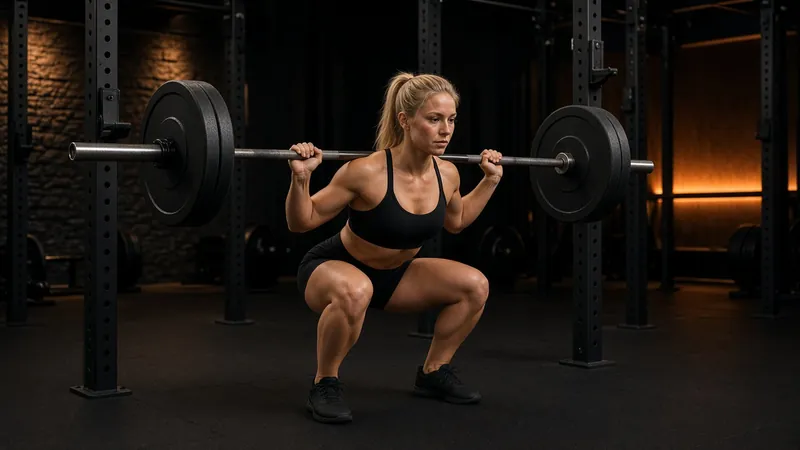
Minimalist training asks a simple question: what is the least you can do in the gym and still build, or at least keep, muscle? It matters when life gets busy, when you travel, when motivation is low, or when you simply want results without living in the gym.
The good news is that the minimum is lower than most people think. The honest news is that “minimum” and “maximum” are not the same: more volume still builds more muscle, up to a point. This guide shows what the low-volume studies found, where the lines are for growing versus maintaining, which shortcuts save time without costing results, and three levels of a plan from about 20 minutes a week to about 2½ hours. It is part of our Training Methods section; for full programs at higher volumes, see our pillar on every training split.
Evidence in one line: a few hard sets of big lifts, done consistently, build real muscle; more sets build more, but with diminishing returns, so the first sets of the week are the most valuable.
What this page covers. This is the guide to the minimum effective dose. For the full volume picture, see how many sets per week; for bringing up one muscle while the rest stays on a minimum, see specialization phases.
Key terms
- Hard set: a set taken close to failure, here 0–3 reps in reserve (RIR). Warm-up sets do not count.
- RIR (reps in reserve): how many more reps you could have done. 1 RIR means one rep left. See training to failure vs RIR.
- Weekly volume: hard sets per muscle per week.
- Direct vs indirect sets: a curl is a direct set for the biceps; a row is an indirect set, because the biceps help but are not the main target.
- Minimum effective dose: the least training that still produces a measurable gain.
- Maintenance dose: the least training that keeps what you already have.
- Antagonist superset: two exercises for opposing muscles done back to back (for example a press and a row), resting after the pair.
- 1RM: the most weight you can lift for one rep.
What the research says
One set works, more sets work better
A 2010 meta-analysis pooled eight studies comparing one set per exercise with multiple sets. Both built muscle, but multiple sets were associated with about 40% larger growth effects than a single set, in both trained and untrained people. The average effect sizes rose step by step: 0.24 for one set, 0.34 for two to three sets and 0.44 for four to six sets (Krieger, 2010).
Later meta-analyses counted sets per muscle per week. A 2017 analysis of 15 studies found a graded dose-response: each extra weekly set was associated with a small further gain (Schoenfeld et al., 2017). The largest analysis so far, a 2026 meta-regression of 67 studies and 2,058 participants, again found that growth rises with volume, but with diminishing returns. It also found that training frequency (how many sessions you split the sets into) had at most a negligible effect on growth, and that counting indirect sets as half a set predicted results best (Pelland et al., 2026).
What that means for minimalists: the first few sets for a muscle each week give the most return. Going from zero to a handful of hard sets is a big step; going from 15 to 20 is a small one.
The trained-lifter test: 13 minutes vs much longer
In an 8-week trial, 34 resistance-trained men did the same full-body program three times a week with one, three or five sets per exercise. All groups gained strength and muscular endurance, with no difference between them. Muscle size increased in most sites in all groups, but growth was greater with higher volumes at the biceps and thigh. The authors summarised that marked strength gains are possible with just three 13-minute weekly sessions, while hypertrophy follows a dose-response (Schoenfeld et al., 2019).
A 6-week trial in 49 trained men compared 9, 18 or 27 weekly sets for the biceps. All three groups grew, with no statistically significant difference between them (average gains 4.3%, 9.5% and 5.4%), although effect sizes favoured the two higher volumes. Nine sets in one weekly session were enough to increase muscle thickness (Heaselgrave et al., 2019).
A 2026 position stand from the American College of Sports Medicine, which pooled 137 systematic reviews, found that hypertrophy was enhanced by higher volumes of 10 or more sets per week, while many other details (training to momentary failure, equipment type, set structure, time under tension, periodisation) did not consistently change outcomes (Currier et al., 2026). That is good news for minimalists: get the sets in and do not sweat the details.
Minimum for strength
A systematic review of the minimum effective dose for strength in trained men found that a single set of 6–12 reps at about 70–85% of 1RM, taken to or near failure, two to three times a week for 8–12 weeks, produced significant (if not optimal) gains in squat and bench press 1RM. Pooled gains were about 17 kg on the squat and 8 kg on the bench press (Androulakis-Korakakis et al., 2020). The authors note there is too little data for the deadlift, trained women and elite strength athletes.
Do you need isolation exercises?
For arm size, maybe not at first. In 29 untrained young men, adding curls and triceps extensions to lat pulldowns and bench presses for 10 weeks did not add any biceps growth (6.5% vs 7.04% increase in muscle thickness) or strength (Gentil et al., 2013). In 20 trained men with at least two years of experience, adding single-joint exercises to an 8-week multi-joint program also made no significant difference to arm size or strength (de França et al., 2015). Both trials are small and short, and the second measured arm circumference rather than muscle thickness, so treat this as “compound lifts cover a lot of arm work”, not as “arm exercises are useless”. Muscles that compound lifts barely reach, such as side delts and calves, still need direct work if you care about them.
Load: you can go lighter, but not too light
Light loads build muscle when sets are taken close to failure. A meta-analysis of low-load (60% of 1RM or less) versus high-load training found substantial growth with both in untrained people, with a non-significant trend favouring heavier loads (Schoenfeld et al., 2016). In a 12-week trial in which each person trained one limb at 20% of 1RM and the other at 40%, 60% or 80%, all loads built muscle, but 20% of 1RM grew only about half as much (for example 8.9% vs 19.5% in the thigh at 80%) (Lasevicius et al., 2018). For home training with light dumbbells or bands, this means: take sets close to failure, and do not go extremely light.
How little keeps your muscle?
In a two-phase trial, 70 adults trained three times a week for 16 weeks, then spent 32 weeks either stopping or training at one-third or one-ninth of the original dose. Both reduced doses kept the muscle growth in young adults (20–35 years), but not in older adults (60–75 years). Strength was largely retained even with complete detraining, dropping only slightly at the final time point (Bickel et al., 2011). A narrative review of maintenance concluded that strength and muscle size in younger people can be kept for up to 32 weeks with one session a week and one set per exercise, as long as the load stays heavy; older adults may need up to two sessions a week and two to three sets per exercise (Spiering et al., 2021).
Time savers that do not cost growth
- Supersets: a 2025 meta-analysis of 19 studies found that supersets allowed similar reps and volume load in a shorter session, with similar long-term gains in strength and muscle size. They felt harder, and same-muscle supersets reduced the load you could lift (Zhang et al., 2025).
- Short, specific warm-ups and no pre-workout stretching unless flexibility is the goal; prioritise multi-joint lifts with at least one leg press or squat, one upper-body pull and one upper-body push, and at least four weekly sets per muscle group (Iversen et al., 2021).
- Minimal-dose models: a narrative review describes two routes that improve strength and function in younger and older adults: low-volume, heavier training a few times a week, or very short, frequent “exercise snacks” with little or no equipment (Fyfe et al., 2022). The review focuses on strength and function more than muscle size.
Evidence grade
Moderate. Several meta-analyses and trials agree that low volumes build muscle and that more volume builds more, with diminishing returns. The maintenance numbers rest mostly on one 32-week trial and a narrative review. Most trials are 6–12 weeks in young men; data in women and older adults are thinner. Nobody can tell you your personal minimum: it depends on training age, genetics, sleep, food and stress.
What the research does not show: that one set a week is enough to keep growing for years, or that the “right” minimum is the same for everyone.
Three levels: pick the one your week allows
| Level | Goal | Sessions | Hard sets per muscle per week | Time per week (our estimate) |
|---|---|---|---|---|
| 1. Keep | Maintain muscle and strength | 1 | 1–2 per major muscle, heavy | About 20–30 min |
| 2. Minimal growth | Slow, steady gains | 2 | About 4–6 | About 60–80 min |
| 3. Efficient growth | Good gains in little time | 3 | About 5–9 | About 2–2½ hours |
These levels and set ranges are our conventions, built from the studies above. Level 2 meets the minimum of four weekly sets per muscle suggested by Iversen et al. (2021); Level 3 approaches the 10-plus sets linked with better growth.
The programs
All sets are hard sets at 1–2 RIR unless stated. Warm up with one or two lighter sets of the first exercise only. In supersets (A1/A2), do A1, rest about 60 seconds, do A2, rest about 60 seconds, and repeat.
Level 2: two full-body sessions (about 30–40 minutes each)
Day A
| Exercise | Sets × reps | Effort | Rest |
|---|---|---|---|
| Back squat (or leg press) | 3 × 6–10 | 1–2 RIR | 2–3 min |
| A1. Bench press (or push-up) | 3 × 6–10 | 1–2 RIR | 60 s |
| A2. Seated cable row (or dumbbell row) | 3 × 8–12 | 1–2 RIR | 60 s |
| Romanian deadlift | 2 × 8–10 | 2 RIR | 2 min |
| Optional: Lateral raise | 2 × 12–15 | 1 RIR | 1 min |
Day B
| Exercise | Sets × reps | Effort | Rest |
|---|---|---|---|
| Bulgarian split squat (or leg press) | 3 × 8–12 per leg | 1–2 RIR | 2 min |
| A1. Incline dumbbell press | 3 × 8–12 | 1–2 RIR | 60 s |
| A2. Pull-up (or lat pulldown) | 3 × 6–12 | 1–2 RIR | 60 s |
| Leg curl | 2 × 10–12 | 1 RIR | 1–2 min |
| Optional: B1. Biceps curl / B2. Overhead triceps extension | 2 × 10–12 each | 1 RIR | 60 s |
Level 1: keep what you have (one session a week)
Do Day A one week and Day B the next. Do one to two sets of each main exercise at the same loads you used before (1–2 RIR). Skip the optional exercises. If you are over about 60, aim for two sessions a week with two to three sets per exercise, in line with Spiering et al. (2021).
Level 3: three sessions a week (about 45 minutes each)
Run Day A and Day B with the optional exercises, and add Day C:
Day C
| Exercise | Sets × reps | Effort | Rest |
|---|---|---|---|
| Leg press (or goblet squat) | 3 × 10–12 | 1–2 RIR | 2 min |
| A1. Dips (or push-up) | 3 × 8–15 | 1–2 RIR | 60 s |
| A2. One-arm dumbbell row | 3 × 8–12 per arm | 1–2 RIR | 60 s |
| B1. Leg curl | 2 × 10–12 | 1 RIR | 60 s |
| B2. Lateral raise | 3 × 12–15 | 1 RIR | 60 s |
| C1. Biceps curl / C2. Overhead triceps extension | 2 × 10–12 each | 1 RIR | 60 s |
Home version
| Gym exercise | Home swap |
|---|---|
| Back squat, leg press | Goblet squat with a heavy dumbbell, or Bulgarian split squat with dumbbells |
| Bench press, incline press | Dumbbell floor press or push-ups (feet raised to make them harder) |
| Cable row, lat pulldown | One-arm dumbbell row, band row, pull-ups on a doorway bar |
| Romanian deadlift | Dumbbell Romanian deadlift or single-leg version |
| Leg curl | Sliding leg curl on a towel, or a band leg curl |
With lighter home loads, use the upper end of the rep ranges (or go up to about 20–30 reps) and still finish 1–2 reps short of failure: light loads work when effort is high, but very light loads (about 20% of 1RM) grew less (Lasevicius et al., 2018).
Volume audit
We count one hard set as one set for the muscle it mainly trains. In brackets, we add half a set for indirect work (the “fractional” method that best predicted growth in Pelland et al., 2026). For more on counting, see our upcoming guide to fractional sets.
| Muscle | Level 2 (core) | Level 2 + optional | Level 3 |
|---|---|---|---|
| Quadriceps | 6 (squat 3, split squat 3) | 6 | 9 (+ leg press 3) |
| Hamstrings | 4 (Romanian deadlift 2, leg curl 2) | 4 | 6 (+ leg curl 2) |
| Chest | 6 (bench 3, incline press 3) | 6 | 9 (+ dips 3) |
| Back (lats and upper back) | 6 (row 3, pull-up 3) | 6 | 9 (+ one-arm row 3) |
| Side delts | 0 | 2 | 5 (lateral raise 2 + 3) |
| Biceps | 0 direct (≈3 fractional from 6 pulling sets) | 2 (≈5 fractional) | 4 direct (≈8.5 fractional from 9 pulling sets) |
| Triceps | 0 direct (≈3 fractional from 6 pressing sets) | 2 (≈5 fractional) | 4 direct (≈8.5 fractional from 9 pressing sets) |
| Calves | 0 | 0 | 0; add 2–3 sets of calf raises if they matter to you |
Level 2 puts every major muscle at or above four weekly sets. Level 3 brings the big muscles to about 9, close to the 10-set mark linked with better growth (Currier et al., 2026). If you have one more set to spare, give it to your weakest muscle.
Progression
- Double progression: when you hit the top of the rep range on all sets at 1–2 RIR, add the smallest load step (2.5 kg on barbells, the next dumbbell, or harder push-up variations).
- Keep the effort honest. With so few sets, every set must count. Check now and then by taking the last set of an exercise to failure on a safe machine; if you got many more reps than you thought, you were stopping too early.
- Track two numbers per exercise: weight and reps. Beat one of them every week or two; see progressive overload.
- When gains stall for three to four weeks and you have the time, move up a level or add one set to the muscles you care about most. If you cannot add time, rotate exercises after 6–8 weeks.
- Deloads: with this little volume you rarely need one; take an easier week if joints ache or performance drops for two sessions in a row (see when and how to deload).
Minimalist training compared
| Approach | Weekly time (our estimate) | Growth | Strength | Who it suits |
|---|---|---|---|---|
| Level 1 keep | 20–30 min | Maintains (young adults) | Maintains | Busy periods, travel, holidays |
| Level 2 minimal | 60–80 min | Slow, steady | Good | Very busy people, beginners, older lifters starting out |
| Level 3 efficient | 2–2½ h | Good | Good | Most people who want results without long sessions |
| Typical higher-volume split (see full-body training or upper/lower) | 4–6 h | Best on average | Good | People who enjoy training and have the time |
Common mistakes
- Doing too few hard sets and calling it minimalist. One easy set a week will not do much. Fix: at least 4 hard sets per major muscle per week for growth.
- Stopping far from failure. Low volume only works when sets are hard. Fix: 1–2 RIR on most sets, and test yourself occasionally.
- Long warm-ups and long breaks. They eat the time you saved. Fix: one or two ramp-up sets on the first lift, supersets for the rest (Iversen et al., 2021).
- Same-muscle supersets. Pairing two chest exercises cuts your loads. Fix: pair opposing muscles (press + row, curl + triceps).
- Choosing only machines for one body part. Fix: cover a squat or leg press, a hinge, a push and a pull every week.
- Skipping the weeks you are busy. Two short sessions beat one perfect session that never happens. Fix: drop to Level 1 rather than to zero.
- Expecting maximum growth from minimum work. Fix: accept slower gains, or add sets when life allows.
Make it better
- Use a stretch-focused version of each lift where you can (deep Bulgarian split squats, incline curls, overhead triceps extensions); see lengthened partials.
- Add a “snack”: if you work from home, a few sets of push-ups or split squats during the day add hard sets without a gym trip, in line with the exercise-snacking idea in Fyfe et al. (2022).
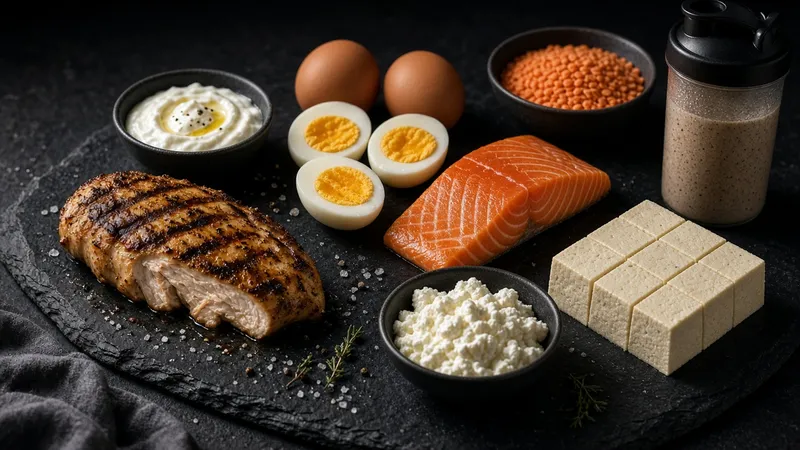
- Eat enough protein. With low volume, recovery is rarely the limit, but protein still is; see how much protein you need.
Safety notes
- Short sessions tempt people to skip warm-ups. Keep one or two ramp-up sets before heavy squats, presses and hinges.
- Use safeties or a spotter when taking barbell lifts close to failure.
- If you are over 60, recovering from injury, pregnant, under 18 or managing a heart, blood-pressure or other medical condition, talk to your doctor before starting or changing a training plan.
FAQ
What is the minimum number of sets to build muscle?
There is no single number, but one hard set per exercise already produced growth in studies, and multiple sets did better. Our practical minimum is about 4–6 hard sets per muscle per week for slow, steady gains.
Can you build muscle training twice a week?
Yes. How many weekly sets you do matters much more than how many sessions you split them into. Two full-body sessions that each give a muscle three hard sets can build muscle, especially for beginners and returning lifters.
How little exercise do you need to maintain muscle?
For younger adults, research suggests one session a week with one set per exercise can maintain strength and size for months, as long as the loads stay heavy. Older adults may need about two sessions a week and two to three sets per exercise.
Is one set to failure enough?
One set per exercise builds muscle and strength, and in trained men it gave the same strength gains as three or five sets. For growth, more sets did better, so one set is a minimum, not an optimum.
Do I need isolation exercises like curls?
Not to start. In two small trials, adding curls and triceps extensions to compound lifts did not add arm growth. Add direct work for side delts, calves and any muscle you want to prioritise.
How long should a minimalist workout take?
Our Level 2 sessions take about 30–40 minutes and Level 3 about 45 minutes, using supersets and short warm-ups. These are our estimates; your time depends on rest periods and how busy your gym is.
References
- Krieger JW. Single vs. multiple sets of resistance exercise for muscle hypertrophy: a meta-analysis. J Strength Cond Res. 2010;24(4):1150-9. doi:10.1519/JSC.0b013e3181d4d436. PubMed: 20300012 ↩
- Schoenfeld BJ, Ogborn D, Krieger JW. Dose-response relationship between weekly resistance training volume and increases in muscle mass: A systematic review and meta-analysis. J Sports Sci. 2017;35(11):1073-1082. doi:10.1080/02640414.2016.1210197. PubMed: 27433992 ↩
- Pelland JC, Remmert JF, Robinson ZP, et al. The Resistance Training Dose Response: Meta-Regressions Exploring the Effects of Weekly Volume and Frequency on Muscle Hypertrophy and Strength Gains. Sports Med. 2026;56(2):481-505. doi:10.1007/s40279-025-02344-w. PubMed: 41343037 ↩
- Schoenfeld BJ, Contreras B, Krieger J, et al. Resistance Training Volume Enhances Muscle Hypertrophy but Not Strength in Trained Men. Med Sci Sports Exerc. 2019;51(1):94-103. doi:10.1249/MSS.0000000000001764. PubMed: 30153194 ↩
- Heaselgrave SR, Blacker J, Smeuninx B, et al. Dose-Response Relationship of Weekly Resistance-Training Volume and Frequency on Muscular Adaptations in Trained Men. Int J Sports Physiol Perform. 2019;14(3):360-368. doi:10.1123/ijspp.2018-0427. PubMed: 30160627 ↩
- Currier BS, D’Souza AC, Singh MAF, et al. American College of Sports Medicine Position Stand. Resistance Training Prescription for Muscle Function, Hypertrophy, and Physical Performance in Healthy Adults: An Overview of Reviews. Med Sci Sports Exerc. 2026;58(4):851-872. doi:10.1249/MSS.0000000000003897. PubMed: 41843416 ↩
- Androulakis-Korakakis P, Fisher JP, Steele J. The Minimum Effective Training Dose Required to Increase 1RM Strength in Resistance-Trained Men: A Systematic Review and Meta-Analysis. Sports Med. 2020;50(4):751-765. doi:10.1007/s40279-019-01236-0. PubMed: 31797219 ↩
- Gentil P, Soares SR, Pereira MC, et al. Effect of adding single-joint exercises to a multi-joint exercise resistance-training program on strength and hypertrophy in untrained subjects. Appl Physiol Nutr Metab. 2013;38(3):341-4. doi:10.1139/apnm-2012-0176. PubMed: 23537028 ↩
- de França HS, Branco PA, Guedes Junior DP, et al. The effects of adding single-joint exercises to a multi-joint exercise resistance training program on upper body muscle strength and size in trained men. Appl Physiol Nutr Metab. 2015;40(8):822-6. doi:10.1139/apnm-2015-0109. PubMed: 26244600 ↩
- Schoenfeld BJ, Wilson JM, Lowery RP, et al. Muscular adaptations in low- versus high-load resistance training: A meta-analysis. Eur J Sport Sci. 2016;16(1):1-10. doi:10.1080/17461391.2014.989922. PubMed: 25530577 ↩
- Lasevicius T, Ugrinowitsch C, Schoenfeld BJ, et al. Effects of different intensities of resistance training with equated volume load on muscle strength and hypertrophy. Eur J Sport Sci. 2018;18(6):772-780. doi:10.1080/17461391.2018.1450898. PubMed: 29564973 ↩
- Bickel CS, Cross JM, Bamman MM. Exercise dosing to retain resistance training adaptations in young and older adults. Med Sci Sports Exerc. 2011;43(7):1177-87. doi:10.1249/MSS.0b013e318207c15d. PubMed: 21131862 ↩
- Spiering BA, Mujika I, Sharp MA, et al. Maintaining Physical Performance: The Minimal Dose of Exercise Needed to Preserve Endurance and Strength Over Time. J Strength Cond Res. 2021;35(5):1449-1458. doi:10.1519/JSC.0000000000003964. PubMed: 33629972 ↩
- Zhang X, Weakley J, Li H, et al. Superset Versus Traditional Resistance Training Prescriptions: A Systematic Review and Meta-analysis Exploring Acute and Chronic Effects on Mechanical, Metabolic, and Perceptual Variables. Sports Med. 2025;55(4):953-975. doi:10.1007/s40279-025-02176-8. PubMed: 39903375 ↩
- Iversen VM, Norum M, Schoenfeld BJ, et al. No Time to Lift? Designing Time-Efficient Training Programs for Strength and Hypertrophy: A Narrative Review. Sports Med. 2021;51(10):2079-2095. doi:10.1007/s40279-021-01490-1. PubMed: 34125411 ↩
- Fyfe JJ, Hamilton DL, Daly RM. Minimal-Dose Resistance Training for Improving Muscle Mass, Strength, and Function: A Narrative Review of Current Evidence and Practical Considerations. Sports Med. 2022;52(3):463-479. doi:10.1007/s40279-021-01605-8. PubMed: 34822137 ↩