Key takeaways
- Soreness is not a growth signal. People who avoided soreness with a 3-week ramp-up gained the same muscle size, and the same strength (25% vs 26%), over 8 weeks as those who started sore (Flann et al., 2011).
- Muscle damage is highest in the first week of a new program, and the protein synthesis that goes with it is not linked to growth. Only from week 3 did it track growth (Damas et al., 2016).
- Soreness fades fast with practice (the repeated-bout effect). One session protected the muscle for at least 6 months in one study (Nosaka et al., 2001).
- Massage was the most effective recovery method for soreness in a meta-analysis of 99 studies; stretching barely helped, about 1 point on a 100-point scale (Dupuy et al., 2018; Herbert et al., 2011).
- Skip daily ice baths and high-dose painkillers if growth is your goal: both blunted muscle gains over 8–12 weeks (Roberts et al., 2015; Lilja et al., 2018).
- Practical rule: if you are sore but your warm-up sets move normally, train. If strength is clearly down or movement is painful, train other muscles or go lighter for 1–2 days.
You did a new leg workout on Monday. On Tuesday the stairs feel steep, and on Wednesday sitting down on the toilet is an adventure. That stiff, tender ache is delayed-onset muscle soreness (DOMS). Many lifters see it as proof of a good workout, and worry when it stops. The research says something more useful: soreness tells you that the work was new or eccentric-heavy, not that the muscle grew.
This guide covers what DOMS is and what causes it, why soreness is a poor marker of muscle growth, why it fades as you keep training (the repeated-bout effect), which recovery methods actually reduce it and which ones may cost you gains, how to train when you’re sore, and when soreness is a reason to see a doctor. It’s part of our Science section; for the basics, start with how muscle grows and our beginner’s guide to building muscle.
Evidence in one line: you can build muscle with little or no soreness; soreness fades with regular training; massage and light activity ease it, stretching does not, and regular ice baths or high doses of painkillers may slow your gains.
Health first. This page is about normal post-training soreness in healthy adults. If you have extreme pain, major swelling, dark urine, or soreness after an injury, a fall or a sudden “pop”, stop training and see a doctor. Anyone under 18, pregnant, or with kidney disease or a muscle condition should ask their doctor before using any painkiller or supplement for soreness.
Key terms
- DOMS (delayed-onset muscle soreness): muscle pain and stiffness that starts some hours after training, usually peaks 48–72 hours after training and then goes away (Hotfiel et al., 2018).
- Eccentric action: the lowering (lengthening) part of a lift, like lowering into a squat. Eccentric work causes the most soreness.
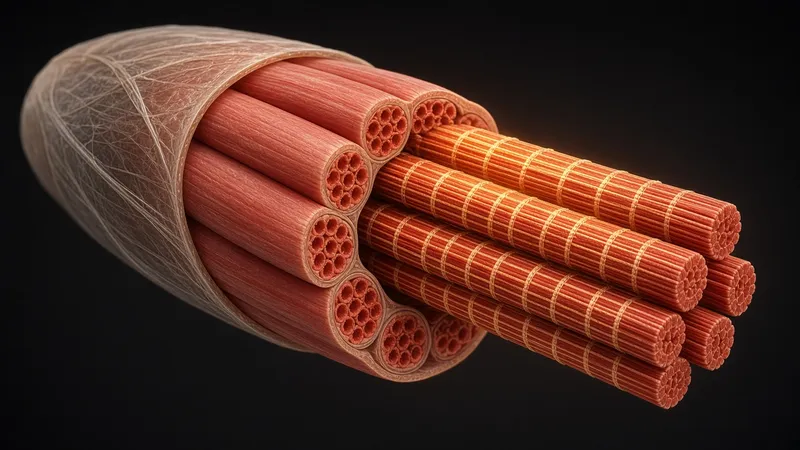
- Muscle damage: small disruptions in muscle fibres and the tissue around them. Researchers usually measure it indirectly, through strength loss, swelling and blood markers.
- Creatine kinase (CK): an enzyme that leaks from damaged muscle into the blood. A rough marker of muscle damage.
- Repeated-bout effect: the protection a muscle gets after one bout of unfamiliar exercise, so the next similar bout causes much less damage and soreness.
- MPS / MyoPS: muscle protein synthesis; myofibrillar protein synthesis is the part that builds the contractile proteins. A short-term signal, not growth itself.
What DOMS is and what causes it
DOMS is the most common training complaint there is. A classic review describes it as most common at the start of a season, when athletes return after time off, and whenever they try a new type of activity (Cheung et al., 2003). Three things make it worse:
- Eccentric work. Lowering actions cause micro-injury more often and more severely than lifting or holding actions (Cheung et al., 2003). That’s why downhill running, deep Romanian deadlifts and slow negatives leave you sore.
- Novelty. A new exercise, a new range of motion or a long break all count as “new” to the muscle.
- Intensity and duration. More hard work in a session means more soreness (Cheung et al., 2003).
What actually hurts is still debated. Researchers have proposed at least six explanations: lactic acid, muscle spasm, connective-tissue damage, muscle damage, inflammation and enzyme leakage. The review concluded that a combination of two or more is the likely answer (Cheung et al., 2003). A newer review sees small structural damage to muscle cells from eccentric or unfamiliar work as the main trigger, followed by protein breakdown and local inflammation; the exact pathway is still unknown (Hotfiel et al., 2018). The old “lactic acid” explanation doesn’t fit the delay: the soreness builds over the days after training, not during it.
Soreness also changes how you move. DOMS can reduce joint range of motion and peak force, and change how muscles are recruited. The authors warned that this can put unusual stress on other tissues if you go back to full-intensity sport too soon (Cheung et al., 2003).
Modern reviews see the protection against repeated soreness as a whole-system adaptation. It involves the nervous system, the mechanical properties of the muscle, remodelling of the connective tissue around fibres, and chemical signals inside the muscle (Hyldahl et al., 2017). We return to this below.
Soreness vs muscle growth: what the research says
The gym idea is simple: sore muscle = damaged muscle = growing muscle. Each step of that chain is weak. Reviews have argued for years that soreness is not a valid indicator of how much a session will make you grow (Schoenfeld & Contreras, 2013). Here’s what the experiments show.
Damage is not needed for growth
In one study, researchers split people into two groups for an 8-week program of high-force eccentric cycling (20 minutes, three times a week). One group eased in with a 3-week ramp-up so that they never showed signs of damage. The other started with a damaging first session. The second group had more than five times higher CK and reported more soreness at the start. Yet muscle size increased equally in both groups, and strength gains were the same: 25% vs 26% (Flann et al., 2011). Muscle growth started without any detectable damage.
Early damage “wastes” the protein synthesis
A Brazilian–Canadian study took muscle biopsies from 10 young men at the start, at week 3 and at week 10 of a resistance training program (Damas et al., 2016):
- Muscle damage was highest after the first sessions, lower at week 3 and minimal at week 10.
- Protein synthesis was also highest in week 1. But that early rise was not related to muscle growth. The authors concluded it was not directed at growth; it coincided with the greatest damage.
- From week 3 on, protein synthesis after training was strongly linked to growth (r ≈ 0.9).
- Measurable fibre growth appeared only by week 10.
In plain terms: the very sore first weeks of a program are when the muscle spends most of its building effort on repair. Growth comes once the damage settles down.
Trained lifters get less damage but still get sore
Researchers compared 15 men who had lifted for an average of 7.7 years with 15 untrained men. Both groups did 10 sets of 6 maximal eccentric curls on a machine. The trained men had smaller changes in all damage markers except one: muscle soreness was similar. Their strength was back to baseline after 3 days, while the untrained men were still about 40% weaker (Newton et al., 2008). So the same soreness can come with very different amounts of damage. Soreness is a noisy signal.
So what does predict growth?
The things covered in our other guides: enough hard sets per muscle each week, close to failure, with progressive overload over months (see how muscle grows and sets per week). Soreness can show up alongside these, especially early in a new block, but it’s a by-product, not the goal.
| Signal | What it tells you | Use it for |
|---|---|---|
| Soreness | The work was new, eccentric-heavy or a big jump in volume | Nothing about growth; a reminder to ramp up new work |
| Reps or load going up over weeks | You’re getting stronger in that range | The best day-to-day sign that training is working |
| Muscle size (photos, tape, scale trend) | Actual growth | Check every 4–8 weeks, not daily |
| Hard sets per muscle per week | Training dose | Plan 10–20 for most lifters |
| Performance dropping for 1–2 weeks | Fatigue is outpacing recovery | Time for a lighter week (deload) |
The repeated-bout effect: why soreness fades
The first time you do a new exercise, you get sore. Do it again a few days or weeks later and the soreness is much milder. This is the repeated-bout effect: one bout of eccentric exercise protects the muscle against damage from the next similar bouts (McHugh, 2003).
How long it lasts was tested in 35 male students, who did a hard eccentric biceps workout twice, separated by 6, 9 or 12 months. After 6 months, the second bout still caused less soreness, less swelling and smaller CK rises, and strength came back faster. After 9 months, faster strength recovery was still seen. At 12 months, the protection was gone (Nosaka et al., 2001). So the protection is surprisingly long-lasting, but it does wear off.
Why does it happen? The repeated-bout effect is seen even when muscles are stimulated electrically, so it is not only a nervous-system trick. Proposed changes include stiffer muscle and connective tissue, extra sarcomeres added in series (which reduces strain on each sarcomere when the muscle is stretched under load), and a better-controlled inflammatory response (McHugh, 2003; Hyldahl et al., 2017).
What this means for you:
- Being less sore after a few weeks of a program is normal. It doesn’t mean the program stopped working. Look at your reps and loads instead.
- Changing exercises all the time to “feel it again” trades recovery for a sensation that doesn’t predict growth. Rotate exercises for joint comfort, weak points or boredom, not for soreness (see exercise variation).
- You can use the effect on purpose. When you add a very eccentric method like eccentric overload or lengthened partials, start with one or two sets in the first week.
What helps (and what doesn’t)
Most recovery methods have been tested in small, short trials, often after extreme eccentric protocols in untrained people. The quality of evidence is mostly low. Here’s what the best syntheses found.
Massage and foam rolling
A meta-analysis of 99 studies compared recovery methods. Active recovery, massage, compression garments, water immersion, contrast baths and cryotherapy all reduced soreness, with effects from small to large; massage was the most effective for soreness and perceived fatigue (Dupuy et al., 2018). A separate meta-analysis of 11 randomised trials (504 participants) found massage reduced soreness ratings at 24, 48 and 72 hours, with the largest effect at 48 hours, and also improved strength recovery (Guo et al., 2017).
Foam rolling is the do-it-yourself version. After exercise, it reduced muscle pain perception (g = 0.47, about 6%) and slightly lessened strength loss, but the authors called the effects on recovery “rather minor” overall (Wiewelhove et al., 2019). Our reading: foam rolling is fine if you like it, but don’t expect much.
Light activity
Moving the sore muscle is the most effective way to ease the pain while you’re doing it, but the relief is temporary (Cheung et al., 2003). A walk, an easy bike ride or a few light sets of the sore muscle all help you feel better. Active recovery also reduced soreness in the large meta-analysis (Dupuy et al., 2018).
Stretching
Stretching is the most popular method and one of the least effective. A Cochrane review of 12 studies found that stretching after exercise reduced soreness the next day by about 1 point on a 100-point scale, and stretching before exercise by about half a point. One large field trial (2,377 participants) found stretching before and after exercise reduced peak soreness over a week by about 4 points. The authors concluded that stretching does not give clinically important reductions in soreness (Herbert et al., 2011). Stretch for mobility if you need it, not for soreness.
Cold-water immersion (ice baths)
A Cochrane review of 17 small trials (366 participants) found cold-water immersion reduced soreness compared with doing nothing at 24, 48, 72 and 96 hours. The study quality was low and the results varied, and cold water was not clearly better than contrast or warm-water baths (Bleakley et al., 2012).
The catch for lifters: in a 12-week study, 21 active men trained twice a week and did either 10 minutes of cold-water immersion or light active recovery after each session. Strength and muscle mass increased more in the active-recovery group; type II fibre size grew by 17% with active recovery but did not increase significantly with cold water (Roberts et al., 2015). One trial, but the direction is clear enough: if muscle growth is your main goal, don’t take an ice bath after every session. Save it for times when feeling fresh tomorrow matters more than growth, like a tournament.
Painkillers (NSAIDs)
Anti-inflammatory painkillers such as ibuprofen can reduce soreness, with effects that depend on dose and timing (Cheung et al., 2003). But in an 8-week training study in young men and women, a daily maximal over-the-counter dose of ibuprofen (1,200 mg) roughly halved quadriceps growth compared with low-dose aspirin (3.7% vs 7.5%) (Lilja et al., 2018). An occasional tablet for a bad day is unlikely to matter. Using high doses daily to “manage” training soreness is a bad trade. Talk to your doctor before regular use of any painkiller.
Sleep, food and supplements
Sleep and enough protein and energy support recovery in general (see sleep and muscle growth and protein intake). We have not reviewed the trials on specific anti-soreness supplements (tart cherry, curcumin, omega-3 and others) for this page. Most are small, and none of them is needed to build muscle. Related on Grow My Lifespan: sleep and recovery.
| Method | Effect on soreness | Effect on muscle growth | Our verdict |
|---|---|---|---|
| Massage | Moderate to large reduction (low-quality trials) | No evidence of harm | Good if available |
| Light activity / active recovery | Short-lived relief; small reduction | No evidence of harm | Best free option |
| Foam rolling | Small reduction | No evidence of harm | Optional |
| Stretching | About 1 point on 100 (not meaningful) | No evidence either way | Not for soreness |
| Cold-water immersion | Small to moderate reduction | Blunted growth in a 12-week trial | Avoid after routine sessions |
| High-dose ibuprofen | Reduces pain | Blunted growth in an 8-week trial | Avoid regular high doses |
| Just waiting | Soreness fades in a few days | None | Always works |
Training while sore: when to push and when to adjust
A review aimed at athletes who must train daily advised them to reduce intensity and duration for 1–2 days after a very DOMS-heavy session, or train less-affected body parts instead. It also advised bringing in eccentric or new exercises gradually over 1–2 weeks (Cheung et al., 2003). Combined with what we know about the repeated-bout effect, this gives simple rules.
The warm-up test
Before a session with sore muscles, do your normal warm-up sets (warm-up sets). Then decide:
| What you notice | What to do |
|---|---|
| Mild stiffness that eases during warm-ups; warm-up weights feel normal | Train as planned. |
| Clear soreness; first work set is 1–2 reps short of last time | Keep the exercise, drop 1–2 sets or use 5–10% less load. |
| Strength clearly down, or the sore muscle limits your range of motion | Train other muscles today; come back to this one in 1–2 days. |
| Sharp, one-sided or joint pain; pain that worsens during sets | Stop that exercise. This isn’t normal DOMS (see warning signs below). |
Plan new work so soreness doesn’t run your week
- New program or after a break: start at about half your usual hard sets per muscle and 2–3 reps in reserve for the first week, then build up over 2–3 weeks. Our muscle memory guide has a week-by-week comeback plan.
- New exercise: one or two sets the first time, then add a set each week.
- Eccentric-heavy methods (slow negatives, Romanian deadlifts, deep Bulgarian split squats, lengthened partials): add them gradually; they cause the most soreness.
- Frequency: training each muscle 2–3 times a week works well for growth (see training frequency). When muscles are trained often, the repeated-bout effect keeps soreness low, which helps you keep that frequency.
Example: first week of a new leg program
| Exercise | Sets × reps | Effort | Rest |
|---|---|---|---|
| Back squat or leg press | 2 × 8–10 | 3 RIR | 2–3 min |
| Romanian deadlift | 2 × 8–10 | 3 RIR, controlled lowering | 2 min |
| Leg extension | 2 × 12–15 | 2–3 RIR | 1–2 min |
| Leg curl | 2 × 10–12 | 2–3 RIR | 1–2 min |
| Standing calf raise | 2 × 10–15 | 2 RIR | 1 min |
Progression: week 2, add one set to each exercise and move to 2 RIR. Week 3, use your full planned volume (often 3–4 sets) at 1–2 RIR. If soreness still stops you from training the next session, stay at the current volume for another week before adding more.
When soreness is a warning sign
Normal DOMS is symmetrical (both legs after squats), dull and tender to the touch, gets better with gentle movement, peaks within about 72 hours and then fades (Hotfiel et al., 2018). Get medical help if any of these apply:
- Signs of rhabdomyolysis: extreme muscle pain far beyond normal, major swelling, weakness, or dark (tea- or cola-coloured) urine after very hard or unaccustomed exercise. This is an emergency. It’s rare, but it does happen, often when exercise is badly prescribed, used as punishment, or combined with extreme heat or certain drugs (Rawson et al., 2017). The same review found no evidence that creatine supplements cause it.
- Signs of an injury: sudden sharp pain during a set, a “pop”, bruising, pain in only one spot or one side, or pain in a joint rather than the muscle belly.
- Soreness that doesn’t improve after about a week, or keeps getting worse.
Rhabdomyolysis risk is highest with extreme, unfamiliar sessions: very high-rep challenges, “workout of the day” marathons, or returning after a long break at full intensity. Ramping up new work protects you here too.
What the research does not show yet
- No long-term study has trained two groups to deliberately different levels of soreness with the same program and compared growth. The two training studies here (Flann et al., 2011; Damas et al., 2016) are small and mainly in young men.
- Most recovery trials use extreme protocols (hundreds of eccentric contractions) in untrained people. Results may differ in trained lifters after normal sessions.
- The cause of the pain itself is still not fully understood (Cheung et al., 2003).
- Women and older adults are under-studied in almost all of this research.
- The cold-water and ibuprofen findings each come mainly from one trial. They are a reason for caution, not settled science.
Common mistakes
| Mistake | Fix |
|---|---|
| Chasing soreness as proof of a good session | Track reps, loads and hard sets instead. Soreness doesn’t predict growth. |
| Changing exercises every week to stay sore | Keep core lifts for at least 6–8 weeks and progress them. |
| Jumping into a full new program at full volume | Start at about half volume for a week and build up over 2–3 weeks. |
| Skipping all training while sore | Train other muscles or go lighter. Movement eases soreness. |
| Taking an ice bath after every lifting session | Save cold water for when next-day performance matters more than growth. |
| Using high doses of painkillers daily | Avoid regular high doses; talk to your doctor before regular use. |
| Stretching hard to “stretch out” soreness | Stretching doesn’t meaningfully reduce DOMS. Walk or do light sets instead. |
| Ignoring dark urine or extreme swelling | See a doctor straight away. |
FAQ
Does muscle soreness mean muscle growth?
No. Soreness shows that the work was new or eccentric-heavy. In a study where one group avoided soreness by easing in, both groups gained the same size and strength over 8 weeks (Flann et al., 2011).
Is it OK to work out with sore muscles?
Usually yes. If warm-up sets feel normal, train as planned. If strength is clearly down, train other muscles or go lighter for 1–2 days (Cheung et al., 2003).
How long does DOMS last?
It starts some hours after training and typically peaks 48–72 hours later (Hotfiel et al., 2018), then fades over the following days. Lab studies with extreme eccentric work followed symptoms and strength loss for 5 days (Nosaka et al., 2001). Pain that lasts much longer or gets worse needs a check-up.
Why am I not sore anymore after training?
Because of the repeated-bout effect: your muscles adapt quickly to familiar work, so the same session causes far less damage and soreness (McHugh, 2003). It doesn’t mean you’ve stopped growing; check whether your reps and loads still go up.
What is the fastest way to get rid of DOMS?
Nothing removes it instantly. Massage had the biggest effect in meta-analyses, and light activity gives short-term relief (Dupuy et al., 2018; Guo et al., 2017). Time works best of all.
Should I take an ice bath after lifting?
Not routinely if your goal is muscle. Cold water eases soreness a little, but after every session for 12 weeks it reduced gains in muscle size and strength (Roberts et al., 2015).
Does stretching prevent sore muscles?
Barely. Stretching before or after exercise lowered soreness by about 1 point or less on a 100-point scale (Herbert et al., 2011).
The bottom line
Muscle soreness is a sign that you did something new or eccentric-heavy, not a measure of how much you grew. You can build muscle with little or no soreness, and soreness fades as your muscles adapt. That is normal, not a sign the program stopped working. Ease into new programs and exercises, train through mild soreness, adjust when strength is clearly down, and skip routine ice baths and high-dose painkillers if growth is your goal. Judge progress by reps, loads and muscle size over weeks.
Next, read how muscle grows, plan your weekly dose with sets per week and progressive overload, and pick a program in our pillar on every training split.
References
- Hotfiel T, Freiwald J, Hoppe MW, et al. Advances in Delayed-Onset Muscle Soreness (DOMS): Part I: Pathogenesis and Diagnostics. Sportverletz Sportschaden. 2018;32(4):243-250. doi:10.1055/a-0753-1884. PubMed: 30537791
- Cheung K, Hume P, Maxwell L. Delayed onset muscle soreness: treatment strategies and performance factors. Sports Med. 2003;33(2):145-64. doi:10.2165/00007256-200333020-00005. PubMed: 12617692
- Hyldahl RD, Chen TC, Nosaka K. Mechanisms and Mediators of the Skeletal Muscle Repeated Bout Effect. Exerc Sport Sci Rev. 2017;45(1):24-33. doi:10.1249/JES.0000000000000095. PubMed: 27782911
- Schoenfeld BJ, Contreras B. Is Postexercise Muscle Soreness a Valid Indicator of Muscular Adaptations? Strength Cond J. 2013;35(5):16-21. doi:10.1519/SSC.0b013e3182a61820
- Flann KL, LaStayo PC, McClain DA, et al. Muscle damage and muscle remodeling: no pain, no gain? J Exp Biol. 2011;214(Pt 4):674-9. doi:10.1242/jeb.050112. PubMed: 21270317
- Damas F, Phillips SM, Libardi CA, et al. Resistance training-induced changes in integrated myofibrillar protein synthesis are related to hypertrophy only after attenuation of muscle damage. J Physiol. 2016;594(18):5209-22. doi:10.1113/JP272472. PubMed: 27219125
- Newton MJ, Morgan GT, Sacco P, et al. Comparison of responses to strenuous eccentric exercise of the elbow flexors between resistance-trained and untrained men. J Strength Cond Res. 2008;22(2):597-607. doi:10.1519/JSC.0b013e3181660003. PubMed: 18550979
- McHugh MP. Recent advances in the understanding of the repeated bout effect: the protective effect against muscle damage from a single bout of eccentric exercise. Scand J Med Sci Sports. 2003;13(2):88-97. doi:10.1034/j.1600-0838.2003.02477.x. PubMed: 12641640
- Nosaka K, Sakamoto K, Newton M, et al. How long does the protective effect on eccentric exercise-induced muscle damage last? Med Sci Sports Exerc. 2001;33(9):1490-5. doi:10.1097/00005768-200109000-00011. PubMed: 11528337
- Dupuy O, Douzi W, Theurot D, et al. An Evidence-Based Approach for Choosing Post-exercise Recovery Techniques to Reduce Markers of Muscle Damage, Soreness, Fatigue, and Inflammation: A Systematic Review With Meta-Analysis. Front Physiol. 2018;9:403. doi:10.3389/fphys.2018.00403. PubMed: 29755363
- Guo J, Li L, Gong Y, et al. Massage Alleviates Delayed Onset Muscle Soreness after Strenuous Exercise: A Systematic Review and Meta-Analysis. Front Physiol. 2017;8:747. doi:10.3389/fphys.2017.00747. PubMed: 29021762
- Wiewelhove T, Döweling A, Schneider C, et al. A Meta-Analysis of the Effects of Foam Rolling on Performance and Recovery. Front Physiol. 2019;10:376. doi:10.3389/fphys.2019.00376. PubMed: 31024339
- Herbert RD, de Noronha M, Kamper SJ. Stretching to prevent or reduce muscle soreness after exercise. Cochrane Database Syst Rev. 2011;(7):CD004577. doi:10.1002/14651858.CD004577.pub3. PubMed: 21735398
- Bleakley C, McDonough S, Gardner E, et al. Cold-water immersion (cryotherapy) for preventing and treating muscle soreness after exercise. Cochrane Database Syst Rev. 2012;(2):CD008262. doi:10.1002/14651858.CD008262.pub2. PubMed: 22336838
- Roberts LA, Raastad T, Markworth JF, et al. Post-exercise cold water immersion attenuates acute anabolic signalling and long-term adaptations in muscle to strength training. J Physiol. 2015;593(18):4285-301. doi:10.1113/JP270570. PubMed: 26174323
- Lilja M, Mandić M, Apró W, et al. High doses of anti-inflammatory drugs compromise muscle strength and hypertrophic adaptations to resistance training in young adults. Acta Physiol (Oxf). 2018;222(2):e12948. doi:10.1111/apha.12948. PubMed: 28834248
- Rawson ES, Clarkson PM, Tarnopolsky MA. Perspectives on Exertional Rhabdomyolysis. Sports Med. 2017;47(Suppl 1):33-49. doi:10.1007/s40279-017-0689-z. PubMed: 28332112