Key takeaways
- Aim for at least 7 hours of sleep a night, the minimum the US sleep societies recommend for adults (Watson et al., 2015). Most lifters do better with 7.5–9 hours in bed.
- One night without sleep cut muscle protein synthesis by 18% and testosterone by 24% the next day in healthy young adults (Lamon et al., 2021).
- On a diet, sleeping 5.5 instead of 8.5 hours meant less fat and more lean mass lost from the same calorie deficit (Nedeltcheva et al., 2010). Sleep matters most when you cut.
- Short sleep hurts big compound lifts more than isolation work, and afternoon sessions more than morning ones. On a bad night, train early and keep the plan.
- Stop caffeine about 9 hours before bed (13 hours for a big pre-workout dose), and keep alcohol low on training days.
You can’t out-train bad sleep. That line gets repeated in every gym, usually without evidence. The real picture is more interesting: sleep doesn’t build muscle by itself, but short sleep quietly makes every other part of your plan work less well. Your workouts get weaker, your muscles respond less to the protein you eat, and when you diet, more of the weight you lose comes from muscle.
This guide explains what the research actually shows about sleep and muscle growth, where the evidence is still thin, and exactly what to do about it, including what to do on the nights you can’t get enough sleep. It sits in our science section next to how muscle grows, which explains the growth process that sleep supports.
The short answer
| Question | Answer | Evidence |
|---|---|---|
| How much sleep do lifters need? | At least 7 hours a night, regularly | Consensus guideline (Watson et al., 2015) |
| Does one bad night hurt gains? | It lowers muscle protein synthesis the next day | One crossover study, 13 adults (Lamon et al., 2021) |
| Does short sleep hurt strength? | Yes, mostly in multi-joint lifts after several short nights | Systematic reviews (Knowles et al., 2018; Craven et al., 2022) |
| Does it matter on a diet? | Yes, a lot: more muscle, less fat lost | One crossover study, 10 adults (Nedeltcheva et al., 2010) |
| Should I eat protein before bed? | Useful, especially if your daily protein is low | RCT plus systematic review, mainly young men (Snijders et al., 2015; Reis et al., 2021) |
What the research says
How much sleep is “enough”?
The American Academy of Sleep Medicine and the Sleep Research Society reviewed the evidence on sleep and health and concluded that adults should sleep 7 or more hours per night on a regular basis (Watson et al., 2015). That is a health guideline, not a muscle-growth target, but it is the best-supported number we have. There is no evidence that lifters need less. Hard training adds recovery demand, so treat 7 hours as the floor, not the goal.
Note the word sleep. Time in bed is always longer than time asleep, because you take a while to fall asleep and wake up during the night. If you want 7–8 hours of sleep, you usually need 7.5–9 hours in bed.
One night of no sleep: lower protein synthesis, worse hormones
The most direct study on sleep and muscle comes from Deakin University in Australia. Thirteen healthy young adults (seven men, six women) spent one night with normal sleep and one night with no sleep at all, in random order (Lamon et al., 2021). The next afternoon, after a standard meal, the researchers measured muscle protein synthesis (MPS), the process of building new muscle protein.
After the sleepless night:
- muscle protein synthesis was 18% lower,
- cortisol, a stress hormone, was 21% higher,
- testosterone was 24% lower.
The authors described this as “anabolic resistance”: the muscle responded less to the same meal. Markers of muscle protein breakdown did not change.
How much should you worry? This was total sleep deprivation, which most lifters rarely experience, and it was one night in 13 people. MPS is a short-term marker. It suggests what may happen over months, but it isn’t the same as measuring muscle growth (see how muscle grows for why). Evidence level: preliminary, but plausible and consistent with other data.
Several short nights: exercise seems to protect you
A more realistic scenario is several nights of short sleep. Researchers in Melbourne put 24 healthy young men on either 8 hours in bed or 4 hours in bed for five nights in a row (Saner et al., 2021). In the short-sleep group, sarcoplasmic protein synthesis (the synthesis of proteins in the fluid part of the muscle cell, not the contractile proteins) fell, mitochondrial function dropped and glucose tolerance got worse.
The interesting part: a third group slept 4 hours a night too, but did three sessions of high-intensity interval exercise during the same five days. In that group, those negative changes were not seen.
This was interval cycling, not weight training, and it measured sarcoplasmic rather than myofibrillar protein synthesis, so we can’t say the same protection applies to lifting. But it supports a practical idea: when sleep is short, keep training rather than skipping sessions. Evidence level: preliminary.
Sleep and dieting: where short sleep costs the most muscle
If you only remember one study from this page, make it this one. Ten overweight adults (seven men, three women, average age 41) went through two 14-day periods of the same moderate calorie deficit, once with 8.5 hours of sleep opportunity a night and once with 5.5 hours (Nedeltcheva et al., 2010).
They lost similar body weight both times, but the composition was very different:
| Sleep opportunity | Fat lost | Fat-free mass lost |
|---|---|---|
| 8.5 hours | 1.4 kg | 1.5 kg |
| 5.5 hours | 0.6 kg | 2.4 kg |
Short sleep cut the share of weight lost as fat by 55% and raised the loss of fat-free mass by 60%. The participants were also hungrier.
Fat-free mass includes water and glycogen, not just muscle, and these were untrained people who did not lift. Still, the direction is clear and it matters for anyone cutting or recomposing: a calorie deficit plus short sleep is the worst combination for keeping muscle. Evidence level: preliminary to moderate (one small, well-controlled trial).
Sleep and strength in the gym
Growth depends on training volume and effort over time. If short sleep makes your sets weaker, you do less work, and that costs gains through the back door.
A systematic review of 17 studies found that a single night without sleep had little effect on muscle strength, but several nights of short sleep reduced force in multi-joint lifts, not in single-joint exercises (Knowles et al., 2018). Study quality was rated moderate or weak. The authors noted that motivation, training with others and caffeine helped people perform despite poor sleep.
A larger meta-analysis pooled 69 publications and found that sleep loss lowered exercise performance by about 7.6% on average across all types of exercise, including strength (Craven et al., 2022). Two details are useful for lifters:
- Performance dropped about 0.4% for every extra hour awake before the session.
- Sessions in the afternoon or evening were hurt consistently, while morning sessions were largely unaffected.
89% of the participants in those studies were men, so we know less about women.
Can more sleep improve performance?
In a small study, 11 Stanford basketball players extended their sleep for 5–7 weeks, aiming for at least 10 hours in bed (Mah et al., 2011). They slept about 111 minutes more per night, sprinted faster, shot more accurately and reported better mood and less fatigue. There was no control group, and the outcomes were basketball skills rather than strength or muscle. But it suggests that many athletes are under-slept without knowing it. Evidence level: preliminary.
Why sleep affects muscle: the mechanism
Researchers have proposed that sleep loss shifts the body towards a catabolic state, with more cortisol and less testosterone and growth hormone, which could make it harder to build and keep muscle (Dattilo et al., 2011). That paper is a hypothesis, not a trial, and later work only partly supports it.
Be careful with the hormone story. Short-term rises and falls in hormones after training don’t predict how much muscle people gain, as we explain in how muscle grows. The stronger argument is simpler: sleep loss lowers protein synthesis, lowers training quality and, on a diet, increases muscle loss. Those are effects on outcomes you care about.
What the research does not show yet
Honest limits, so you can judge the claims you see elsewhere:
- No long-term trial in lifters. Nobody has yet randomised trained lifters to 6 versus 8 hours of sleep for 12 weeks and measured muscle growth. Claims like “you lose X% of your gains for every hour of missed sleep” are invented.
- Most data is short-term. One to five nights, or 14 days. Chronic habits may differ.
- Small samples. Most studies have 10–25 participants.
- Few women and few older lifters. The sex balance was better in Lamon et al. (2021), but most studies are mainly young men.
- Naps are under-studied for muscle. They are reasonable for performance, but we have no growth data.
The safest reading of all this: sleep is not magic, but under-sleeping is a real, avoidable handicap.
The sleep plan for lifters
Step 1: set a fixed wake time, then count back
Pick a wake-up time you can keep on most days, including weekends. Count back 8–8.5 hours: that is your “lights out” time. A consistent schedule makes it easier to fall asleep and is the base of every other step.
Step 2: cut caffeine early enough
A 2023 meta-analysis of 24 studies found that caffeine reduced total sleep time by 45 minutes and deep sleep by about 11 minutes on average (Gardiner et al., 2023). To avoid losing sleep, the authors calculated that a coffee (107 mg of caffeine per 250 mL) should be drunk at least 8.8 hours before bed and a standard pre-workout dose (217.5 mg) at least 13.2 hours before bed.
| Bedtime | Last coffee | Last full pre-workout |
|---|---|---|
| 22:00 | 13:00 | 08:45 |
| 23:00 | 14:00 | 09:45 |
| 00:00 | 15:00 | 10:45 |
If you train in the evening, consider a caffeine-free pre-workout or a smaller dose. Your sleep is worth more than one slightly better session.
Step 3: keep alcohol away from training days
In a study of eight active men, drinking a large amount of alcohol (about 12 standard drinks) after a hard session of weights plus cycling lowered muscle protein synthesis by 24% even when it was taken with 25 g of protein, and by 37% when taken with carbohydrate instead (Parr et al., 2014). That is far more than a glass of wine with dinner, so don’t panic over small amounts. But a big night out after leg day is the worst of both worlds: less muscle building and worse sleep.
Step 4: make the room dark, cool and quiet
These are standard sleep-hygiene measures. They have not been tested for muscle growth, but they are cheap and low-risk: blackout curtains or an eye mask, a cool room, earplugs if you need them, and the phone out of reach.
Step 5: use a protein snack before bed (if it fits your day)
In a lab study, 16 young men lifted in the evening, had a standard recovery meal, and then drank either 40 g of casein protein or a placebo 30 minutes before sleep (Res et al., 2012). The protein was digested well during sleep, raised whole-body protein synthesis and turned overnight protein balance positive. Muscle protein synthesis was about 22% higher, but this was only borderline significant.
In a 12-week training study, 44 young men took either a supplement with 27.5 g of protein or a placebo every night before sleep (Snijders et al., 2015). The protein group gained more strength and more quadriceps muscle (cross-sectional area +8.4 vs +4.8 cm²). One important catch: the placebo had no calories, so the protein group also ate more protein in total each day. The study also involved researchers from DSM, a company that makes nutrition ingredients.
A systematic review of nine studies concluded that 20–40 g of casein about 30 minutes before sleep supports overnight protein synthesis in young men, with possible benefits for muscle and strength over 10–12 weeks, but warned that uneven total protein intake between groups makes the long-term results uncertain (Reis et al., 2021).
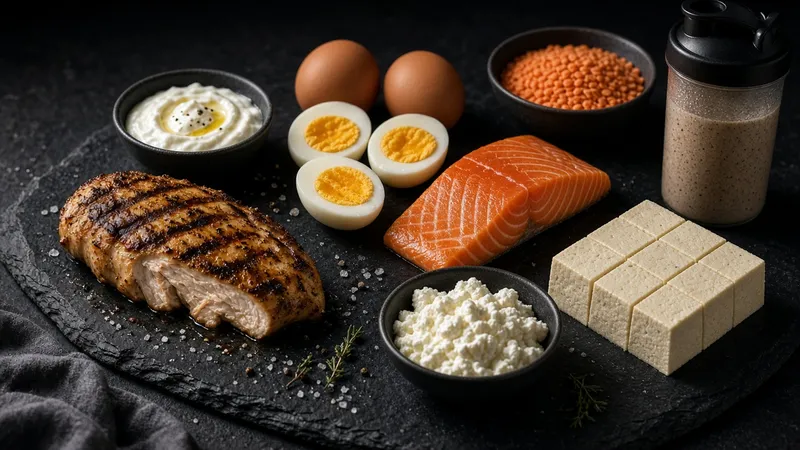
Our reading: a pre-sleep protein serving is a convenient way to reach your daily target, not a magic window. If you already eat enough protein across the day (see how much protein you need), the extra benefit is probably small. Good options: Greek yoghurt or quark, cottage cheese, a casein shake or milk.
Step 6: train earlier after a bad night
Because morning sessions were the least affected by sleep loss (Craven et al., 2022), move your session earlier when you know you slept badly. Keep the planned exercises and weights. If the bar feels slow, keep the sets but stop one rep earlier than usual (see failure vs reps in reserve).
Step 7: protect sleep most during a cut
When you’re in a deficit, sleep moves from “nice to have” to “muscle insurance” (Nedeltcheva et al., 2010). If life gets busy during a diet, reduce the deficit before you cut sleep.
What to do after a bad night: a session plan
You slept 4–5 hours and have a session planned. Here is a simple rule set.
| Situation | What to do |
|---|---|
| One bad night, morning session | Train as planned. Normal warm-up, normal weights. |
| One bad night, evening session | Train as planned, but stop sets 1 rep earlier (RIR 2–3 instead of 1–2). Skip any planned max attempts. |
| Second or third short night in a row | Keep exercises and sets; reduce load on heavy compound lifts by about 5–10%, keep isolation work as normal. |
| A week of short sleep (travel, newborn, exams) | Run a lighter week: same exercises, about two-thirds of the usual sets, RIR 2–3. Treat it like a deload. |
| Feeling dizzy, unwell or unsafe | Skip heavy squats and deadlifts. Walk, stretch or rest. |
The percentages in this table are our coaching suggestions, not numbers from studies. The idea behind them comes from the research: big lifts suffer most, and performance drops more the longer you’ve been awake.
Sleep for different lifters
Beginners. Your gains come fast from almost any sensible program. Don’t overthink sleep; just get to 7+ hours and stay consistent.
Intermediate and advanced lifters. Progress is slower and each workout matters more. Sleep is one of the few “free” levers left. Track it next to your training log for a month and see if your best sessions follow your best nights.
Shift workers and new parents. You may not be able to get 7 hours in one block. Split sleep (a core sleep plus a nap) is better than nothing. Train after your main sleep, not before it.
Older lifters. Muscle is harder to build and keep with age, and sleep often gets lighter. The basics in this guide apply. For a broader health angle, see Related on Grow My Lifespan: sleep and recovery.
Medical caution: loud snoring, gasping at night, or daytime sleepiness despite enough time in bed can be signs of sleep apnoea or another sleep disorder. Talk to your doctor. Don’t use sleeping pills or melatonin without medical advice.
How sleep compares with other recovery factors
| Factor | Effect on muscle growth | Strength of evidence | Cost |
|---|---|---|---|
| Enough training volume and effort | Large | Strong | Time and effort |
| Enough daily protein | Moderate | Strong | Food |
| Sleep (7+ hours vs short) | Probably moderate, especially on a diet | Moderate for direction, weak for size | Free |
| Pre-sleep protein | Small, mainly via total protein | Moderate (young men) | Food |
| Cold baths, massage guns, gadgets | Small or unclear | Weak | Money |
If you are already training hard with progressive overload and eating enough protein, sleep is the next thing to fix, long before any supplement.
Common mistakes
- Counting time in bed as sleep. Eight hours in bed is often only seven hours of sleep. Fix: set lights-out 8–8.5 hours before your alarm.
- Late pre-workout. An evening pre-workout can cost you sleep for the next night’s recovery. Fix: follow the caffeine cut-off table above.
- Skipping workouts after bad nights. Fix: train, but adjust the effort. The Saner et al. (2021) study suggests exercise helps protect you during sleep loss.
- Cutting hard while sleeping 5–6 hours. Fix: make the deficit smaller, or fix sleep first.
- Weekend catch-up chaos. Sleeping until noon on Sunday makes Monday night worse. Fix: keep wake time within about an hour every day.
- Testing a max after an all-nighter. Fix: keep tests for well-rested mornings.
- Buying recovery gadgets before fixing sleep. Fix: sleep first, gadgets maybe never.
FAQ
How many hours of sleep do you need to build muscle?
At least 7 hours a night, regularly, which is the general adult guideline (Watson et al., 2015). Many lifters feel and perform better with 8 or more hours. No study has found an exact “best” number for muscle growth.
Do muscles grow while you sleep?
Muscle building happens all day and night, whenever protein synthesis is higher than breakdown. Sleep supports it: protein eaten before bed is digested and used overnight (Res et al., 2012), and one night without sleep lowered muscle protein synthesis the next day (Lamon et al., 2021).
Will one bad night ruin my gains?
No. One night of total sleep loss lowered muscle protein synthesis for a day in a small study, but growth comes from months of training. Get back to your routine the next night. Repeated short sleep is the real problem.
Is it OK to train after a night of bad sleep?
Usually yes. Strength drops most in heavy compound lifts and in later sessions of the day (Knowles et al., 2018; Craven et al., 2022). Train earlier if you can, leave an extra rep in reserve and skip max attempts.
Should I drink a casein shake before bed?
It helps you reach your daily protein target and raises overnight protein synthesis (Res et al., 2012). Whether it adds muscle beyond eating enough protein during the day is not clear (Reis et al., 2021). Food like quark or cottage cheese works too.
Do naps help muscle growth?
Naps can reduce sleepiness and help performance, but there are no good studies on naps and muscle growth. Use them to top up short nights, not to replace a regular night’s sleep.
The bottom line
Sleep doesn’t replace hard training or enough protein, but short sleep makes both work less well. Aim for 7+ hours of sleep (7.5–9 hours in bed), cut caffeine early, keep alcohol low on training days, and protect your sleep most when you diet. On bad nights, train anyway, train earlier if you can and stop sets a rep sooner.
Next, read how muscle grows to understand what sleep supports, and how long to rest between sets for recovery inside the session. If you want a program to apply this to, start with our guide to every training split, and for the big lifts that suffer most from poor sleep, see the back squat and deadlift pages.
References
- Watson NF, Badr MS, Belenky G, et al. Recommended Amount of Sleep for a Healthy Adult: A Joint Consensus Statement of the American Academy of Sleep Medicine and Sleep Research Society. Sleep. 2015;38(6):843-4. doi:10.5665/sleep.4716. PubMed: 26039963 ↩
- Lamon S, Morabito A, Arentson-Lantz E, et al. The effect of acute sleep deprivation on skeletal muscle protein synthesis and the hormonal environment. Physiol Rep. 2021;9(1):e14660. doi:10.14814/phy2.14660. PubMed: 33400856 ↩
- Nedeltcheva AV, Kilkus JM, Imperial J, et al. Insufficient sleep undermines dietary efforts to reduce adiposity. Ann Intern Med. 2010;153(7):435-41. doi:10.7326/0003-4819-153-7-201010050-00006. PubMed: 20921542 ↩
- Knowles OE, Drinkwater EJ, Urwin CS, et al. Inadequate sleep and muscle strength: Implications for resistance training. J Sci Med Sport. 2018;21(9):959-968. doi:10.1016/j.jsams.2018.01.012. PubMed: 29422383 ↩
- Craven J, McCartney D, Desbrow B, et al. Effects of Acute Sleep Loss on Physical Performance: A Systematic and Meta-Analytical Review. Sports Med. 2022;52(11):2669-2690. doi:10.1007/s40279-022-01706-y. PubMed: 35708888 ↩
- Snijders T, Res PT, Smeets JS, et al. Protein Ingestion before Sleep Increases Muscle Mass and Strength Gains during Prolonged Resistance-Type Exercise Training in Healthy Young Men. J Nutr. 2015;145(6):1178-84. doi:10.3945/jn.114.208371. PubMed: 25926415 ↩
- Reis CEG, Loureiro LMR, Roschel H, et al. Effects of pre-sleep protein consumption on muscle-related outcomes - A systematic review. J Sci Med Sport. 2021;24(2):177-182. doi:10.1016/j.jsams.2020.07.016. PubMed: 32811763 ↩
- Saner NJ, Lee MJ, Kuang J, et al. Exercise mitigates sleep-loss-induced changes in glucose tolerance, mitochondrial function, sarcoplasmic protein synthesis, and diurnal rhythms. Mol Metab. 2021;43:101110. doi:10.1016/j.molmet.2020.101110. PubMed: 33137489 ↩
- Mah CD, Mah KE, Kezirian EJ, et al. The effects of sleep extension on the athletic performance of collegiate basketball players. Sleep. 2011;34(7):943-50. doi:10.5665/SLEEP.1132. PubMed: 21731144 ↩
- Dattilo M, Antunes HK, Medeiros A, et al. Sleep and muscle recovery: endocrinological and molecular basis for a new and promising hypothesis. Med Hypotheses. 2011;77(2):220-2. doi:10.1016/j.mehy.2011.04.017. PubMed: 21550729 ↩
- Gardiner C, Weakley J, Burke LM, et al. The effect of caffeine on subsequent sleep: A systematic review and meta-analysis. Sleep Med Rev. 2023;69:101764. doi:10.1016/j.smrv.2023.101764. PubMed: 36870101 ↩
- Parr EB, Camera DM, Areta JL, et al. Alcohol ingestion impairs maximal post-exercise rates of myofibrillar protein synthesis following a single bout of concurrent training. PLoS One. 2014;9(2):e88384. doi:10.1371/journal.pone.0088384. PubMed: 24533082 ↩
- Res PT, Groen B, Pennings B, et al. Protein ingestion before sleep improves postexercise overnight recovery. Med Sci Sports Exerc. 2012;44(8):1560-9. doi:10.1249/MSS.0b013e31824cc363. PubMed: 22330017 ↩