Drop Sets, Supersets and Rest-Pause: Do They Work?
Drop sets, supersets and rest-pause: what 2025–2026 meta-analyses found, how to do each one right, how to count them as sets and when they are worth using.
Key takeaways
- Drop sets, supersets and rest-pause give about the same muscle growth as normal sets in meta-analyses, not more (Sødal et al., 2023; Zhang et al., 2025; Tsartsapakis et al., 2026).
- Their real benefit is time: these techniques can roughly halve session length while keeping the training volume (Iversen et al., 2021).
- They feel harder: drop sets raise perceived effort and blood lactate, and supersets raise effort, lactate and energy cost (Havers et al., 2026; Zhang et al., 2025).
- Use them mainly on machines, cables and isolation exercises, at the end of a session, and keep heavy squats, deadlifts and presses as straight sets.
- Our counting rule: a drop set or rest-pause set with two extensions counts as about two hard sets; each half of a superset counts as a normal set. This is our convention, not a measured value.
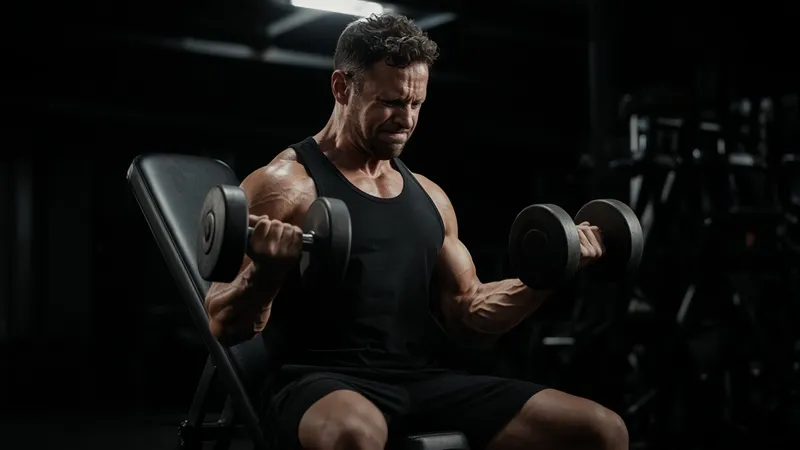
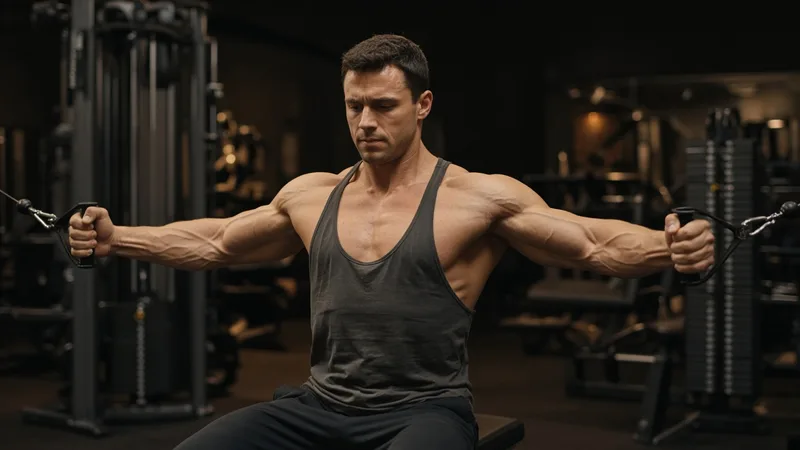
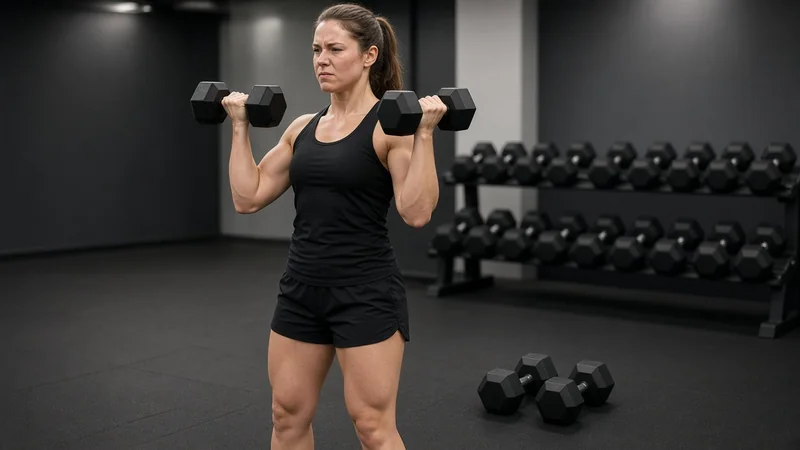
Drop sets, supersets and rest-pause are the classic “intensity techniques” of bodybuilding. Each one squeezes more hard work into less time: you strip weight and keep going (drop sets), pair two exercises back to back (supersets), or take a few breaths and grind out more reps with the same weight (rest-pause).
Gym culture often sells them as the secret to extra growth. The research tells a calmer story: they work about as well as normal sets, not better, but they save a lot of time. This guide covers what each technique is, what the latest meta-analyses found, step-by-step instructions, how to count them in your weekly volume, a sample session, and the mistakes that turn a useful tool into junk fatigue. It is part of our Training Methods section; for how methods fit into a full program, see our pillar on every training split.
Evidence in one line: these techniques give similar hypertrophy to traditional sets in less time. Use them to save time, not to unlock growth you can’t get otherwise.
What this page covers. This is the overview of the three main techniques plus a few relatives. One specific rest-pause method has its own page: myo-reps, and cluster sets have their own guide too. Deeper guides cover rest-pause and mechanical drop sets, pre-exhaust has its own guide, and DC training is a full program built around rest-pause. Supersets in depth, with pairings and a full plan, are in supersets and antagonist pairing.
Key terms
- RIR (reps in reserve): how many more reps you could have done before failure. 0 RIR means failure. See our guide to training to failure vs RIR.
- Hard set: a set taken close to failure (roughly 0–3 RIR). We count weekly volume in hard sets.
- Drop set: a set taken to or near failure, followed immediately by one or more extra sets with a lighter weight and little or no rest.
- Superset: two exercises done back to back with little or no rest between them.
- Rest-pause: a set taken close to failure, then a short pause (usually 10–20 seconds), then more reps with the same weight, repeated once or twice.
- Volume load: sets × reps × weight. Studies use it to check how much total work was done.
- Traditional sets (straight sets): normal sets with full rest between them.
The techniques at a glance
| Technique | How it works | Typical setup | Best for |
|---|---|---|---|
| Drop set | Lift to near failure, cut the weight by about 20–30%, keep going | 1 main set + 1–3 drops | Machines, cables, dumbbells |
| Superset (agonist–antagonist) | Pair opposing muscles, e.g. biceps and triceps | A1 → A2 → short rest → repeat | Saving time without losing reps |
| Superset (same muscle, “compound set”) | Two exercises for the same muscle back to back | e.g. dumbbell fly → push-up | Finishers, metabolic work |
| Superset (upper–lower) | Pair an upper- and lower-body exercise | e.g. leg curl → lateral raise | Full-body and busy schedules |
| Rest-pause | Near-failure set, 10–20 s pause, more reps, repeat | 1 set + 2 mini-sets | Machines, isolation lifts |
| Giant set | Three or more exercises in a row | 3–4 exercises, one muscle or one body area | Finishers |
The 20–30% weight drop and the 10–20 second pause are common gym conventions, not values fixed by research; studies use a range of setups.
Why they might work
Muscle growth depends mostly on doing enough hard sets close to failure with enough total volume (see how muscle grows and sets per week). Intensity techniques don’t add a new growth signal. They change how quickly you collect hard reps:
- Drop sets and rest-pause keep the muscle working near failure without long rests, so many of the reps are hard ones.
- Supersets use the rest time of one muscle to train another, so the session is shorter but each muscle still gets its sets.
The trade-off is fatigue. Drop sets raise perceived effort and blood lactate compared with traditional sets (Havers et al., 2026), and supersets raise perceived effort, lactate and energy cost (Zhang et al., 2025). That fatigue is the price you pay for the time saved.
What the research says
Drop sets
- Sødal et al. (2023) pooled studies of drop sets versus traditional sets (6 studies, 142 participants aged about 19–27). Both approaches built muscle, with no significant difference between them. Some drop-set setups took half to one-third of the time of traditional training.
- Havers et al. (2026), a newer meta-analysis of 12 studies (274 participants), found no difference in long-term hypertrophy or strength between drop sets and traditional training, but clearly higher perceived exertion and lactate with drop sets.
- Angleri et al. (2017): 32 well-trained men trained one leg with traditional sets and the other with drop sets or a pyramid system for 12 weeks, with total volume equalised. Quadriceps growth was almost identical: 7.6% (traditional) vs 7.8% (drop sets).
- Fink et al. (2018): 16 young men did either one drop set or three normal sets of triceps work for 6 weeks. The triceps grew 10.0% with the single drop set vs 5.1% with three sets, while strength (12-rep max) rose 16.1% vs 25.2%. With 8 people per group, this is a small study and the result has not been reliably repeated.
- Ozaki et al. (2018): in 9 untrained young men doing dumbbell curls for 8 weeks, one heavy set (80% of 1RM) followed by drops down to 30% of 1RM built as much arm muscle as three heavy sets or three light sets, in less time. It also improved both strength and endurance.
- Varović et al. (2021): in 16 recreationally active men doing leg extensions, drop sets gave more growth in parts of the rectus femoris (the front thigh muscle) but not in the vastus lateralis, and no extra strength. Regional findings like this are interesting but uncertain.
Grade: moderate. Drop sets reliably match traditional sets for hypertrophy in less time. Claims of superior growth rest on single small studies.
Supersets
- Zhang et al. (2025) reviewed 19 studies (313 participants). Compared with traditional sets, supersets allowed a similar number of reps and volume load in a shorter session. They gave higher lactate, energy cost and perceived exertion, and similar long-term gains in strength, strength endurance and hypertrophy. Agonist–antagonist supersets (opposing muscles) even allowed more reps than traditional sets, while supersets for the same muscle reduced the volume load.
- Mang et al. (2025), a narrative review, concluded that agonist–antagonist, reciprocal and total-body supersets cut session time by about 50% and generally lead to similar adaptations to traditional training.
- Robbins et al. (2010) reviewed agonist–antagonist paired sets and concluded they may be an efficient way to build strength and power, although the evidence was mixed.
Grade: moderate for “same results in less time”. Few superset trials measured muscle size directly, and most were short.
Rest-pause
- Prestes et al. (2019): 18 trained men and women did 6 weeks of either rest-pause or traditional sets (3 × 6 at 80% of 1RM). Strength gains were similar. The rest-pause group gained more thigh muscle thickness (11% vs 1%) and more leg press endurance. A small, short study.
- Enes et al. (2021): 28 resistance-trained men did rest-pause, drop sets or traditional sets twice a week for 8 weeks, with total volume equalised. Thigh muscle growth was similar in all groups. Rest-pause gave a larger gain in squat 1RM than traditional sets.
- Vargas-Molina et al. (2026): 23 trained adults did rest-pause or drop sets within a progressive-overload plan for 8 weeks. Lean mass rose by 1.2 kg and 1.4 kg, with no difference between groups, and bench press strength improved similarly.
Grade: moderate for “at least as good as traditional sets”. A 2026 meta-analysis found a modest hypertrophy edge for rest-pause specifically, but overall hypertrophy differences between advanced systems and traditional sets were small and not significant (Tsartsapakis et al., 2026).
The big picture
- Tsartsapakis et al. (2026), a meta-analysis of 23 studies in recreationally trained adults, found that advanced training systems as a group gave a small, non-significant hypertrophy effect compared with traditional training, and a moderate strength advantage. Drop sets and cluster-type sets matched traditional sets when volume and effort were equal.
- Cowley et al. (2026), a network meta-analysis, found no advanced method that consistently built more muscle than traditional training in untrained to moderately trained people, and called for studies in more experienced lifters.
- Iversen et al. (2021) concluded in their review of time-efficient training that supersets, drop sets and rest-pause roughly halve training time while maintaining volume, and are probably better for hypertrophy than for maximal strength.
- Krzysztofik et al. (2019) reviewed 30 studies and concluded that there is not enough evidence for specific guidelines on these techniques, but that well-trained lifters may use them as an extra stimulus, to break through plateaus and to avoid monotony.
What the research does not show: that intensity techniques build more muscle than the same effort spent on normal sets, or how they work over many months in advanced lifters. Most trials last 6–12 weeks and use young men.
How to do each technique
Drop sets
- Pick a weight you can lift for about 8–12 reps.
- Take the set to 0–1 RIR.
- Immediately reduce the weight by about 20–30% (move the pin, grab lighter dumbbells or have a partner strip plates).
- Rep out to 0–1 RIR again.
- Do 1–2 drops (3 at most). Stop when the reps per drop fall below about 5.
Good exercises: machine chest press, lat pulldown, cable rows, leg extension, leg curl, lateral raises, curls, triceps pushdowns. Avoid: heavy barbell squats, deadlifts and bench press without safeties. Form breaks down when you are this tired.
Running the rack: with dumbbells, start heavy and work down the rack one or two pairs at a time. This is a drop set with more drops; keep it to one exercise per session.
Supersets
- Choose two exercises that don’t compete for the same muscle: biceps curl + triceps pushdown, chest press + seated row, leg curl + lateral raise.
- Do a set of exercise A, walk straight to exercise B and do a set.
- Rest 60–120 seconds, then repeat.
- Keep your normal reps and RIR on both exercises.
Tip: set both stations up before you start so you aren’t hunting for equipment. In a busy gym, choose pairs you can do at one cable stack or with one pair of dumbbells.
Same-muscle supersets (for example dumbbell fly → push-up) are harder and reduce the total volume load (sets × reps × weight) you can manage (Zhang et al., 2025). Use them as a finisher, not as your main work.
Rest-pause
- Pick a weight for about 8–12 reps and take it to 0–1 RIR.
- Rack it and take 10–20 seconds (roughly 5–8 deep breaths).
- Do as many reps as you can with the same weight, stopping at 0–1 RIR.
- Pause again and repeat once more.
- Done: one main set and two mini-sets.
Myo-reps are a structured version with shorter pauses and fixed mini-sets of 3–5 reps; see our myo-reps guide.
How to count them in your weekly volume
Studies don’t give an exact conversion, so we use simple rules. These are our own conventions, chosen to avoid both under- and over-counting:
| Technique | How we count it |
|---|---|
| Drop set (main set + 1 drop) | About 1.5 hard sets |
| Drop set (main set + 2 or more drops) | About 2 hard sets |
| Rest-pause (main set + 2 mini-sets) | About 2 hard sets |
| Myo-rep set | About 2 hard sets (see myo-reps) |
| Superset | Each exercise counts as a normal set for the muscle it trains |
| Giant set | Each exercise counts as a normal set |
Aim to keep total weekly volume for each muscle in the usual 10–20 hard sets range described in our guide on sets per week.
When to use intensity techniques
| Situation | Best choice | Why |
|---|---|---|
| Short on time | Supersets (opposing muscles) | Same reps and volume in a shorter session (Zhang et al., 2025) |
| Last exercise for a muscle | Drop set or rest-pause | Many hard reps in one set |
| Isolation work for small muscles (side delts, arms, calves) | Drop sets, rest-pause, myo-reps | Low injury risk, easy to change weight |
| Heavy compound lifts | Straight sets | Form and safety come first |
| Training at home with limited weights | Rest-pause or mechanical drop sets | More hard reps from a light load |
| Deload week | None | The point is to reduce fatigue (see deload) |
Sample session: 50-minute upper-body day
A normal upper-body day using supersets and one drop set. Sets × reps, effort as RIR.
| Order | Exercise | Sets × reps | RIR | Rest |
|---|---|---|---|---|
| 1 | Bench press | 3 × 6–8 | 1–2 | 2–3 min (straight sets) |
| 2a | Incline dumbbell press | 3 × 8–10 | 1–2 | → straight to 2b |
| 2b | Seated cable row | 3 × 10–12 | 1–2 | 90 s after 2b |
| 3a | Lat pulldown | 3 × 10–12 | 1 | → straight to 3b |
| 3b | Lateral raise | 3 × 12–15 | 1 | 90 s after 3b |
| 4a | Biceps curl | 2 × 10–12, last set + 2 drops | 0–1 | → straight to 4b |
| 4b | Overhead triceps extension | 2 × 10–12, last set rest-pause | 0–1 | 60–90 s |
Volume audit (this session): chest 6 sets, back 6, side delts 3, biceps about 3, triceps about 3 (plus indirect work from presses). Run it twice a week with a lower-body day in between, and most upper-body muscles land in the 10–20 sets range. Done as straight sets with full rest, the same session would usually take noticeably longer; supersets can cut session time by about half (Mang et al., 2025). The set counts are our own example.
Progression
- Straight sets first. Progress your main lifts with normal progressive overload: add reps, then load.
- Progress the technique too. For a drop set, try to beat the reps of the main set or the first drop. For rest-pause, try to add reps across the mini-sets with the same weight. When total reps rise by about 3–5, add weight. (Our rule of thumb.)
- Cycle them. Use intensity techniques for a few weeks, then switch back to straight sets. This keeps fatigue under control and gives you a clear before/after comparison.
Common mistakes
- Using them on everything. If every exercise ends in a drop set, fatigue climbs and the quality of your main lifts suffers. Use them on 1–3 exercises per session.
- Doing them on heavy barbell lifts. Failure-level drop sets on squats or deadlifts raise injury risk for little extra benefit. Use machines and cables.
- Not counting them. A drop set with several drops is not “one set”. Count it, or your weekly volume will creep up without you noticing.
- Resting too long. A 2-minute break turns a rest-pause set into a normal set. Keep pauses short.
- Same-muscle supersets as your main work. They reduce the total volume load you can manage (Zhang et al., 2025). Keep them for finishers.
- Expecting magic. The research shows similar growth, not extra growth. If you have plenty of time, straight sets are just as good.
- Using them in a deload. A deload week should be easy.
Intensity techniques vs straight sets
| Straight sets | Drop sets | Supersets | Rest-pause | |
|---|---|---|---|---|
| Muscle growth | Reference | Similar (meta-analyses) | Similar (meta-analysis) | Similar, possibly slightly better (one meta-analysis) |
| Strength | Reference | Similar | Similar | Similar or slightly better (one trial) |
| Time | Longest | Much shorter | About half | Shorter |
| Perceived effort | Moderate | High | Higher | High |
| Best exercises | All | Machines, cables, dumbbells | Most pairs | Machines, isolation |
Make it better
- Finish with lengthened partials. On the last drop, keep going with lengthened partials in the stretched half of the movement.
- Pair stretch-focused exercises. Superset an overhead triceps extension with an incline curl: both load the muscle at long lengths, and they don’t compete.
- Light BFR as a joint-friendly finisher. If it is safe for you, a blood flow restriction set at the end of an arm day gives many hard reps with a light load.
FAQ
Are drop sets good for muscle growth?
Yes, but not better than normal sets. Meta-analyses find similar hypertrophy with drop sets and traditional sets, with drop sets often taking much less time (Sødal et al., 2023; Havers et al., 2026).
Do supersets build muscle?
Yes. A 2025 meta-analysis of 19 studies found similar gains in hypertrophy and strength with supersets and traditional sets, in shorter sessions (Zhang et al., 2025). Pair opposing muscles to keep your reps up.
Is rest-pause better than drop sets?
They seem about equal. In trained adults, 8 weeks of rest-pause or drop sets gave similar lean mass and strength gains (Vargas-Molina et al., 2026), and both matched traditional sets for thigh growth in another trial (Enes et al., 2021).
How many drop sets should I do?
One or two per muscle per session is plenty, usually on the last exercise. Count a drop set with two or more drops as about two hard sets (our convention).
Should beginners use intensity techniques?
They don’t need to. Beginners grow well with straight sets and simple progression, and they benefit more from practising technique. Supersets with opposing muscles are fine for saving time.
Can I do drop sets every workout?
You can, but limit them to one or two exercises, mainly isolation work. They raise perceived effort and fatigue (Havers et al., 2026), so using them on every exercise makes recovery harder.
References
- Havers T, Micke F, Geisler S, et al. Acute and Chronic Effects of Drop-Set Training: A Meta-Analysis and Systematic Review. Sports Med Open. 2026;12(1). doi:10.1186/s40798-026-01012-1. PubMed: 41920484 ↩
- Zhang X, Weakley J, Li H, et al. Superset Versus Traditional Resistance Training Prescriptions: A Systematic Review and Meta-analysis Exploring Acute and Chronic Effects on Mechanical, Metabolic, and Perceptual Variables. Sports Med. 2025;55(4):953-975. doi:10.1007/s40279-025-02176-8. PubMed: 39903375 ↩
- Sødal LK, Kristiansen E, Larsen S, et al. Effects of Drop Sets on Skeletal Muscle Hypertrophy: A Systematic Review and Meta-analysis. Sports Med Open. 2023;9(1):66. doi:10.1186/s40798-023-00620-5. PubMed: 37523092 ↩
- Angleri V, Ugrinowitsch C, Libardi CA. Crescent pyramid and drop-set systems do not promote greater strength gains, muscle hypertrophy, and changes on muscle architecture compared with traditional resistance training in well-trained men. Eur J Appl Physiol. 2017;117(2):359-369. doi:10.1007/s00421-016-3529-1. PubMed: 28130627 ↩
- Fink J, Schoenfeld BJ, Kikuchi N, et al. Effects of drop set resistance training on acute stress indicators and long-term muscle hypertrophy and strength. J Sports Med Phys Fitness. 2018;58(5):597-605. doi:10.23736/S0022-4707.17.06838-4. PubMed: 28474868 ↩
- Ozaki H, Kubota A, Natsume T, et al. Effects of drop sets with resistance training on increases in muscle CSA, strength, and endurance: a pilot study. J Sports Sci. 2018;36(6):691-696. doi:10.1080/02640414.2017.1331042. PubMed: 28532248 ↩
- Varović D, Žganjer K, Vuk S, et al. Drop-Set Training Elicits Differential Increases in Non-Uniform Hypertrophy of the Quadriceps in Leg Extension Exercise. Sports (Basel). 2021;9(9). doi:10.3390/sports9090119. PubMed: 34564324
- Mang ZA, Beam JR, Kravitz L. The Acute and Chronic Effects of Superset Resistance Training Versus Traditional Resistance Training-A Narrative Review. J Strength Cond Res. 2025;39(11):1216-1234. doi:10.1519/JSC.0000000000005246. PubMed: 41118588 ↩
- Robbins DW, Young WB, Behm DG, et al. Agonist-antagonist paired set resistance training: a brief review. J Strength Cond Res. 2010;24(10):2873-82. doi:10.1519/JSC.0b013e3181f00bfc. PubMed: 20733520 ↩
- Prestes J, A Tibana R, de Araujo Sousa E, et al. Strength and Muscular Adaptations After 6 Weeks of Rest-Pause vs. Traditional Multiple-Sets Resistance Training in Trained Subjects. J Strength Cond Res. 2019;33 Suppl 1:S113-S121. doi:10.1519/JSC.0000000000001923. PubMed: 28617715 ↩
- Enes A, Alves RC, Schoenfeld BJ, et al. Rest-pause and drop-set training elicit similar strength and hypertrophy adaptations compared with traditional sets in resistance-trained males. Appl Physiol Nutr Metab. 2021;46(11):1417-1424. doi:10.1139/apnm-2021-0278. PubMed: 34260860 ↩
- Vargas-Molina S, García-Palumbo A, Petro JL, et al. Comparison of Repetition-Based Progressive-Overload Strategies in Resistance Training: Rest-Pause Versus Drop Sets. Scand J Med Sci Sports. 2026;36(7):e70327. doi:10.1111/sms.70327. PubMed: 42340141 ↩
- Tsartsapakis I, Zafeiroudi A, Kouthouris C. Effects of Advanced Resistance Training Systems on Muscle Hypertrophy and Strength in Recreationally Trained Adults: A Systematic Review and Meta-Analysis. J Funct Morphol Kinesiol. 2026;11(1). doi:10.3390/jfmk11010080. PubMed: 41718208 ↩
- Cowley N, Nicholson V, Timmins R, et al. The Effects of Advanced Resistance Training Prescription Methods on Strength, Power, Hypertrophy, and Performance Adaptations in Healthy Adults: A Systematic Review and Bayesian Network Meta-analysis. Sports Med. 2026;56(8):1955-1977. doi:10.1007/s40279-026-02428-1. PubMed: 41951916 ↩
- Iversen VM, Norum M, Schoenfeld BJ, et al. No Time to Lift? Designing Time-Efficient Training Programs for Strength and Hypertrophy: A Narrative Review. Sports Med. 2021;51(10):2079-2095. doi:10.1007/s40279-021-01490-1. PubMed: 34125411 ↩
- Krzysztofik M, Wilk M, Wojdała G, et al. Maximizing Muscle Hypertrophy: A Systematic Review of Advanced Resistance Training Techniques and Methods. Int J Environ Res Public Health. 2019;16(24). doi:10.3390/ijerph16244897. PubMed: 31817252 ↩