Blood Flow Restriction (BFR) Training for Hypertrophy
BFR training explained: how light loads and a cuff build muscle, what studies in trained lifters found, the 30-15-15-15 setup and who should avoid it.
Key takeaways
- BFR training uses light loads (20–40% of 1RM) with a cuff around the top of the arm or thigh that partly restricts blood flow.
- Meta-analyses find light-load BFR gives similar muscle growth to heavy training, but usually smaller strength gains (Lixandrão et al., 2018; Centner et al., 2019).
- The standard setup is 30-15-15-15 reps with 30–60 s rest, the cuff at 40–80% of arterial occlusion pressure, for 5–10 minutes per exercise (Patterson et al., 2019).
- For lifters, BFR is most useful for joint-friendly arm and leg work, deloads and periods when heavy lifting isn't possible. Adding a cuff to heavy sets adds nothing (Mckee et al., 2026).
- BFR is not for everyone: people with high blood pressure, heart or vascular disease, a history of blood clots, recent surgery or pregnancy should not use it without medical clearance.
Blood flow restriction (BFR) training means lifting light weights while a cuff or band around the top of your arm or thigh partly restricts blood flow to the working muscle. With loads as low as 20–30% of your one-rep max, sets become very hard very quickly, and studies show the muscle can grow about as much as it does with heavy training. You will also hear it called occlusion training or by the Japanese brand name KAATSU.
That sounds like a shortcut, and it partly is. But BFR has real limits: strength gains are usually smaller, the evidence in experienced lifters is thin, and it is not safe for everyone. This guide covers how BFR works, what the research shows (including in trained lifters), a standard setup, how lifters can use it in a normal program, and who should not use it. It is part of our Training Methods section; for the bigger picture of how methods fit into a weekly plan, see our pillar on every training split.
Evidence in one line: light-load BFR builds muscle about as well as heavy lifting in most groups studied, with smaller strength gains. For trained lifters it is a useful extra tool, not a replacement for heavy training.
Safety first. BFR changes blood flow and raises blood pressure during exercise. If you have high blood pressure, heart or blood vessel disease, diabetes, kidney disease, a clotting disorder or a past blood clot, recent surgery or injury, or you are pregnant or recently gave birth, talk to your doctor before trying it. This page is general training information, not medical advice.
Key terms
- 1RM: the most weight you can lift once.
- AOP (arterial occlusion pressure), also called LOP (limb occlusion pressure): the cuff pressure at which blood flow into the limb stops completely. BFR uses a percentage of this pressure, never full occlusion.
- Low-load BFR (LL-BFR): light weights (20–40% of 1RM) with a cuff. This is what most studies test.
- Practical BFR: using elastic wraps (such as knee wraps) instead of a pressure-controlled cuff. Cheaper, but you can’t measure the pressure.
- Continuous vs intermittent: whether the cuff stays inflated during rest periods (continuous) or is released between sets (intermittent).
How BFR works
The cuff is tight enough to slow blood leaving the muscle through the veins, and to reduce, but not stop, blood flowing in through the arteries. Blood and metabolites pool in the muscle, oxygen drops, and the muscle fatigues much faster than it normally would with a light weight.
One common explanation is that this fatigue forces the body to recruit more and larger motor units, so a light set ends up working muscle fibres that usually only heavy loads or sets close to failure reach. Cell swelling and metabolic stress may also play a role. Researchers still debate the exact mechanism (Patterson et al., 2019). For the bigger picture, see how muscle grows.
What matters in practice: the sets must be hard. BFR is not a passive treatment. The growth comes from training close to failure under restriction.
What the research says
Light-load BFR vs heavy training
- Lixandrão et al. (2018), a meta-analysis comparing low-load BFR (under 50% of 1RM) with high-load training (over 65% of 1RM), found similar muscle growth regardless of cuff width or pressure method, but larger strength gains with heavy loads.
- Grønfeldt et al. (2020) pooled 16 studies (310 participants, aged 20–80) and found no clear difference in maximal strength gains between low-load BFR and heavy training. So the strength gap may be smaller than once thought, but it rarely favours BFR.
- Centner et al. (2019), in older adults (11 studies, 238 people), found low-load BFR gave similar muscle growth to heavy training but smaller strength gains. It also gave larger strength gains than the same light training without a cuff.
- Fabero-Garrido et al. (2022), in adults over 60 (14 studies), found the same pattern: similar hypertrophy to heavy training, slightly smaller strength gains, and more growth and strength than light training without BFR.
Two careful within-person studies show the same:
- Ellefsen et al. (2015): 9 untrained women trained one leg with BFR at 30% of 1RM to exhaustion and the other with heavy loads (6–10RM) for 12 weeks. Strength and growth of the lower thigh were similar. Growth was lower under the cuff (the upper thigh) with BFR.
- Wang et al. (2026): 24 resistance-trained men did Bulgarian split squats with one leg using BFR (30% of 1RM, 30-15-15-15 reps, 80% of AOP) and the other heavy (80% of 1RM, 4 × 10) for 6 weeks. Quadriceps thickness rose by 8.1% vs 9.3%, and strength by 10.7% vs 13.0%, with no significant difference between legs.
Trained lifters
Most BFR research is in untrained people, older adults and rehab patients. The trained-lifter evidence is smaller but encouraging:
- Bjørnsen et al. (2019): 17 national-level powerlifters were split into two groups. One did two one-week blocks of five BFR front-squat sessions (about 30% of 1RM, first and last set to failure) within a 6.5-week period; the other front-squatted conventionally at 60–85% of 1RM. Quadriceps area grew 7.7% vs 0.5%, together with selective growth of type 1 (slow-twitch) fibres. Strength changes did not differ between groups, although front-squat 1RM only increased significantly in the conventional group.
- Lowery et al. (2014): 20 trained men used practical BFR (elastic wraps) for the biceps for 4 weeks of an 8-week program. Biceps thickness increased about as much in the BFR phase as in the high-intensity phase.
- Luebbers et al. (2014): 62 college American football players added light BFR bench press and squat sets with knee wraps (20% of 1RM, 30-20-20-20 reps) to their strength program for 7 weeks. The only clear group difference was in squat 1RM, which the authors credited to the BFR program; limb girths did not clearly differ.
- Huang et al. (2026), a meta-analysis of 12 studies in 859 team-sport athletes, found that adding BFR to resistance training gave a small extra gain in muscle size and strength, but no improvement in jumping or sprinting.
Combining BFR with heavy training
Yasuda et al. (2011) compared heavy bench pressing (75% of 1RM), light BFR bench pressing (30% of 1RM) and a combination (two BFR sessions and one heavy session per week) in 40 young men for 6 weeks. The combination gave strength gains close to heavy training alone, while BFR alone gave the smallest strength and size gains. This supports using BFR alongside heavy work, not instead of it.
What doesn’t work is putting a cuff on during heavy sets. Mckee et al. (2026) pooled 8 long-term studies and found that adding BFR to high-load training gave no extra muscle growth or strength (very low certainty evidence).
Cuff pressure and width
- Counts et al. (2016): 40% and 90% of AOP gave the same muscle growth (about 10%) and strength over 8 weeks of arm training. Very high pressures don’t seem necessary.
- Laurentino et al. (2016): a narrow (5 cm) and a wide (10 cm) cuff, both set to 80% of AOP, gave similar strength and growth over 12 weeks.
- Jessee et al. (2016): in 249 people, the pressure needed to stop arm blood flow depended on cuff width (on average 145 mmHg for a 5 cm cuff, 123 for 10 cm and 120 for 12 cm) and above all on arm size. That is why a single “standard” pressure doesn’t work for everyone.
Practical BFR with wraps
Elastic knee wraps around the upper thigh or arm are the cheap option. In an acute study of 12 trained men, wraps used for a 30-15-15-15 leg-press protocol at 30% of 1RM increased muscle swelling and activation without signs of extra muscle damage (Wilson et al., 2013). The problem is that nobody agrees on how tight to wrap: studies have used different overlap, stretch and perceived-tightness methods (Aniceto & da Silva Leandro, 2022). With wraps you cannot know your actual pressure, so be conservative.
Evidence grade
| Question | Evidence | Grade |
|---|---|---|
| Does light-load BFR build muscle? | Several meta-analyses | Strong |
| As much as heavy training? | Meta-analyses (mostly untrained/older adults, arms and thighs) | Moderate |
| As much strength as heavy training? | Usually less; one meta-analysis found no clear difference | Moderate: probably less |
| Useful for trained lifters? | A few small trials, one meta-analysis in team athletes | Promising / preliminary |
| Does adding a cuff to heavy sets help? | 2026 meta-analysis | No (very low certainty) |
| Chest, back, shoulders (above the cuff)? | Little direct data | No direct evidence |
A standard BFR protocol
These guidelines come from a 2019 position stand written by BFR researchers (Patterson et al., 2019):
| Variable | Recommendation |
|---|---|
| Load | 20–40% of 1RM |
| Reps | 75 reps over 4 sets: 30-15-15-15, or sets to concentric failure |
| Sets | 2–4 per exercise |
| Rest | 30–60 s between sets, cuff kept on |
| Pressure | 40–80% of AOP, measured with the cuff you train with |
| Cuff time | 5–10 minutes per exercise, then release before the next exercise |
| Cuff width | About 5 cm (small), 10–12 cm (medium) or 17–18 cm (large) |
| Rep speed | About 1–2 s up and 1–2 s down |
| Frequency | 2–3 times per week (studies also used short phases of 1–2 sessions a day for 1–3 weeks) |
The position stand also notes that at the lowest loads (around 20% of 1RM), a higher pressure (around 80% of AOP) may be needed, and that 75 reps across four sets seems to be enough volume for most people.
Setting the pressure
- Best: a pneumatic BFR cuff that measures your limb occlusion pressure and sets a percentage of it within the 40–80% range.
- Next best: a cuff with a gauge, set by a qualified coach or physiotherapist who can measure your occlusion pressure.
- Wraps or elastic bands: snug, never painful. You should not lose feeling or colour in the hand or foot, and the limb should not go numb or tingle. If it does, the wrap is too tight. Release it immediately.
Always place the cuff on the upper arm (just below the shoulder) or the upper thigh (just below the groin). Never on the forearm, lower leg, neck or trunk.
How lifters can use BFR
Option 1: arm finisher (upper days)
| Exercise | Load | Reps | Rest | Cuff |
|---|---|---|---|---|
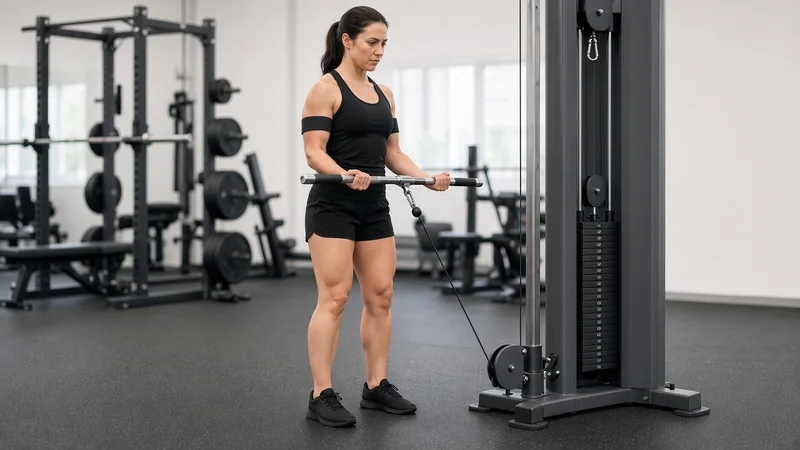
| Cable or dumbbell biceps curl | 20–30% of 1RM | 30-15-15-15 | 30 s | Upper arms, on for the whole exercise |
| Release the cuffs for 1–2 minutes | ||||
| Cable pushdown or overhead triceps extension | 20–30% of 1RM | 30-15-15-15 | 30 s | Upper arms |
Do this after your heavy pressing and pulling. Each exercise takes about 4 minutes.
Option 2: joint-friendly leg day
For weeks when your knees, hips or back need a break from heavy loading:
| Exercise | Load | Reps | Rest |
|---|---|---|---|
| Leg press | 30% of 1RM | 30-15-15-15 | 30–60 s |
| Leg extension | 20–30% of 1RM | 30-15-15-15 | 30–60 s |
| Leg curl | 20–30% of 1RM | 30-15-15-15 | 30–60 s |
| Standing calf raise | Light | 30-15-15-15 | 30–60 s |
Release the cuffs between exercises so total time under restriction stays within 5–10 minutes per exercise.
Option 3: extra volume during a deload or a heavy-lifting break
Keep compound lifts light (or skip them) and use BFR on 2–3 arm or leg isolation exercises, 2–3 times a week. If you are recovering from an injury or surgery, only do this with your physiotherapist’s approval and supervision: post-surgery patients have a higher clot risk (Bond et al., 2019).
Sample week (upper/lower, 4 days)
| Day | Main work | BFR add-on |
|---|---|---|
| Upper A | Bench press, rows, overhead press (heavy) | BFR biceps curl |
| Lower A | Squat, Romanian deadlift (heavy) | None |
| Upper B | Incline press, pulldowns (moderate) | BFR triceps pushdown |
| Lower B | Leg press, lunges (moderate) | BFR leg extension and calf raise |
For a full four-day template, see our upper/lower split guide.
How to count BFR sets
A 30-15-15-15 sequence on one exercise is four sets, but the first set is long and light and only gets hard near the end. We count one BFR exercise (4 sets) as about 3 hard sets in weekly volume. That is our own convention, not a measured value. See sets per week for muscle growth for the 10–20 sets per muscle per week range most programs use.
Progression
- Add reps first. If you complete 30-15-15-15 easily, switch to sets to failure with the same load and track total reps.
- Then add load in small steps, staying within 20–40% of 1RM.
- Keep the pressure constant. Don’t use higher pressure to make sets harder. Higher pressure did not add growth in a direct comparison (Counts et al., 2016), and it increases discomfort and the cardiovascular response (Patterson et al., 2019).
- Run BFR in blocks of a few weeks (our suggestion: 4–8 weeks), then return to normal training on those exercises.
Safety: who should not use BFR
BFR has a good safety record in healthy people when done correctly, but it is not risk-free.
What the safety research shows:
- In 19 studies of patients with musculoskeletal problems, rare adverse events included one upper-limb deep vein thrombosis and rhabdomyolysis. In the randomised trials, people doing BFR were not more likely to have an adverse event than people exercising without it (Minniti et al., 2020).
- A military literature review of case reports, surveys and trials listed numbness, dizziness, bruising under the skin and rhabdomyolysis as the most commonly reported adverse events (Anderson et al., 2022).
- The 2019 position stand estimated the rhabdomyolysis rate from published studies at 0.07–0.2%, and noted a large Japanese survey of over 12,000 KAATSU users that reported very low rates of blood clots (Patterson et al., 2019).
- Blood pressure during BFR exercise is higher than in normal exercise, especially in people with high blood pressure, although it drops more afterwards (Domingos & Polito, 2018).
Do not use BFR without medical clearance if you have (based on the risk-screening model by Nascimento et al., 2022 and the blood-clot risk factors listed by Patterson et al., 2019):
- High blood pressure, heart disease or other cardiovascular disease
- Diabetes or chronic kidney disease
- A personal or family history of deep vein thrombosis or pulmonary embolism, or a clotting disorder
- Recent surgery, a recent hip, pelvis or long-bone fracture, or long periods of immobility
- Pregnancy or the months after giving birth
- Rheumatoid arthritis
- Cancer
- Use of anabolic steroids or other performance-enhancing drugs
Also talk to a doctor first if you are under 18, take blood-pressure medication, or have any doubt.
Stop immediately and remove the cuff if you feel: numbness or tingling, sharp pain, dizziness, or if your hand or foot turns pale or blue. Seek medical help for unusual swelling, calf pain, or dark urine with severe muscle pain in the days after training.
Common mistakes
- Wrapping too tight. More pressure is not better. 40% and 90% of occlusion gave the same growth in one study (Counts et al., 2016).
- Putting the cuff in the wrong place. Upper arm or upper thigh only, as close to the shoulder or groin as possible.
- Using heavy weights with the cuff. BFR is for light loads. Adding a cuff to heavy sets adds risk and no growth.
- Leaving the cuff on for the whole workout. Keep it to 5–10 minutes per exercise and release between exercises.
- Long rests with the cuff on. Stick to 30–60 s. Long rests under pressure just add discomfort.
- Replacing all heavy training with BFR. You will lose strength. Use BFR as an add-on or a temporary substitute.
- Skipping the health check. Read the safety list above before your first session.
BFR compared with other options
| Light-load BFR | Heavy training | Light training (no cuff) | Myo-reps | |
|---|---|---|---|---|
| Load | 20–40% of 1RM | 65–85% of 1RM | 20–40% of 1RM | Moderate (12–20RM) |
| Muscle growth | Similar to heavy (meta-analyses) | Gold standard | Less than BFR in older adults (Fabero-Garrido et al., 2022) | Similar to straight sets (1 trial) |
| Strength | Usually lower | Best | Lower | Similar (1 trial) |
| Joint stress | Low | High | Low | Moderate |
| Equipment | Cuffs or wraps | Barbell, machines | Anything | Anything |
| Who should avoid it | See safety list | Some injuries | Almost nobody | Almost nobody |
Make it better
- Finish with lengthened partials. On the last BFR set, keep going with lengthened partials in the stretched half until you can’t reach halfway.
- Use machines and cables. Fixed paths make it easy to keep the reps fast and controlled while the cuff is on.
- Plan it for problem weeks. Keep a BFR arm or leg session ready for travel (bands and light dumbbells) or for weeks when a joint needs rest from heavy loads.
FAQ
Does BFR training build muscle as well as heavy weights?
In most studies, yes. Meta-analyses find similar muscle growth with light-load BFR and heavy training, but usually smaller strength gains (Lixandrão et al., 2018; Centner et al., 2019). Evidence in experienced lifters is limited to a few small trials.
Is BFR training safe?
For healthy people using correct pressures and cuff times, serious problems are rare. Reported side effects include numbness, dizziness, bruising and, rarely, rhabdomyolysis or blood clots (Anderson et al., 2022). People with cardiovascular disease, clotting problems, recent surgery or pregnancy should not use it without medical clearance.
How tight should BFR bands be?
Research protocols use 40–80% of the pressure that would fully stop blood flow, measured with the cuff being used (Patterson et al., 2019). With elastic bands or wraps you can’t measure this, so keep them snug but not painful, and never so tight that your hand or foot goes numb, tingles or changes colour.
Can I use knee wraps for BFR?
Yes, studies of “practical BFR” have used elastic knee wraps (Lowery et al., 2014; Luebbers et al., 2014). The downside is that you can’t measure the pressure, and methods for setting the tightness vary between studies.
How long can you keep BFR cuffs on?
The 2019 position stand recommends 5–10 minutes of restriction per exercise, with the cuff released between exercises (Patterson et al., 2019).
Can BFR train the chest and shoulders?
Cuffs only go on the arms and legs. One trial used arm cuffs during bench presses and found triceps growth, but it did not measure the chest (Yasuda et al., 2011). There is little direct data on growth of the chest, back or shoulders with BFR.
Should I put cuffs on during heavy sets?
No. A 2026 meta-analysis found no extra muscle growth or strength from adding BFR to high-load training (Mckee et al., 2026).
References
- Patterson SD, Hughes L, Warmington S, et al. Blood Flow Restriction Exercise: Considerations of Methodology, Application, and Safety. Front Physiol. 2019;10:533. doi:10.3389/fphys.2019.00533. PubMed: 31156448 ↩
- Lixandrão ME, Ugrinowitsch C, Berton R, et al. Magnitude of Muscle Strength and Mass Adaptations Between High-Load Resistance Training Versus Low-Load Resistance Training Associated with Blood-Flow Restriction: A Systematic Review and Meta-Analysis. Sports Med. 2018;48(2):361-378. doi:10.1007/s40279-017-0795-y. PubMed: 29043659 ↩
- Grønfeldt BM, Lindberg Nielsen J, Mieritz RM, et al. Effect of blood-flow restricted vs heavy-load strength training on muscle strength: Systematic review and meta-analysis. Scand J Med Sci Sports. 2020;30(5):837-848. doi:10.1111/sms.13632. PubMed: 32031709 ↩
- Centner C, Wiegel P, Gollhofer A, et al. Effects of Blood Flow Restriction Training on Muscular Strength and Hypertrophy in Older Individuals: A Systematic Review and Meta-Analysis. Sports Med. 2019;49(1):95-108. doi:10.1007/s40279-018-0994-1. PubMed: 30306467 ↩
- Fabero-Garrido R, Gragera-Vela M, Del Corral T, et al. Effects of Low-Load Blood Flow Restriction Resistance Training on Muscle Strength and Hypertrophy Compared with Traditional Resistance Training in Healthy Adults Older Than 60 Years: Systematic Review and Meta-Analysis. J Clin Med. 2022;11(24). doi:10.3390/jcm11247389. PubMed: 36556004 ↩
- Ellefsen S, Hammarström D, Strand TA, et al. Blood flow-restricted strength training displays high functional and biological efficacy in women: a within-subject comparison with high-load strength training. Am J Physiol Regul Integr Comp Physiol. 2015;309(7):R767-79. doi:10.1152/ajpregu.00497.2014. PubMed: 26202071 ↩
- Wang Y, Zhao X, Zhang L, et al. Unilateral low-load blood flow restriction vs. high-load training in the Bulgarian split squat: a randomized within-subject design on strength, hypertrophy, and asymmetry. Front Physiol. 2026;17:1786733. doi:10.3389/fphys.2026.1786733. PubMed: 41983008 ↩
- Bjørnsen T, Wernbom M, Kirketeig A, et al. Type 1 Muscle Fiber Hypertrophy after Blood Flow-restricted Training in Powerlifters. Med Sci Sports Exerc. 2019;51(2):288-298. doi:10.1249/MSS.0000000000001775. PubMed: 30188363 ↩
- Lowery RP, Joy JM, Loenneke JP, et al. Practical blood flow restriction training increases muscle hypertrophy during a periodized resistance training programme. Clin Physiol Funct Imaging. 2014;34(4):317-21. doi:10.1111/cpf.12099. PubMed: 24188499 ↩
- Luebbers PE, Fry AC, Kriley LM, et al. The effects of a 7-week practical blood flow restriction program on well-trained collegiate athletes. J Strength Cond Res. 2014;28(8):2270-80. doi:10.1519/JSC.0000000000000385. PubMed: 24476782 ↩
- Huang Q, Xiao L, Zheng S, et al. Muscle hypertrophy and strength improvements following blood flow restriction combined with resistance training in team-athletes: a systematic review and meta-analysis. Front Physiol. 2026;17:1812707. doi:10.3389/fphys.2026.1812707. PubMed: 42549104 ↩
- Yasuda T, Ogasawara R, Sakamaki M, et al. Combined effects of low-intensity blood flow restriction training and high-intensity resistance training on muscle strength and size. Eur J Appl Physiol. 2011;111(10):2525-33. doi:10.1007/s00421-011-1873-8. PubMed: 21360203 ↩
- Mckee JR, Selva Raj I, Marston KJ, et al. Acute and Chronic Effects of High-Load Resistance Training With Blood Flow Restriction in Healthy Adults: A Systematic Review and Meta-Analysis. J Strength Cond Res. 2026;40(7):822-842. doi:10.1519/JSC.0000000000005467. PubMed: 42223143 ↩
- Counts BR, Dankel SJ, Barnett BE, et al. Influence of relative blood flow restriction pressure on muscle activation and muscle adaptation. Muscle Nerve. 2016;53(3):438-45. doi:10.1002/mus.24756. PubMed: 26137897 ↩
- Laurentino GC, Loenneke JP, Teixeira EL, et al. The Effect of Cuff Width on Muscle Adaptations after Blood Flow Restriction Training. Med Sci Sports Exerc. 2016;48(5):920-5. doi:10.1249/MSS.0000000000000833. PubMed: 26656773 ↩
- Jessee MB, Buckner SL, Dankel SJ, et al. The Influence of Cuff Width, Sex, and Race on Arterial Occlusion: Implications for Blood Flow Restriction Research. Sports Med. 2016;46(6):913-21. doi:10.1007/s40279-016-0473-5. PubMed: 26820301 ↩
- Wilson JM, Lowery RP, Joy JM, et al. Practical blood flow restriction training increases acute determinants of hypertrophy without increasing indices of muscle damage. J Strength Cond Res. 2013;27(11):3068-75. doi:10.1519/JSC.0b013e31828a1ffa. PubMed: 23446173
- Aniceto RR, da Silva Leandro L. Practical Blood Flow Restriction Training: New Methodological Directions for Practice and Research. Sports Med Open. 2022;8(1):87. doi:10.1186/s40798-022-00475-2. PubMed: 35763185
- Bond CW, Hackney KJ, Brown SL, et al. Blood Flow Restriction Resistance Exercise as a Rehabilitation Modality Following Orthopaedic Surgery: A Review of Venous Thromboembolism Risk. J Orthop Sports Phys Ther. 2019;49(1):17-27. doi:10.2519/jospt.2019.8375. PubMed: 30208794
- Minniti MC, Statkevich AP, Kelly RL, et al. The Safety of Blood Flow Restriction Training as a Therapeutic Intervention for Patients With Musculoskeletal Disorders: A Systematic Review. Am J Sports Med. 2020;48(7):1773-1785. doi:10.1177/0363546519882652. PubMed: 31710505
- Anderson KD, Rask DMG, Bates TJ, et al. Overall Safety and Risks Associated with Blood Flow Restriction Therapy: A Literature Review. Mil Med. 2022;187(9-10):1059-1064. doi:10.1093/milmed/usac055. PubMed: 35284924 ↩
- Domingos E, Polito MD. Blood pressure response between resistance exercise with and without blood flow restriction: A systematic review and meta-analysis. Life Sci. 2018;209:122-131. doi:10.1016/j.lfs.2018.08.006. PubMed: 30086274
- Nascimento DDC, Rolnick N, Neto IVS, et al. A Useful Blood Flow Restriction Training Risk Stratification for Exercise and Rehabilitation. Front Physiol. 2022;13:808622. doi:10.3389/fphys.2022.808622. PubMed: 35360229