Vegan and Plant-Based Muscle Building: Protein, Food Plan and Supplements
Vegan bodybuilding: how much plant protein you need to build muscle, what trials show, a sample 160 g protein day, the best sources and 3 key supplements.
Key takeaways
- You can build muscle on a vegan diet. In two training trials, vegans and omnivores eating about 1.6–2 g protein per kg gained the same muscle and strength (Hevia-Larraín et al., 2021; Monteyne et al., 2023).
- Plant proteins have less leucine, lysine and methionine and are digested a little less well, so aim for the upper end: about 1.8–2.2 g/kg/day and roughly 30–45 g protein per meal (our convention).
- Soy, pea and blends work: soy matched whey and other animal proteins in a meta-analysis of 9 studies (Messina et al., 2018), and a 30 g wheat-corn-pea blend matched milk protein for muscle protein synthesis (Pinckaers et al., 2023).
- People who eat no meat start with lower muscle creatine and may gain more from creatine monohydrate (Burke et al., 2003). Vitamin B12 is non-negotiable; also watch iron, calcium, vitamin D and total calories.
- Soy does not lower testosterone: a meta-analysis of 41 clinical studies found no effect on male hormones (Reed et al., 2021).
Can you build serious muscle without animal products? Yes, and the evidence for it is better than most lifters think. In the best training trials so far, vegans and meat-eaters on high-protein diets gained the same muscle and strength. The catch is that a careless vegan diet is often lower in protein, lower in protein quality and lower in a few key nutrients, so you need a plan rather than just swapping chicken for salad.
This guide covers what the research shows, how much protein you need, which plant proteins are best, a full sample day with about 160 g of protein, the supplements that actually matter and the mistakes we see most. It is part of our eating for muscle growth pillar, and it builds on our main guide to how much protein you need.
Evidence in one line: with enough total protein, a vegan diet supports muscle growth about as well as a mixed diet in the trials we have, which were done in untrained young adults. Advanced vegan lifters haven’t been studied long-term yet.
Key terms
- Vegan: no animal foods at all. Plant-based usually means mostly plants, with some eggs, dairy or fish.
- MPS (muscle protein synthesis): the rate at which your body builds new muscle protein. Short lab studies measure it after a meal; it hints at long-term growth but doesn’t prove it.
- EAA (essential amino acids): the nine amino acids you must get from food. Leucine is the one that most strongly switches on MPS.
- Protein quality: how complete a protein’s amino acid profile is and how well you digest it.
- g/kg/day: grams of protein per kilogram of body weight per day.
What the research says
Long-term training trials: same gains when protein is high (moderate evidence)
The most important study is Hevia-Larraín et al. (2021). Nineteen young men who were habitual vegans and nineteen who were omnivores trained twice a week for 12 weeks under supervision. Protein was topped up to 1.6 g/kg/day, with soy protein for the vegans and whey for the omnivores. Both groups gained 1.2 kg of leg lean mass, and there were no differences in muscle size, muscle fibre size or leg-press strength (Hevia-Larraín et al., 2021).
Monteyne et al. (2023) tested a harder training program: 22 young men and women trained 5 days a week for 10 weeks on a high-protein diet of about 2 g/kg/day, either omnivorous or fully vegan (rich in mycoprotein, the fungus-based protein in Quorn). Lean mass rose 2.6 kg in the omnivores and 3.1 kg in the vegans, and thigh muscle volume rose 8.3% in both, with no differences between groups (Monteyne et al., 2023). In an earlier 3-day phase of the same project, daily MPS was also the same on both diets.
Evidence note: both trials used untrained or recreationally active young adults, and both had small groups. Hevia-Larraín et al. was registered after the fact. In Monteyne et al., one author worked for Marlow Foods, which makes mycoprotein. The results are encouraging and consistent, but they are not proof for an advanced lifter eating whole foods without protein powder.
Supplement trials and meta-analyses: soy holds up, with one caveat
A meta-analysis of 9 studies with 266 participants found that soy protein supplementation gave similar gains in strength and lean mass as whey or other animal proteins during resistance training (Messina et al., 2018). Messina, the lead author, works for a private nutrition consultancy, so read soy research with funding in mind.
A broader meta-analysis of randomised trials (16 studies in the meta-analysis) found that protein source did not affect absolute lean mass or strength overall. But in adults under 50, animal protein gave slightly more lean mass, about 0.41 kg (Lim et al., 2021). That is small, but it’s a reason to aim a little higher on plant protein rather than assume it’s identical.
Pea protein also performs well. In a 12-week trial in 161 young men training their arms, biceps thickness grew similarly with 25 g of pea or whey protein twice a day, and pea beat placebo in the weakest participants (Babault et al., 2015). Three of the authors worked for the company that made the pea protein. A small 8-week pilot study found similar results for whey and pea in functional-fitness athletes (Banaszek et al., 2019), but neither group gained measurable muscle thickness and there were only 15 people, so it’s weak evidence.
Short-term MPS studies: why plants need a little more
Lab studies show that, gram for gram, many plant proteins such as soy and wheat cause a smaller MPS response than animal proteins. The reasons are lower digestibility and fewer essential amino acids, especially leucine, lysine and methionine. You can make up for it by eating more protein, blending different plant proteins, or fortifying with the missing amino acids (Pinckaers et al., 2021a).
The differences between plant sources are large. In an analysis of commercial protein isolates, EAA content was about 21–22% for oat, lupin and wheat protein compared with 43% for whey. Leucine ranged from 5.1% (hemp) to 13.5% (corn), against 9.0% for milk protein (Gorissen et al., 2018).
Blends close the gap. A 30 g blend of wheat, corn and pea protein raised MPS just as much as 30 g of milk protein in young men (Pinckaers et al., 2023), and so did 30 g of wheat protein alone in another study (Pinckaers et al., 2021b). These are short lab studies, so treat them as supporting evidence, not as proof of long-term growth.
For the biology of why protein and MPS matter at all, see how muscle grows.
How much protein do vegan lifters need?
For most lifters, about 1.6 g/kg/day captures most of the benefit of protein on muscle growth, with a sensible upper target of 2.2 g/kg (see our protein guide). On a vegan diet we recommend the upper half of that range. The trials above used 1.6–2 g/kg, and the meta-analysis edge for animal protein in younger adults suggests a small buffer is wise.
| Body weight | 1.8 g/kg | 2.0 g/kg | 2.2 g/kg |
|---|---|---|---|
| 60 kg (132 lb) | 108 g | 120 g | 132 g |
| 70 kg (154 lb) | 126 g | 140 g | 154 g |
| 80 kg (176 lb) | 144 g | 160 g | 176 g |
| 90 kg (198 lb) | 162 g | 180 g | 198 g |
| 100 kg (220 lb) | 180 g | 200 g | 220 g |
Our rule of thumb: 1.8–2.2 g/kg/day, split over 3–5 meals of roughly 30–45 g protein each. The per-meal figure is our convention, chosen to reach a leucine dose similar to a typical animal-protein meal; it isn’t a tested threshold. If you’re in a calorie deficit, stay at the top end.
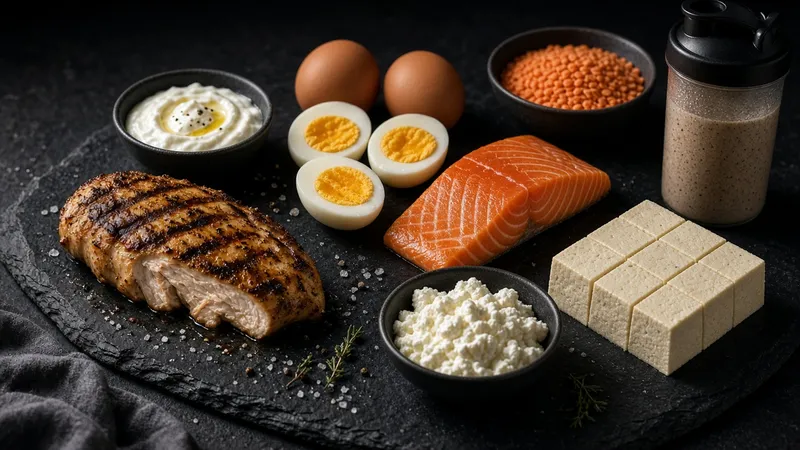
The best plant proteins for muscle
Protein contents below are typical values from food labels and food-composition tables. Brands vary, so check your packaging.
| Food | Protein (approx.) | Notes |
|---|---|---|
| Soy or pea protein isolate | 20–25 g per 30 g scoop | Easiest way to hit targets; blends of pea and rice are common |
| Seitan (wheat gluten) | about 20–25 g per 100 g | Very high protein, low in lysine: pair with legumes |
| Tempeh | about 19 g per 100 g | Fermented soy; complete amino acid profile |
| Firm tofu | about 12–15 g per 100 g | Cheap and versatile |
| Edamame | about 11 g per 100 g | Good snack |
| Lentils, cooked | about 9 g per 100 g | Rich in lysine, plus fibre and iron |
| Chickpeas and beans, cooked | about 7–9 g per 100 g | Filling; combine with grains |
| Soy milk | about 3 g per 100 ml | Pick a version with added calcium and B12 |
| Oats, dry | about 13 g per 100 g | Adds protein at breakfast |
| Mycoprotein (e.g. Quorn vegan products) | varies by product | Used in Monteyne et al. (2023) |
Combine, don’t stress. Legumes are rich in lysine; grains and seeds bring more methionine. Eating both across the day covers you. You don’t need to combine them in every single meal, but mixed meals (lentils with rice, hummus with bread, tofu with noodles) make it automatic.
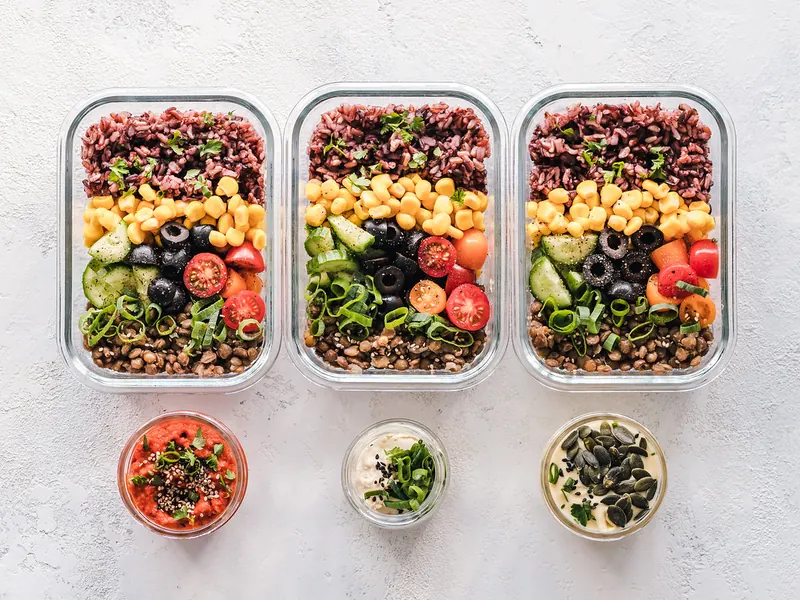
Sample vegan day: about 160 g protein
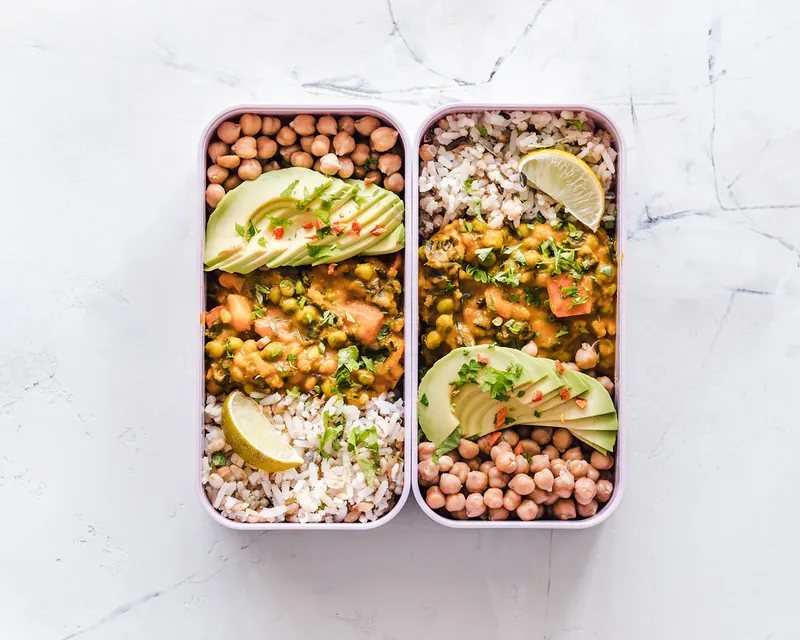
This is an example for an 80 kg lifter at 2.0 g/kg. Protein values are rounded estimates; adjust portions to your calorie needs (bulking or cutting).
| Meal | Food | Protein |
|---|---|---|
| Breakfast | 80 g oats, 300 ml soy milk, 30 g soy or pea protein, berries | ~43 g |
| Lunch | 200 g firm tofu stir-fried with vegetables, 250 g cooked rice | ~37 g |
| Post-workout | Shake with 30 g pea protein, a banana, 30 g almonds | ~28 g |
| Dinner | 150 g tempeh, 150 g cooked lentils, 80 g (dry) wholewheat pasta, tomato sauce | ~52 g |
| Total | ~160 g |
Four meals of 28–52 g each. If you’re bulking, add calories from extra grains, nuts, olive oil, dried fruit and a second slice of bread rather than from more protein. See our lean bulk guide for how big the surplus should be.
Supplements that matter for vegan lifters
1. Protein powder (convenience, not magic)
A soy, pea or blended powder makes 1.8–2.2 g/kg far easier, especially if you’re lighter on appetite or cutting. Both long-term vegan trials relied on concentrated protein products (soy protein isolate in Hevia-Larraín et al.; mycoprotein foods in Monteyne et al.), so we don’t know how a whole-food-only vegan diet compares.
2. Creatine monohydrate (stronger case than for meat-eaters)
Meat and fish are the main dietary sources of creatine. In a double-blind trial, vegetarians started with lower muscle creatine (117 vs 130 mmol/kg). With creatine and 8 weeks of training, the vegetarians gained more muscle creatine, lean tissue and total work than the non-vegetarians taking creatine (Burke et al., 2003). A systematic review of nine studies agreed that vegetarians are likely to benefit, though the studies had moderate to high risk of bias and results were mixed on whether vegetarians benefit more than omnivores (Kaviani et al., 2020). Standard dosing is 3–5 g a day; see our full creatine review.
3. Vitamin B12 (essential)
Vitamin B12 isn’t reliably available from plant foods, so every vegan needs fortified foods or a supplement. A review of vegan sports nutrition lists protein quantity and quality, iron, calcium, vitamin B12 and vitamin D as the nutrients most likely to fall short when a vegan diet isn’t planned (West et al., 2023). Ask your doctor or a dietitian about testing and dosing.
Worth a look, depending on your diet: vitamin D in winter at northern latitudes, iodine if you don’t use iodised salt, and an algae-based omega-3. These are general health choices; we don’t know of trials showing they add muscle.
Soy and testosterone: the myth
Many lifters still avoid soy because they fear it will lower testosterone. A meta-analysis of 41 clinical studies found no effect of soy protein or isoflavones on total or free testosterone, estradiol or estrone in men, regardless of dose or study duration (Reed et al., 2021). Messina is a co-author here too. Combined with the soy-versus-whey training data, there’s no good reason for a lifter to avoid tofu, tempeh or soy protein.
Training on a vegan diet
Nothing about training changes. The trials above used ordinary progressive resistance training. Build your week around a proven split such as push/pull/legs, push big lifts such as the back squat and bench press, take most sets within 0–3 reps of failure, and add load or reps over time with progressive overload. Aim for roughly 10–20 hard sets per muscle per week; see sets per week.
Vegan vs vegetarian vs omnivore for muscle
| Vegan | Vegetarian (eggs and dairy) | Omnivore | |
|---|---|---|---|
| Protein target we suggest | 1.8–2.2 g/kg | 1.6–2.2 g/kg | 1.6–2.2 g/kg |
| Typical protein quality | Lower per gram; fix with amount and blends | High with dairy and eggs | High |
| Long-term muscle gain in trials | Same as omnivores when protein is high (untrained adults) | Little direct data | Reference |
| Creatine supplement | Strong case | Strong case | Optional, still useful |
| B12 supplement | Required | Often needed | Rarely needed |
| Effort to plan | Highest | Medium | Lowest |
Common mistakes
- Eating too little protein. Spontaneous vegan diets are often lower in protein (West et al., 2023). Fix: track for two weeks and hit 1.8–2.2 g/kg.
- Relying on one low-quality source. Hemp or oat protein alone has little leucine (Gorissen et al., 2018). Fix: use soy, pea or a blend as your base.
- Too few calories. Plant foods are filling and high in fibre, so it’s easy to undereat. Fix: add calorie-dense foods (nuts, nut butters, oils, dried fruit) when bulking.
- Skipping B12. Fix: take a supplement or use fortified foods every day.
- Ignoring creatine. People who eat no meat start with the lowest muscle creatine. Fix: 3–5 g of creatine monohydrate daily.
- Fearing soy. Fix: see the hormone data above; soy is one of the best plant proteins you can eat.
- Expecting the diet itself to build muscle. No study shows vegan diets build more muscle (West et al., 2023). Fix: training and total protein drive the result.
Safety note
If you have kidney disease, an eating disorder, are pregnant or under 18, or have a medical condition, talk to your doctor or a registered dietitian before changing your diet or protein intake. They can also check B12, iron and vitamin D.
FAQ
Can you build muscle on a vegan diet?
Yes. In two training trials, vegans and omnivores eating high-protein diets (about 1.6–2 g/kg) gained the same muscle and strength over 10–12 weeks. Those trials were in untrained young adults, so long-term data in advanced lifters is still missing.
How much protein do vegans need to build muscle?
We suggest 1.8–2.2 g per kg of body weight per day, which is the upper half of the general range. Plant proteins are a little lower in quality per gram, so a small buffer helps.
Is pea protein as good as whey?
In a 12-week trial with 161 young men, pea protein grew the biceps as much as whey, and both were taken at 25 g twice a day. The trial was industry-funded, but soy and blended plant proteins show similar results elsewhere.
Do vegans need creatine?
They don’t need it to grow, but they are likely to benefit more than most. Vegetarians start with lower muscle creatine and responded strongly to supplementation in a controlled trial. Use 3–5 g of creatine monohydrate a day.
Does soy lower testosterone?
No. A meta-analysis of 41 clinical studies found no effect of soy protein or isoflavones on testosterone or estrogen levels in men.
Do I need to combine proteins at every meal?
No. Getting legumes, grains, soy and seeds across the day is enough. Mixed meals and a soy or blended powder simply make it easier.
References
- Hevia-Larraín V, Gualano B, Longobardi I, et al. High-Protein Plant-Based Diet Versus a Protein-Matched Omnivorous Diet to Support Resistance Training Adaptations: A Comparison Between Habitual Vegans and Omnivores. Sports Med. 2021;51(6):1317-1330. doi:10.1007/s40279-021-01434-9. PubMed: 33599941 ↩
- Monteyne AJ, Coelho MOC, Murton AJ, et al. Vegan and Omnivorous High Protein Diets Support Comparable Daily Myofibrillar Protein Synthesis Rates and Skeletal Muscle Hypertrophy in Young Adults. J Nutr. 2023;153(6):1680-1695. doi:10.1016/j.tjnut.2023.02.023. PubMed: 36822394 ↩
- Messina M, Lynch H, Dickinson JM, et al. No Difference Between the Effects of Supplementing With Soy Protein Versus Animal Protein on Gains in Muscle Mass and Strength in Response to Resistance Exercise. Int J Sport Nutr Exerc Metab. 2018;28(6):674-685. doi:10.1123/ijsnem.2018-0071. PubMed: 29722584 ↩
- Lim MT, Pan BJ, Toh DWK, et al. Animal Protein versus Plant Protein in Supporting Lean Mass and Muscle Strength: A Systematic Review and Meta-Analysis of Randomized Controlled Trials. Nutrients. 2021;13(2). doi:10.3390/nu13020661. PubMed: 33670701 ↩
- Babault N, Païzis C, Deley G, et al. Pea proteins oral supplementation promotes muscle thickness gains during resistance training: a double-blind, randomized, Placebo-controlled clinical trial vs. Whey protein. J Int Soc Sports Nutr. 2015;12(1):3. doi:10.1186/s12970-014-0064-5. PubMed: 25628520 ↩
- Banaszek A, Townsend JR, Bender D, et al. The Effects of Whey vs. Pea Protein on Physical Adaptations Following 8-Weeks of High-Intensity Functional Training (HIFT): A Pilot Study. Sports (Basel). 2019;7(1). doi:10.3390/sports7010012. PubMed: 30621129 ↩
- Pinckaers PJM, Trommelen J, Snijders T, et al. The Anabolic Response to Plant-Based Protein Ingestion. Sports Med. 2021;51(Suppl 1):59-74. doi:10.1007/s40279-021-01540-8. PubMed: 34515966
- Gorissen SHM, Crombag JJR, Senden JMG, et al. Protein content and amino acid composition of commercially available plant-based protein isolates. Amino Acids. 2018;50(12):1685-1695. doi:10.1007/s00726-018-2640-5. PubMed: 30167963 ↩
- Pinckaers PJM, Kouw IWK, Gorissen SHM, et al. The Muscle Protein Synthetic Response to the Ingestion of a Plant-Derived Protein Blend Does Not Differ from an Equivalent Amount of Milk Protein in Healthy Young Males. J Nutr. 2023;152(12):2734-2743. doi:10.1093/jn/nxac222. PubMed: 36170964 ↩
- Pinckaers PJM, Kouw IWK, Hendriks FK, et al. No differences in muscle protein synthesis rates following ingestion of wheat protein, milk protein, and their protein blend in healthy, young males. Br J Nutr. 2021;126(12):1832-1842. doi:10.1017/S0007114521000635. PubMed: 33597056
- Burke DG, Chilibeck PD, Parise G, et al. Effect of creatine and weight training on muscle creatine and performance in vegetarians. Med Sci Sports Exerc. 2003;35(11):1946-55. doi:10.1249/01.MSS.0000093614.17517.79. PubMed: 14600563 ↩
- Kaviani M, Shaw K, Chilibeck PD. Benefits of Creatine Supplementation for Vegetarians Compared to Omnivorous Athletes: A Systematic Review. Int J Environ Res Public Health. 2020;17(9). doi:10.3390/ijerph17093041. PubMed: 32349356 ↩
- West S, Monteyne AJ, van der Heijden I, et al. Nutritional Considerations for the Vegan Athlete. Adv Nutr. 2023;14(4):774-795. doi:10.1016/j.advnut.2023.04.012. PubMed: 37127187 ↩
- Reed KE, Camargo J, Hamilton-Reeves J, et al. Neither soy nor isoflavone intake affects male reproductive hormones: An expanded and updated meta-analysis of clinical studies. Reprod Toxicol. 2021;100:60-67. doi:10.1016/j.reprotox.2020.12.019. PubMed: 33383165 ↩