Meal Frequency and Protein Distribution: How Often to Eat for Muscle
How many meals a day to build muscle? What meal frequency and protein distribution studies show, protein per meal by body weight and 3- to 5-meal plans.
Key takeaways
- Daily totals beat meal counts. When calories and protein are matched, eating 2, 3 or 6 times a day makes little difference to fat or muscle; a meta-analysis found that the apparent benefit of more meals came from a single study (Schoenfeld et al., 2015).
- For lifters, 3–5 protein meals a day is the sweet spot: about 0.4–0.55 g/kg per meal, which is roughly 30–45 g for an 80 kg lifter.
- Bigger protein meals are not wasted. In trained men, 40 g of whey raised muscle protein synthesis more than 20 g (Macnaughton et al., 2016), and 100 g gave a larger and longer response than 25 g (Trommelen et al., 2023).
- Even protein across the day may help a little. In a 12-week trial, men who moved protein from dinner to breakfast tended to gain more lean mass (2.5 vs 1.8 kg, P = 0.06) (Yasuda et al., 2020), but other trials found no difference.
- Use meal frequency as an appetite tool: more meals make a surplus easier when bulking; fewer, bigger meals may control hunger when cutting.
- A protein meal before bed is a convenient way to reach your daily target. It is not magic: the best-known trial gave the extra protein on top of the placebo group's intake (Snijders et al., 2015).
Meal frequency is how many times a day you eat. Protein distribution is how you split your daily protein across those meals. For decades, bodybuilders ate six to eight small meals a day to “keep the body anabolic”. Today, many lifters do the opposite and eat two big meals inside a fasting window. Which one builds more muscle?
This guide covers what the meal frequency and protein distribution studies found, how much protein to put in each meal, how many meals make sense for bulking and cutting, where pre-bed protein and fasting fit in, and ready-to-use meal templates. It is part of our Eating for Muscle Growth section; for the big picture on diets, see our pillar on every way of eating for muscle growth.
Evidence in one line: hit your daily calories and protein first; then 3–5 protein-rich meals is a small, sensible upgrade, not a requirement.
What this page covers. How much protein you need per day is covered in our guide to protein intake. Long fasting windows are covered in intermittent fasting and muscle growth. This page is about the number of meals and how to split protein across them.
Key terms
- Meal frequency: the number of eating occasions per day. Most studies count anything with a meaningful amount of energy as a meal.
- Protein distribution: how daily protein is split across meals. Even (similar amounts at each meal) or skewed (most at dinner, little at breakfast).
- MPS (muscle protein synthesis): the rate at which your body builds new muscle protein. It rises for several hours after a protein meal and after training.
- Per-meal dose: the grams of protein in one meal, often given in grams per kilogram of body weight (g/kg).
- Time-restricted eating (TRE): eating only within a set window each day, such as 8 hours (16:8).
What the research says
Meal frequency and body composition
The idea that frequent meals “stoke the metabolism” has not held up. A meta-analysis of 15 experimental studies at first found that more frequent meals were linked to slightly more fat loss and more fat-free mass. But a sensitivity analysis showed the positive result came from a single study; without it, the effect disappeared. The authors concluded that the findings should be interpreted with caution (Schoenfeld et al., 2015).
Two small studies show the possible upsides and downsides:
- Muscle during a hard diet. Twelve boxers ate 1,200 kcal a day for 2 weeks in either two or six meals. Body weight dropped the same, but the two-meal group lost more lean body mass (Iwao et al., 1996). The study was tiny, short and very low in calories, so it says little about a normal cut.
- Hunger. In 15 lean adults, eating the same food as six meals instead of three did not change 24-hour fat burning, but it increased hunger and the desire to eat (Ohkawara et al., 2013).
Bottom line: the number of meals is not a fat-loss or muscle-building lever on its own. It is a tool for appetite and convenience.
How much protein one meal can “use”
The old claim that your body can only use 20–25 g of protein at a time comes from short lab studies. In resistance-trained young men of about 80 kg, 20 g of whey after leg training raised myofibrillar MPS by 49% over no protein, and 40 g by 56%; the authors judged 20 g enough for a maximal response, because the extra protein mainly increased amino acid oxidation (Witard et al., 2014).
Later studies changed that picture:
- After a whole-body workout, 40 g of whey raised MPS more than 20 g in trained men, whatever their lean mass (Macnaughton et al., 2016).
- In older adults, a mixed meal with 70 g of protein produced a more positive whole-body protein balance and higher MPS than a meal with 35 g (Park et al., 2020).
- Using four isotope tracers, a 2023 study found that 100 g of protein after exercise produced a larger and longer (more than 12 hours) anabolic response than 25 g, with little extra oxidation (Trommelen et al., 2023). One author was an employee of a dairy company, which had no role in the study.
A review of acute and long-term studies concluded that a target of about 0.4 g/kg per meal over at least four meals maximises anabolism, with up to 0.55 g/kg per meal for people eating 2.2 g/kg/day (Schoenfeld & Aragon, 2018). One author sits on the advisory board of a supplement company.
What this means: a bigger meal is not wasted; it is just used more slowly. The per-meal “limit” is soft.
Spreading protein over the day: lab studies
Two well-known studies suggest that an even spread helps, at least in the short term:
- Areta et al. (2013) gave trained men 80 g of whey over 12 hours after training, as 8 × 10 g, 4 × 20 g or 2 × 40 g. Four 20 g servings every 3 hours produced the highest MPS (Areta et al., 2013).
- Mamerow et al. (2014) fed eight adults the same daily protein, either evenly (about 30 g at each of three meals) or skewed (about 11 g at breakfast, 16 g at lunch and 63 g at dinner). 24-hour MPS was 25% higher with the even pattern, and it stayed higher after 7 days (Mamerow et al., 2014). Two authors have received speaking fees from a beef industry group.
These are MPS studies, measured over hours or days. They suggest a mechanism but do not prove that you will build more muscle over months.
Spreading protein over the day: long-term trials
Only a handful of trials have measured muscle over weeks:
- Yasuda et al. (2020): 26 young men trained 3 times a week for 12 weeks on the same daily protein (1.3 g/kg). The group that ate more protein at breakfast (0.33 g/kg) tended to gain more lean mass than the group that ate most of it at dinner: 2.5 vs 1.8 kg (P = 0.06, a large effect size but not statistically significant) (Yasuda et al., 2020).
- Kim et al. (2018): 14 older adults ate 1.1 g/kg/day either evenly or mostly at dinner for 8 weeks. There were no differences in lean mass, strength or protein kinetics (Kim et al., 2018).
- Tavares et al. (2025): resistance-trained men ate similar daily protein as either three or five protein-rich meals for 8 weeks. Both groups gained lean mass, muscle size and strength, with no significant differences. Only 18 of 32 participants finished (Tavares et al., 2025).
- Arnal et al. (2000): in 16 young women, eating most of the day’s protein in one meal or spreading it over four meals gave similar protein retention over 14 days (Arnal et al., 2000).
A review of observational and randomised studies concluded that the evidence for an “optimal” protein distribution is limited and inconsistent, and that the effect of distribution is hard to separate from the effect of total protein (Hudson et al., 2020).
Shakes with meals or between meals?
A systematic review of 34 randomised trials looked at protein supplements taken with meals or between meals during resistance training. Lean mass rose in nearly all groups either way (94% vs 90% of groups); taking the shake with meals was linked to more fat loss (Hudson et al., 2018). Adding a shake between meals adds calories, which suits a bulk better than a cut.
Protein before bed
In a 12-week trial, 44 young men trained and took either 27.5 g of protein or a non-caloric placebo every night before sleep. The protein group gained more strength and more quadriceps size (+8.4 vs +4.8 cm²) (Snijders et al., 2015). But the placebo group also ate less protein per day, so the trial cannot separate timing from total intake. A systematic review of nine studies concluded that 20–40 g of casein about 30 minutes before sleep raises overnight protein synthesis and may help muscle and strength in young men, with less clear results in older adults (Reis et al., 2021). For more on recovery overnight, see sleep and muscle growth.
Fewer meals: fasting windows
Time-restricted eating squeezes meals into a short window, so it is a natural test of low meal frequency:
- Recreationally active young men who ate within a 4-hour window on 4 days a week ate about 650 kcal less on those days. Muscle size increased in both groups, but the normal-eating group gained more lean tissue (+2.3 kg, a small effect) (Tinsley et al., 2017).
- Resistance-trained men who ate three meals within 8 hours (16:8) at matched calories lost more fat than a normal-eating group, while keeping fat-free mass and strength over 8 weeks (Moro et al., 2016).
- In the only surplus trial in well-trained men and women, 16:8 eating with 2.2 g/kg protein increased fat-free mass similarly to normal eating, but total training volume was slightly lower and squat 1RM gains were about 4 kg smaller (Blake et al., 2025).
- A meta-analysis of 15 studies found that time-restricted eating plus exercise reduced fat mass slightly and did not significantly change fat-free mass (Hays et al., 2025).
Takeaway: two or three meals inside a window can work, especially when cutting. In a surplus, a very short window may make it harder to eat and train at your best.
What the position stands say
The International Society of Sports Nutrition says that meeting total daily protein, preferably with evenly spaced protein meals about every 3 hours, should be the main focus, and that doses of 20–40 g (0.25–0.40 g/kg) every 3–4 hours appear to affect MPS most favourably (Kerksick et al., 2017). A review of off-season bodybuilding nutrition recommends 1.6–2.2 g/kg/day protein in 3–6 meals of 0.40–0.55 g/kg, including within 1–2 hours before and after training (Iraki et al., 2019).
Evidence grade and gaps
- Moderate: meal count has little effect on body composition when calories and protein are matched.
- Preliminary: an even protein spread over 3–5 meals helps long-term muscle growth. The lab data point that way; long-term trials are small, short and mixed.
- No direct evidence: exact optimal meal counts for advanced lifters, for women in a surplus, or for bulking versus cutting phases.
- Most studies used young men, whey shakes and 8–12 weeks. Real meals with fibre and fat digest more slowly, which probably makes the per-meal “limit” even less important.
Our meal frequency rules
- Set the daily targets first: calories for your goal and 1.6–2.2 g/kg of protein per day; see protein intake.
- Choose 3–5 eating occasions with protein in each. Three is the minimum for most lifters to reach their daily protein comfortably.
- Aim for 0.4–0.55 g/kg of protein per meal. Treat this as a range, not a ceiling.
- Don’t skew it badly. If breakfast has 10 g of protein and dinner has 80 g, move 20–30 g to breakfast.
- Put a protein meal within about 1–3 hours before and after training. If you train fasted in the morning, eat soon after.
- Use the last meal of the day well. A protein-rich dinner or a 30–40 g pre-bed snack makes the daily target easier.
- Adjust for appetite: more, smaller meals when bulking; fewer, larger meals when cutting if that keeps hunger down.
The numbers in rules 2–5 come from the studies above; the exact ranges and the rule set are our conventions.
Protein per meal by body weight
Daily target 1.6–2.2 g/kg, split evenly. Values are rounded.
| Body weight | Daily protein (1.6–2.2 g/kg) | Per meal with 3 meals | Per meal with 4 meals |
|---|---|---|---|
| 60 kg (132 lb) | 96–132 g | 32–44 g | 24–33 g |
| 70 kg (154 lb) | 112–154 g | 37–51 g | 28–39 g |
| 80 kg (176 lb) | 128–176 g | 43–59 g | 32–44 g |
| 90 kg (198 lb) | 144–198 g | 48–66 g | 36–50 g |
| 100 kg (220 lb) | 160–220 g | 53–73 g | 40–55 g |
With 5 meals, divide the daily target by five; with 2 meals, by two. Two meals of 60–90 g each are fine if that is how you prefer to eat; you just rely more on the “bigger meals are used more slowly” findings.
Meal templates
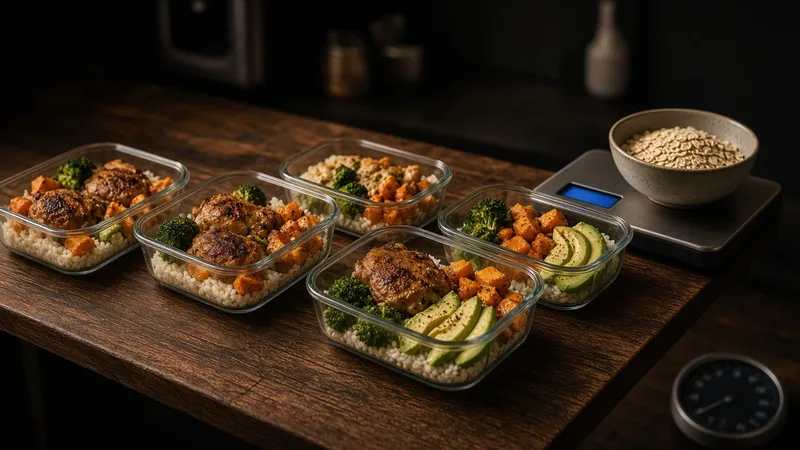
All four templates give an 80 kg lifter about 160 g of protein (2.0 g/kg). Adjust portions for your calories.
Template A: 3 meals (simple, good for cutting)
| Meal | Time | Example | Protein |
|---|---|---|---|
| Breakfast | 07:30 | Greek yogurt, oats, berries, whey | 50 g |
| Lunch | 12:30 | Chicken, rice, vegetables | 55 g |
| Dinner | 19:00 | Salmon, potatoes, salad, cottage cheese | 55 g |
Template B: 4 meals (our default)
| Meal | Time | Example | Protein |
|---|---|---|---|
| Breakfast | 07:30 | Eggs, egg whites, wholegrain toast | 40 g |
| Lunch | 12:00 | Lean beef, pasta, vegetables | 40 g |
| Post-training | 17:30 | Whey or skyr, fruit, rice cakes | 40 g |
| Dinner | 20:00 | Tofu or chicken stir-fry with rice | 40 g |
Template C: 5 meals (bulking, small appetite)
| Meal | Time | Example | Protein |
|---|---|---|---|
| Breakfast | 07:00 | Oats with milk and whey | 35 g |
| Snack | 10:00 | Cottage cheese, nuts, fruit | 30 g |
| Lunch | 13:00 | Turkey wrap, yogurt | 35 g |
| Post-training | 17:30 | Milk, banana, bagel with ham | 30 g |
| Dinner | 20:00 | Pork or lentils, rice, vegetables | 30 g |
Template D: 3 meals in an 8-hour window (16:8)
| Meal | Time | Example | Protein |
|---|---|---|---|
| First meal | 12:00 | Eggs, ham, bread, fruit | 50 g |
| Second meal | 16:00 | Chicken, rice, vegetables | 50 g |
| Last meal | 19:30 | Steak or fish, potatoes, casein or skyr | 60 g |
Check: 50 + 55 + 55 = 160 g; 4 × 40 = 160 g; 35 + 30 + 35 + 30 + 30 = 160 g; 50 + 50 + 60 = 160 g.
Training days
You don’t need a shake the minute you rack the bar. The ISSN position stand notes that high-quality protein from immediately to 2 hours after training stimulates MPS, and that the size and timing of your pre-training meal affect how much the post-training meal matters (Kerksick et al., 2017). Practical set-ups:
- Train mid-day or evening: a normal meal 1–3 hours before training and another within 1–3 hours after is enough.
- Train early and fasted: eat a protein-rich breakfast (0.4 g/kg or more) soon after the session.
- Long or double sessions: a small protein-and-carbohydrate snack between them helps you eat enough.
For the training side, a hard session of back squats or bench press is what creates the signal for growth; protein meals around it supply the building blocks.
Bulking vs cutting
| Phase | Suggested meals | Why |
|---|---|---|
| Lean bulk | 4–5 | Easier to eat a surplus without feeling stuffed; see lean bulking |
| Maintenance or recomposition | 3–4 | Simple and enough for an even protein spread; see body recomposition |
| Cut | 3 (or 2–3 in a window) | Fewer, larger meals may control hunger better (Ohkawara et al., 2013); keep protein high |
| Aggressive cut | 3–4 | Very low calories may make longer gaps harder on lean mass (weak evidence: Iwao et al., 1996) |
The phase-by-phase meal counts are our conventions, based on appetite and on the small studies above.
Meal patterns compared
| Pattern | Pros | Cons | Best for |
|---|---|---|---|
| 2 meals | Very simple, few hunger spikes for some | Large meals; hard to reach 2 g/kg on a bulk | Busy people, cutting |
| 3 meals | Normal social pattern; 40–60 g protein meals | Each meal must be protein-rich | Most lifters, cutting |
| 4–5 meals | Even protein spread; easier surplus | More planning and prep | Bulking, high-volume training |
| 6+ meals | Small meals for small appetites | No proven extra benefit; may raise hunger | Rarely needed |
| Grazing (protein-poor snacks) | Convenient | Low protein per meal, easy overeating | Not recommended |
Common mistakes
- Counting meals instead of protein. Six meals with 15 g each (90 g) is worse than three meals with 50 g each (150 g). Fix: set the daily target first.
- A protein-poor breakfast. Many people eat 10–15 g at breakfast and 60+ g at dinner. Fix: add eggs, skyr, cottage cheese or whey to breakfast.
- Forcing six meals while cutting. Small meals may leave you hungry all day. Fix: three larger meals are fine.
- Fearing big meals. A 70 g protein dinner is not wasted. Fix: eat it; spread the rest of the day as best you can.
- Skipping food around training when training fasted early in the morning. Fix: eat a protein-rich meal soon after.
- Adding shakes between meals on a cut and wondering why the scale doesn’t move. Fix: replace food with shakes, or take them with meals.
- Relying on pre-bed protein as a magic trick. Fix: use it only if it helps you reach your daily total.
Make it better
- Front-load protein: move 20–30 g from dinner to breakfast. It is the cheapest upgrade the long-term data hint at (Yasuda et al., 2020).
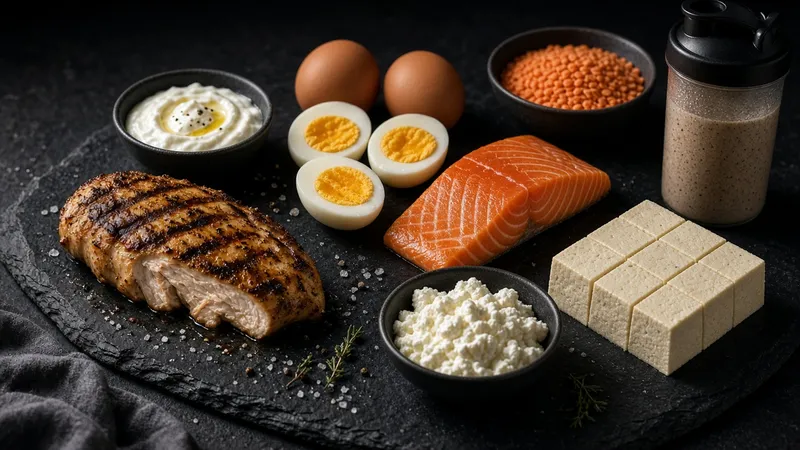
- Build each meal around one protein food (meat, fish, eggs, dairy, tofu, tempeh or legumes plus a protein-rich side). Plant eaters can use our vegan and plant-based guide.
- Make the pre-bed meal dairy-based (skyr, quark, cottage cheese or a casein shake) if you need the extra protein.
Safety notes
- If you have diabetes or take blood-sugar-lowering medication, talk to your doctor before changing meal timing or fasting.
- If you have kidney disease, check your protein target with your doctor.
- If you have or have had an eating disorder, rigid meal schedules and fasting windows can be harmful. Get support from a health professional.
- Under-18s and pregnant women should get individual advice rather than following fixed meal templates.
FAQ
How many meals a day should I eat to build muscle?
Three to five meals with protein in each is a good range for most lifters. When calories and protein are matched, the exact number makes little difference to body composition (Schoenfeld et al., 2015).
How much protein should I eat per meal?
About 0.4–0.55 g/kg of body weight per meal, which is about 30–45 g for an 80 kg lifter. Larger meals are fine; they are used more slowly, not wasted (Trommelen et al., 2023).
Can your body absorb more than 30 g of protein at once?
Yes. Absorption is not the bottleneck; the question is how much goes to building muscle. Older studies suggested muscle building peaked at 20–25 g, but newer studies show 40 g beats 20 g after whole-body training, and 100 g gives a longer response than 25 g.
Is eating every 3 hours necessary?
No. Four meals 3 hours apart gave the highest muscle protein synthesis in one 12-hour lab study (Areta et al., 2013), but long-term trials comparing three and five meals found no clear difference in muscle gain (Tavares et al., 2025).
Do more meals boost metabolism?
No. Eating six meals instead of three did not change 24-hour fat burning in lean adults, and it increased hunger (Ohkawara et al., 2013).
Is it bad to eat most of my protein at dinner?
It is not bad, but it may be slightly less effective. An even split raised 24-hour muscle protein synthesis by 25% in one study (Mamerow et al., 2014). Moving some protein to breakfast is an easy fix.
Should I eat protein before bed?
It can help you reach your daily protein, and 20–40 g of casein before sleep raises overnight protein synthesis. Whether the timing matters on top of total protein is not proven (Reis et al., 2021).
References
- Schoenfeld BJ, Aragon AA, Krieger JW. Effects of meal frequency on weight loss and body composition: a meta-analysis. Nutr Rev. 2015;73(2):69-82. doi:10.1093/nutrit/nuu017. PubMed: 26024494 ↩
- Iwao S, Mori K, Sato Y. Effects of meal frequency on body composition during weight control in boxers. Scand J Med Sci Sports. 1996;6(5):265-72. doi:10.1111/j.1600-0838.1996.tb00469.x. PubMed: 8960647 ↩
- Ohkawara K, Cornier MA, Kohrt WM, et al. Effects of increased meal frequency on fat oxidation and perceived hunger. Obesity (Silver Spring). 2013;21(2):336-43. doi:10.1002/oby.20032. PubMed: 23404961 ↩
- Witard OC, Jackman SR, Breen L, et al. Myofibrillar muscle protein synthesis rates subsequent to a meal in response to increasing doses of whey protein at rest and after resistance exercise. Am J Clin Nutr. 2014;99(1):86-95. doi:10.3945/ajcn.112.055517. PubMed: 24257722
- Macnaughton LS, Wardle SL, Witard OC, et al. The response of muscle protein synthesis following whole-body resistance exercise is greater following 40 g than 20 g of ingested whey protein. Physiol Rep. 2016;4(15). doi:10.14814/phy2.12893. PubMed: 27511985
- Park S, Jang J, Choi MD, et al. The Anabolic Response to Dietary Protein Is Not Limited by the Maximal Stimulation of Protein Synthesis in Healthy Older Adults: A Randomized Crossover Trial. Nutrients. 2020;12(11). doi:10.3390/nu12113276. PubMed: 33114585
- Trommelen J, van Lieshout GAA, Nyakayiru J, et al. The anabolic response to protein ingestion during recovery from exercise has no upper limit in magnitude and duration in vivo in humans. Cell Rep Med. 2023;4(12):101324. doi:10.1016/j.xcrm.2023.101324. PubMed: 38118410 ↩
- Schoenfeld BJ, Aragon AA. How much protein can the body use in a single meal for muscle-building? Implications for daily protein distribution. J Int Soc Sports Nutr. 2018;15:10. doi:10.1186/s12970-018-0215-1. PubMed: 29497353
- Areta JL, Burke LM, Ross ML, et al. Timing and distribution of protein ingestion during prolonged recovery from resistance exercise alters myofibrillar protein synthesis. J Physiol. 2013;591(9):2319-31. doi:10.1113/jphysiol.2012.244897. PubMed: 23459753 ↩
- Mamerow MM, Mettler JA, English KL, et al. Dietary protein distribution positively influences 24-h muscle protein synthesis in healthy adults. J Nutr. 2014;144(6):876-80. doi:10.3945/jn.113.185280. PubMed: 24477298 ↩
- Yasuda J, Tomita T, Arimitsu T, et al. Evenly Distributed Protein Intake over 3 Meals Augments Resistance Exercise-Induced Muscle Hypertrophy in Healthy Young Men. J Nutr. 2020;150(7):1845-1851. doi:10.1093/jn/nxaa101. PubMed: 32321161 ↩
- Kim IY, Schutzler S, Schrader AM, et al. Protein intake distribution pattern does not affect anabolic response, lean body mass, muscle strength or function over 8 weeks in older adults: A randomized-controlled trial. Clin Nutr. 2018;37(2):488-493. doi:10.1016/j.clnu.2017.02.020. PubMed: 28318687 ↩
- Tavares H, Roschel H, Felício V, et al. Effects of daily protein intake frequency during 8 weeks of resistance training on lean mass and strength adaptations: a randomized non-controlled clinical trial. J Sports Med Phys Fitness. 2025;65(10):1337-1345. doi:10.23736/S0022-4707.25.16698-X. PubMed: 40673785 ↩
- Arnal MA, Mosoni L, Boirie Y, et al. Protein feeding pattern does not affect protein retention in young women. J Nutr. 2000;130(7):1700-4. doi:10.1093/jn/130.7.1700. PubMed: 10867039 ↩
- Hudson JL, Bergia RE III, Campbell WW. Protein Distribution and Muscle-Related Outcomes: Does the Evidence Support the Concept? Nutrients. 2020;12(5). doi:10.3390/nu12051441. PubMed: 32429355
- Hudson JL, Bergia RE 3rd, Campbell WW. Effects of protein supplements consumed with meals, versus between meals, on resistance training-induced body composition changes in adults: a systematic review. Nutr Rev. 2018;76(6):461-468. doi:10.1093/nutrit/nuy012. PubMed: 29697807
- Snijders T, Res PT, Smeets JS, et al. Protein Ingestion before Sleep Increases Muscle Mass and Strength Gains during Prolonged Resistance-Type Exercise Training in Healthy Young Men. J Nutr. 2015;145(6):1178-84. doi:10.3945/jn.114.208371. PubMed: 25926415
- Reis CEG, Loureiro LMR, Roschel H, et al. Effects of pre-sleep protein consumption on muscle-related outcomes - A systematic review. J Sci Med Sport. 2021;24(2):177-182. doi:10.1016/j.jsams.2020.07.016. PubMed: 32811763 ↩
- Tinsley GM, Forsse JS, Butler NK, et al. Time-restricted feeding in young men performing resistance training: A randomized controlled trial. Eur J Sport Sci. 2017;17(2):200-207. doi:10.1080/17461391.2016.1223173. PubMed: 27550719
- Moro T, Tinsley G, Bianco A, et al. Effects of eight weeks of time-restricted feeding (16/8) on basal metabolism, maximal strength, body composition, inflammation, and cardiovascular risk factors in resistance-trained males. J Transl Med. 2016;14(1):290. doi:10.1186/s12967-016-1044-0. PubMed: 27737674
- Blake DT, Hamane C, Pacheco C, et al. Hypercaloric 16:8 time-restricted eating during 8 weeks of resistance exercise in well-trained men and women. J Int Soc Sports Nutr. 2025;22(1):2492184. doi:10.1080/15502783.2025.2492184. PubMed: 40241374
- Hays HM, Sefidmooye Azar P, Kang M, et al. Effects of time-restricted eating with exercise on body composition in adults: a systematic review and meta-analysis. Int J Obes (Lond). 2025;49(5):755-765. doi:10.1038/s41366-024-01704-2. PubMed: 39794384
- Kerksick CM, Arent S, Schoenfeld BJ, et al. International society of sports nutrition position stand: nutrient timing. J Int Soc Sports Nutr. 2017;14:33. doi:10.1186/s12970-017-0189-4. PubMed: 28919842
- Iraki J, Fitschen P, Espinar S, et al. Nutrition Recommendations for Bodybuilders in the Off-Season: A Narrative Review. Sports (Basel). 2019;7(7). doi:10.3390/sports7070154. PubMed: 31247944